


York stone has helped shape Yorkshire’s paths, walls, and buildings for centuries, and its performance outdoors explains why it remains a practical choice today. When you choose it for steps, patios, or exterior features, you get dense, weather-resistant material with natural texture and reliable grip. Its low porosity limits frost and water damage, while varied tones suit local landscapes. The right installation and maintenance matter, however, especially where drainage, joints, and heavy foot traffic come into play.
Why York Stone Works Outdoors
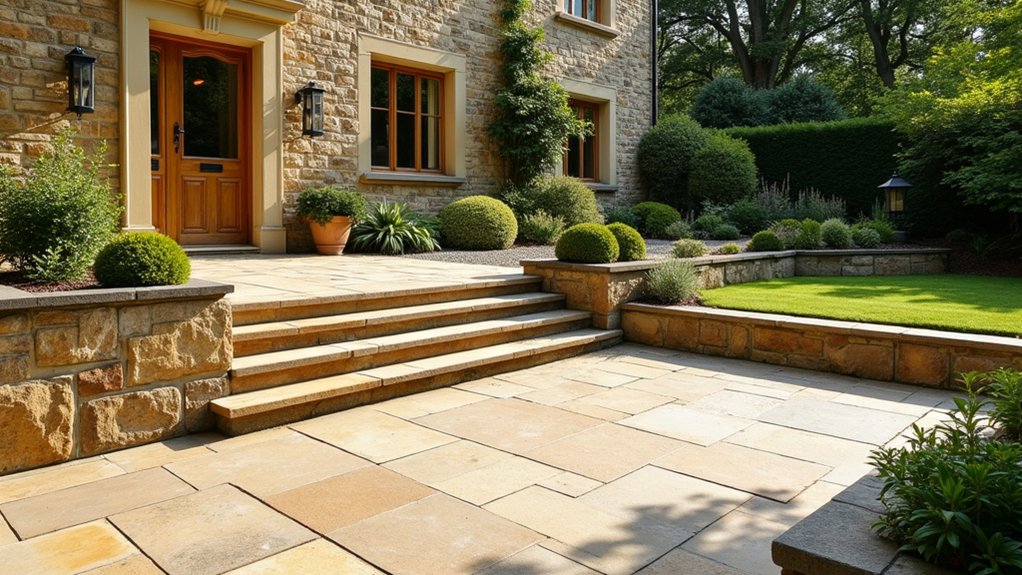
York stone works well outdoors because its dense, naturally durable structure withstands frost, rain, and regular foot traffic. When you choose it for a patio or exterior feature, you’ll get a surface suited to Yorkshire’s wet, changeable climate.
Its low porosity helps limit water absorption, while its mineral composition supports reliable performance through repeated freezing and thawing. You’ll also benefit from strong dimensional stability when the stone is correctly bedded on a well-drained, compacted base.
The material’s historical significance adds character: local York stone has shaped paving, walls, courtyards, and civic buildings across northern England for centuries. Each slab can provide subtle colour variation and natural texture, helping your design look established rather than manufactured.
Regular sweeping and suitable sealing, where appropriate, will help preserve its natural durability outdoors.
York Stone Steps That Stay Safe
When you’re planning York stone steps, set each tread with a consistent rise, firm bearing, and slight forward fall to shed rain safely. Choose slabs with a naturally textured, non slip surface, particularly for entrances exposed to Yorkshire rain, frost, and leaf debris.
Ask your installer to check every stone for secure seating; rocking edges create trip hazards and allow water into the bedding. Use a suitable mortar or full-bed adhesive, then tool joints neatly so they don’t collect standing water.
Keep step nosings even, with no sharp projections, and provide a reliable handrail where the staircase rises considerably.
York stone’s weather resistance supports long-term outdoor use, but you’ll still need to brush away moss and grit. Inspect joints, edges, and drainage each spring, repairing movement before winter worsens it.
York Stone Patios With Lasting Character
A York stone patio can develop lasting character when you combine sound installation with a considered layout. Choose calibrated or naturally riven slabs to suit your garden design, then plan joint lines around door thresholds, drains, and existing features.
On Yorkshire sites, check the sub-base carefully: compacted MOT Type 1, adequate falls, and a suitable permeable bedding layer help manage frost and rainfall. Use compatible mortar or jointing compound, and leave movement allowances where the patio meets buildings.
York stone’s varied tones and weathering reflect the region’s historical significance, while careful selection prevents abrupt colour changes across the surface. Seal only if the stone and location require it; breathable protection generally preserves its natural appearance.
Brush regularly, remove algae promptly, and replace damaged joints to keep the patio practical and attractive.
York Stone Walling for Durable Boundaries
Built from locally sourced or reclaimed stone, York stone walling gives boundaries a durable structure and a distinctive Yorkshire character. You can use it to define driveways, garden edges, terraces, or property lines while complementing surrounding paving and brickwork.
Its dense sandstone withstands Yorkshire’s rain, frost, and temperature changes when you specify a suitable thickness and construct stable foundations. A qualified installer should set each course level, use compatible mortar, and provide effective drainage to reduce movement and staining.
You’ll also benefit from the stone’s Historical significance, which reflects traditional walls found across Yorkshire’s villages and countryside. Varied tones, natural riven faces, and carefully chosen copings enhance aesthetic appeal.
With proper jointing and occasional repointing, your wall can remain structurally sound and visually distinctive for decades.
Conclusion
York stone gives your outdoor spaces a dependable foundation, from safe steps to weather-ready patios and durable boundary walls. Its low porosity limits frost damage, while its textured surface helps maintain grip in wet Yorkshire weather. Think of it as a well-worn walking boot: practical, resilient, and better with age. With regular sweeping, prompt stain removal, and occasional joint checks, you’ll preserve its natural character and enjoy exterior features that perform reliably for many years.