

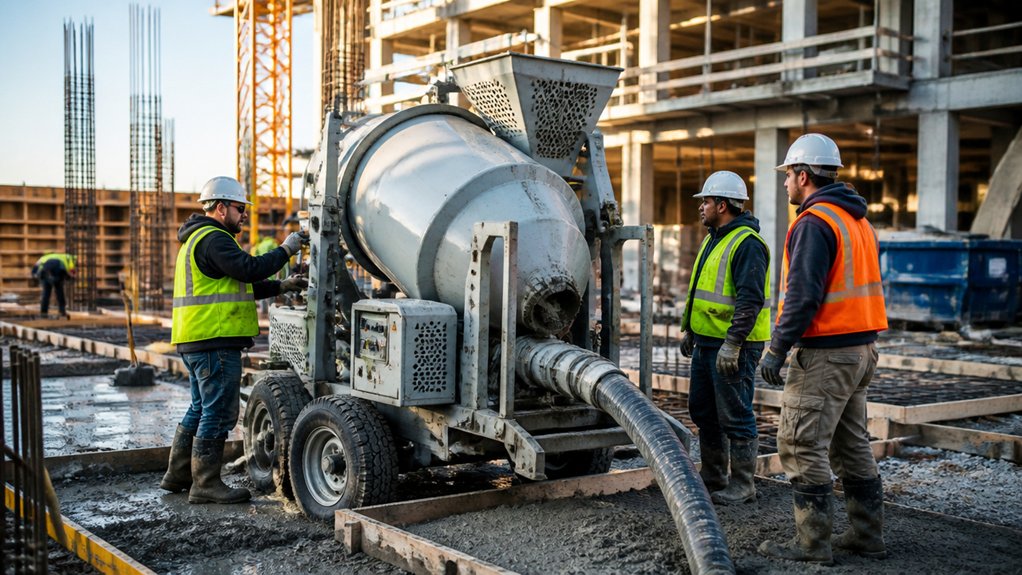
By coincidence, the day you schedule a concrete mixer is often the day a site access or placement problem appears. Before you hire, confirm that the ground can support the equipment, overhead clearance is adequate, and delivery routes remain clear. Match mixer capacity and pour rate to the mix design, then verify pricing, operator duties, technical support, safety features, and spill controls. A written plan can prevent costly delays, but several details still require close attention.
Decide If On-Site Concrete Mixer Rental Fits
Before you rent an on-site concrete mixer, confirm that the project’s batch size, placement rate, and access conditions justify mixing at the work area.
Compare the rental’s setup, delivery, cleanup, and fuel costs with ready-mix delivery and available staging space.
Verify that your crew can maintain consistent proportions, control water addition, and move fresh concrete without delaying placement.
Review Safety protocols before equipment arrives, including guarding, lockout procedures, required personal protective equipment, and emergency access.
Check ground stability, overhead clearance, traffic separation, and washout locations.
Evaluate the environmental impact of fuel use, cement dust, noise, wastewater, and material waste.
Confirm local permits, discharge rules, and operating-hour restrictions.
If the site lacks utilities, trained operators, or secure storage, off-site supply may reduce risk, labor demands, and cleanup responsibilities.
Choose Mixer Capacity for Your Pour
Choose mixer capacity by matching the mixer’s rated batch volume to the pour’s required output, placement rate, and available labor. Estimate how many batches you’ll need, then allow time for loading, mixing, discharge, and cleanup.
A mixer that’s too small can create delays, cold joints, and rushed handling; an oversized unit can exceed your crew’s safe operating capacity.
Check the manufacturer’s rated volume, not just the drum’s total size. Leave adequate space for aggregate movement and consistent mixing.
Confirm your access route, setup area, ground bearing, and clearance before delivery.
Keep workers clear of rotating parts, discharge chutes, and moving equipment, and assign a trained operator.
Choose equipment that supports Mix consistency while limiting fuel use, washout, and unnecessary trips. This reduces environmental impact and operating costs without compromising placement safety.
Confirm Your Concrete Mix and Pour Rate
Before hiring, verify the specified concrete strength, slump, aggregate size, admixtures, and required placement conditions.
Calculate the pour rate from the volume, placement window, crew capacity, and mixer cycle time.
Confirm the mixer can maintain that rate without interruptions, cold joints, overloading, or unsafe site congestion.
Verify Mix Specifications
Confirm the concrete mix design, required strength, slump, aggregate size, admixtures, and estimated volume with the contractor before scheduling the pour.
Review the approved Mix design against the project drawings, specifications, and applicable standards.
Confirm whether the batch plant can produce that formulation consistently and whether the mixer’s capacity, discharge method, and washout procedures suit the site.
Ask for current test data, batch tickets, and documentation for cement, supplementary materials, aggregates, and admixtures.
Establish who’ll verify delivery tickets, inspect the concrete, and record temperature, slump, and specimen samples.
Your quality control plan should define acceptance criteria and procedures for rejected or altered loads.
Tell the supplier about access limits, overhead hazards, reinforcement congestion, and placement constraints.
Don’t permit unapproved water or admixture additions; require authorization and documentation for every adjustment.
Calculate Required Pour Rate
With the mix specifications approved, calculate the placement rate the crew and equipment must sustain to finish within the concrete’s workable time. Divide the total volume by the available placement window, then add capacity for pauses, line priming, truck changes, and weather-related delays.
Confirm that the batch plant can produce and dispatch that volume consistently, and verify that enough trucks can maintain delivery without creating excessive waiting or slump loss. Match the rate to your pump, crew size, formwork, reinforcement access, and finishing sequence.
Schedule concrete testing at the required frequency, including slump, temperature, air content, and strength specimens. If the calculated rate exceeds safe handling capacity, revise the pour sequence or add resources.
Never accelerate placement by compromising consolidation, fall control, traffic separation, or worker positioning around moving equipment.
Check Jobsite Access and Mixer Placement
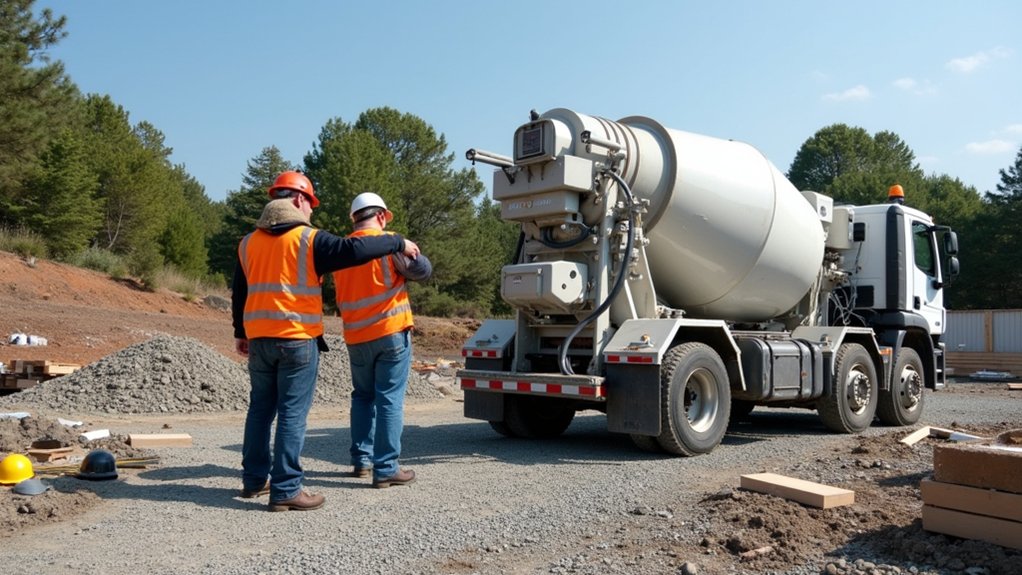
Can the delivery truck reach the pour area and position the mixer on stable, level ground without blocking emergency access or exposing workers to overhead lines, soft soil, or nearby traffic? Inspect the route before delivery, measuring gate widths, turning radii, overhead clearances, and load limits.
Confirm that the access road can support the truck’s weight in wet conditions, and remove debris, parked vehicles, and other obstructions.
Plan a firm, level setup area that keeps outriggers, chutes, and discharge zones clear of trenches, edges, and pedestrian paths.
Your site accessibility plan should identify a spotter to guide reversing and control equipment mobility.
Use barriers, warning signs, and a designated worker to manage traffic.
Tell the rental provider about restrictions, hazards, and placement requirements before scheduling delivery.
Compare Rental Prices and Included Services
Compare daily rental rates, but confirm whether fuel, cleaning, and damage fees apply.
Check which equipment and safety accessories are included, such as mixing tools, guards, and power cords.
Review delivery, pickup, setup guidance, and technical support so you can operate the mixer safely without unexpected costs.
Compare Daily Rental Rates
Daily mixer rental rates vary by drum capacity, rental duration, power source, and included services. Compare quotes using the same rental period and capacity, then verify whether delivery, pickup, fuel, cleaning, and operator support affect the total.
A lower daily price may become costly if you face mileage charges, overtime, or penalties for returning a dirty or damaged mixer.
Ask how the rental company calculates partial days and weekend rates. Confirm payment terms, deposits, insurance requirements, and cancellation fees before signing.
Review the service schedule and ask who handles Equipment maintenance during the rental; reliable servicing reduces breakdown risks and protects Mix durability by keeping the drum and paddles properly aligned.
Request written rates and exclusions, and retain the agreement on-site. Don’t select the cheapest quote until its safety-related responsibilities and total cost are clear.
Check Included Equipment
Before accepting a quote, verify exactly which equipment and accessories it includes. Confirm the mixer’s capacity, power source, drum condition, and required electrical connections match your placement demands.
Check whether the price covers discharge chutes, extension cords, water tanks, batch controls, cleaning tools, and protective guards. If you need pumps, ramps, or wheelbarrows, determine whether they’re included or priced separately.
Compare quotes by total usable package, not merely the daily mixer rate. Ask about fuel, electricity, water, and consumables, since exclusions can raise costs and disrupt production.
Ascertain the supplied machine supports your planned mixing techniques and allows operators to follow established safety protocols.
Review the equipment list against your site plan, concrete volume, and crew capabilities before signing. Document every inclusion and exclusion in the rental agreement to prevent disputes.
Review Delivery And Support
When will the mixer arrive, and what support comes with the rental? Confirm the delivery window, unloading procedure, and pickup schedule before you sign. Ask whether delivery options include curbside placement, on-site positioning, or crane-assisted unloading.
Verify that the truck can access your pour area without crossing unstable ground, overhead lines, or congested work zones. Compare rental prices only after you identify included services, such as setup, operator instruction, fuel, cleaning, and emergency replacement.
Request written terms for overtime, standby charges, damage fees, and canceled deliveries. Confirm that a qualified technician will inspect the mixer and explain controls, guards, emergency stops, and lockout procedures.
Reliable technical support should cover troubleshooting during operating hours and urgent breakdown response. Record contact names and numbers, then coordinate arrival with your site supervisor and traffic-control plan.
Confirm Scheduling, Operators, and Safe Placement
Once you’ve selected a concrete mixer, confirm the delivery schedule, operator responsibilities, and placement plan with the contractor. Verify arrival and pour times, access routes, setup duration, and contingency plans for traffic, weather, or equipment delays.
Clarify who’ll operate the mixer, manage the discharge, inspect the equipment, and coordinate with your crew. Only trained, authorized personnel should control the machine, while a designated signaler guides movements near workers, structures, and vehicles.
Assess the placement area before delivery. Check ground bearing capacity, overhead clearances, slopes, utility locations, and clearance for outriggers or chutes. Establish exclusion zones and keep bystanders away from moving equipment.
Your Site safety plan should address lockout procedures, PPE, communication, and emergency access. Finally, control washout water and spills to reduce environmental impact, protect drains, and comply with local requirements.
Document responsibilities and confirm everything in writing before mobilization.
Conclusion
Before you hire, match the mixer to the pour—not the other way around. Confirm capacity, mix design, production rate, access, ground stability, and overhead clearance before delivery. Compare rental costs, support, operators, and safety features; cheap equipment won’t offset delays or unsafe placement. Put schedules, responsibilities, spill controls, and emergency procedures in writing. Plan carefully, work safely, and you’ll achieve consistent concrete placement instead of rushed decisions, cold joints, or preventable incidents.