


Like the old saying, “measure twice, cut once,” you’ll manage renovation waste best by planning before you hire plant. Assess quantities and materials, separate inert, recyclable, and hazardous waste, then choose excavators, loaders, skips, or compactors suited to your site. You’ll also need safe traffic routes, trained operators, licensed disposal contractors, and accurate transfer records. Get these controls wrong, and a minor clearance task can quickly become a compliance problem—so start by matching each waste stream to the right equipment.
Plan Renovation Waste Before Plant Hire
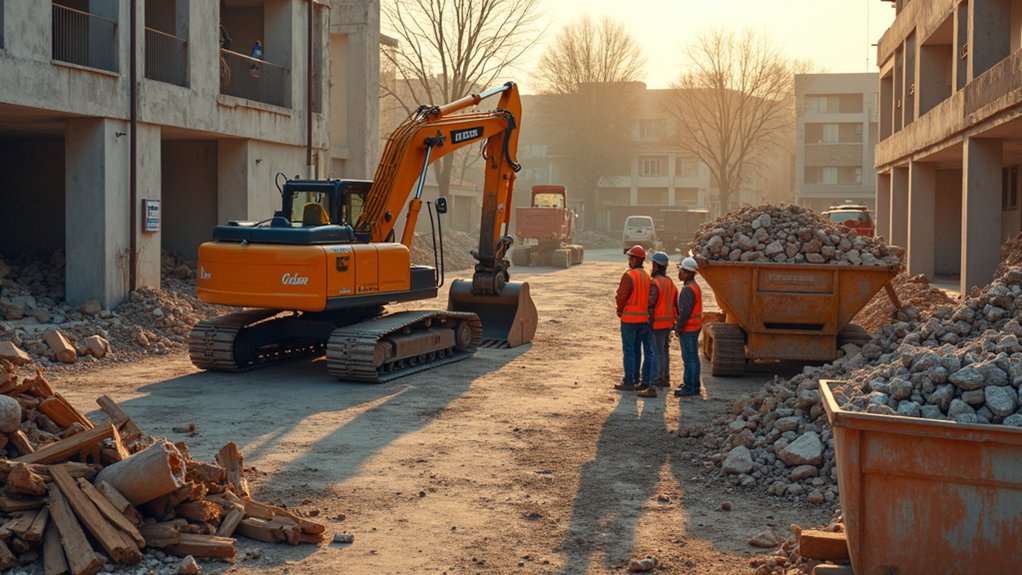
Before hiring plant, estimate the renovation waste by material type, volume, weight, and contamination risk. Record expected quantities for concrete, brick, timber, plasterboard, metals, insulation, and mixed residuals.
Identify hazardous materials, including asbestos, lead-painted debris, solvents, and treated timber, before work starts; arrange licensed assessment and disposal where required.
Check local waste regulations, duty-of-care documentation, and site environmental controls.
Set measurable targets for Material recycling, and keep recyclable streams separated from contaminated or mixed waste.
Map storage areas, access routes, loading limits, and collection points on your site plan.
Provide clear Safety signage showing waste categories, prohibited materials, required personal protective equipment, and emergency contacts.
Train everyone to prevent cross-contamination, protect drainage systems, control dust, and report unexpected materials before handling them.
Reassess estimates when demolition reveals concealed conditions.
Match Plant Hire to Each Waste Type
Choose plant according to the waste’s material, size, weight, and handling risks, not simply the available machine.
For inert rubble, concrete, and bricks, hire a tracked excavator with a breaker or hydraulic grab, then use a suitably rated dumper for heavy loads.
Select a wheeled loader for loose soil, timber, and general construction waste where firm access allows.
Use a telehandler only after confirming ground bearing capacity, load charts, attachment compatibility, and overhead clearance.
For plasterboard, insulation, and contaminated materials, choose enclosed, clearly labelled skips or sealed containers, following hazardous-waste controls where applicable.
Compactors suit clean, crushable residual waste, but don’t compact materials intended for Material recycling.
Accurate capacity matching prevents overloading, protects operators, and supports Waste reduction.
Check hire records, inspection requirements, and site-specific environmental conditions before delivery.
Sort and Move Renovation Waste Safely
Sort renovation waste at the point of generation, keeping inert rubble, timber, metals, plasterboard, insulation, and hazardous materials in separate, clearly labelled containers.
Don’t mix asbestos, contaminated soil, solvents, or treated materials with general waste; follow your jurisdiction’s controlled-waste requirements and use licensed handlers where required.
Plan routes before moving loads, maintain clear access, and keep pedestrians outside plant operating zones.
Use suitable skips, stillages, or bins with secure covers, and never exceed their rated capacity.
Your Site safety controls should include trained operators, banksmen, dust suppression, and inspections of ramps and lifting attachments.
When using a mini excavator or telehandler, travel slowly, keep loads low, and avoid unstable ground.
Apply documented Recycling procedures, checking consignment notes and contamination levels before dispatch to authorised facilities.
Book Disposal and Complete Site Clearance
Once waste is separated and safely moved, book collections with licensed disposal contractors that accept each material type and can provide the required consignment documentation. Confirm collection dates, vehicle access, load limits, and site contact details before work starts.
Describe hazardous materials accurately, including asbestos, contaminated soil, solvents, or treated timber, and never mix them with general rubble. Keep waste transfer notes, weighbridge tickets, and hazardous-waste consignment notes for your records.
Before releasing hired plant, inspect skips, loading areas, and temporary storage zones for loose debris, protruding materials, and spills. Follow safety protocols when operators remove containers, maintaining exclusion zones and clear communication.
Sweep access routes, check drains and boundaries, and repair ground damage. A final audit confirms nothing remains and helps minimise environmental impact, enforcement risk, and future cleanup costs.
Conclusion
Manage waste removal as carefully as the renovation itself: estimate materials, segregate hazardous and recyclable loads, and hire plant suited to each task. Keep routes clear, operators trained, and movements controlled, because the smallest overlooked fragment can create the largest compliance problem. Book licensed contractors, retain transfer notes, and inspect the site after collection. When your “finished” project contains hidden rubble, it isn’t finished at all—so leave the site cleaner than you found it, safely, legally, and ready for use.