

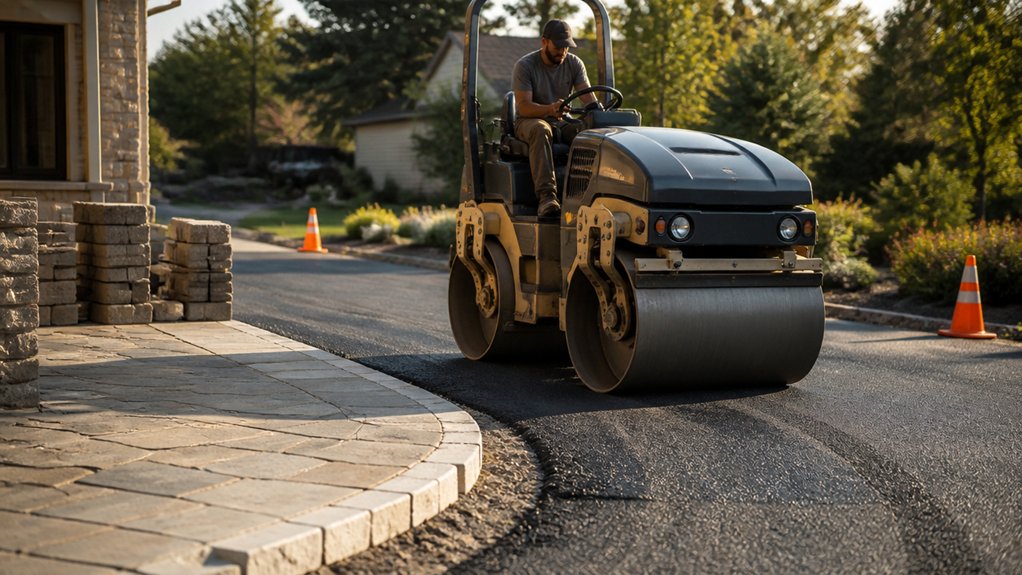
Around 90% of a roller’s effectiveness depends on matching its weight, vibration and drum type to the material beneath it. When you hire rollers for driveway or patio work, you’ll need to assess whether you’re compacting asphalt, granular sub-base or cohesive soil, then account for access, layer thickness and edge safety. Compare tandem, vibratory and padfoot options, while budgeting for delivery, operation and site constraints—because the wrong choice can undermine the finished surface before you spot the problem.
Match Roller Type to Your Surface
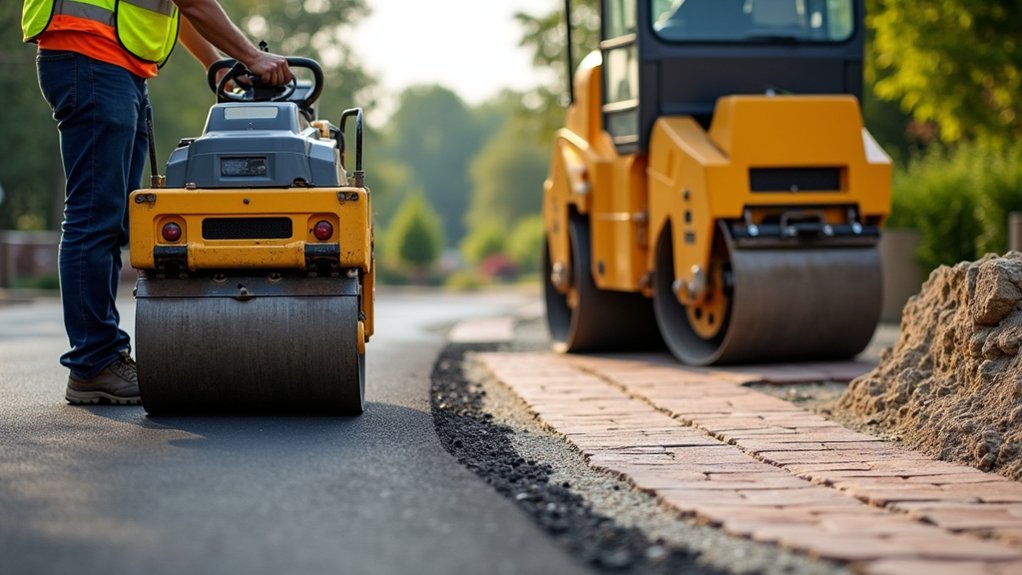
Choose a roller according to the surface and material you’re compacting. For asphalt driveways, use a smooth tandem roller to create an even, sealed finish; select vibration carefully to avoid cracking or displacing hot material.
When compacting MOT Type 1 or other granular sub-base, a vibratory tandem roller delivers effective depth compaction.
Use a single-drum roller where access is restricted, but confirm its operating width suits your formation.
For block paving, avoid direct heavy vibration over laid blocks; compact the prepared bedding and use a plate compactor with a protective mat after jointing.
On cohesive clay or damp soil, a padfoot roller provides better kneading action than a smooth drum.
Good surface preparation improves results, while roller maintenance—especially checking drums, vibration controls and scrapers—protects your finish and keeps hire equipment reliable.
Compare Rollers for Driveway Hire
When comparing rollers for driveway hire, match the machine’s drum type, operating weight and working width to the material and site conditions. Choose a smooth drum for asphalt and granular sub-bases, while a vibratory or padfoot model suits cohesive soils during surface preparation.
Check centrifugal force, vibration frequency and amplitude, as these affect compaction depth and the risk of disturbing edges, kerbs or nearby structures.
Compare hire rates alongside fuel use, delivery, insurance and operator requirements. Ask the supplier whether the roller has current LOLER-related documentation where applicable, inspection records and emergency-stop controls.
Confirm access, gradients and ground bearing capacity before booking, without selecting a machine solely on price.
Review roller maintenance arrangements, including servicing, cleaning and defect reporting, so downtime doesn’t delay your programme or compromise the finished driveway.
Choose Roller Size for Access and Area
Match the roller’s size to the site’s access constraints and the area requiring compaction. Measure gateways, side passages and turning space before selecting equipment.
For a narrow driveway or rear patio, choose a compact pedestrian roller that can pass through restricted access and manoeuvre beside walls. Larger driveways may accommodate a tandem roller, giving you wider drum coverage and fewer passes.
Consider ground conditions and layer thickness when evaluating Roller weight. Heavier machines deliver greater compaction, but excessive loading can damage kerbs, drainage runs or weaker sub-bases.
Confirm the hire roller’s operating width suits the formation, leaving enough clearance for safe edge work. Use vibration only where the specification and surrounding structures allow it.
Correct sizing helps you achieve even density, reliable Surface durability and a finished surface without inaccessible, under-compacted margins.
Budget for Hire, Delivery, and Operation
Budget the full roller hire cost, not just the advertised daily rate. Include VAT, delivery and collection, minimum hire periods, insurance, cleaning, and any damage waiver. Compare quotations on the same basis, because a low daily price may conceal transport charges or weekend fees.
Confirm whether the supplier delivers to your site entrance or the working area, and check access for a rigid lorry.
Factor in fuel, water, operator time, and standby costs. If you’re hiring a diesel roller, allow for fuel usage and refuelling arrangements; electric models may reduce running costs but need a suitable supply.
Your cost considerations should also cover ground protection, permits, and potential rework from inadequate compaction.
Plan safety precautions into the budget: include operator training, PPE, banksman support, and servicing. Book delivery to match your programme, avoiding expensive idle days.
Conclusion
Choose the roller to suit your material, layer thickness, and access—not simply the lowest hire rate. For example, if you’re compacting a narrow asphalt driveway in a UK terrace, a small smooth tandem vibratory roller may deliver better coverage and edge control than a larger machine. Confirm delivery access, operator competence, ground conditions, and safety requirements before work starts. By budgeting for transport and downtime, you’ll achieve consistent compaction and a durable, even finish.