

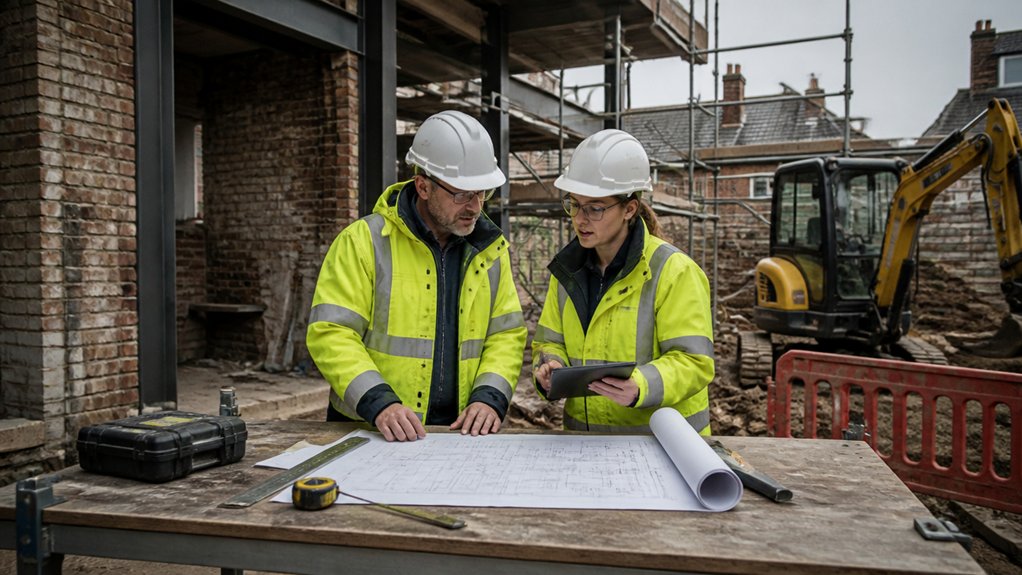
Planning a structural renovation with UK plant hire services starts with defining each task, from excavation and demolition to lifting and ground preparation. You’ll need to assess access, ground conditions, overhead services and utility risks before selecting machinery and attachments. Compare hire terms, operator requirements, delivery times and removal arrangements with reputable suppliers. The right sequence can control costs and downtime, but one overlooked site constraint may disrupt the entire programme.
List Your Renovation Tasks and Plant Needs

Start by listing every structural renovation task, from breaking out concrete and excavating footings to lifting steelwork, removing spoil and preparing access routes.
Break each task into sequence, duration and required output.
Then match equipment to the work: choose breakers or excavators for demolition, mini diggers for restricted excavation, dumpers for spoil movement, telehandlers or cranes for steel, and tracked access platforms where height demands them.
Record operating weights, attachments, lifting capacities and fuel requirements, so your schedule reflects genuine production rates.
Include delivery, collection, operator requirements and standby time in your Budget planning.
Share the task list with each trade to improve contractor coordination and prevent plant clashes.
Group compatible machinery into hire periods, but retain flexibility for structural discoveries and programme changes.
This approach gives you a practical plant schedule before booking.
Check Your Site Before Hiring Plant
Before hiring plant, assess your ground conditions to confirm the site can support its weight safely.
Check access routes, including gateways, gradients and overhead clearances, to guarantee delivery and operation are practical.
You’ll also need to identify utility hazards and confirm underground services before excavation.
Assess Ground Conditions
Assess the ground before hiring plant, as soil strength, drainage, gradients and access conditions will determine which machines can operate safely and whether temporary works are needed. Arrange a competent inspection and record made ground, clay, peat, rock, soft spots and signs of previous excavation.
Check bearing capacity against the proposed excavator, crane or telehandler’s weight, load distribution and working radius.
Consider seasonal changes: prolonged rain can reduce soil stability and create unsafe standing areas.
Identify surface water, groundwater and nearby drainage runs before digging, then specify suitable drainage solutions, such as pumps, channels or settlement tanks.
Your temporary works designer may recommend steel road plates, bog mats, stone platforms or piling to spread loads.
Obtain utility and ground investigation information, and document controls in your construction phase plan.
Reassess conditions after heavy rain or unexpected excavation findings.
Check Site Access
Confirm that your site can accommodate the planned plant before booking delivery, including the approach roads, entrance width, headroom, turning space and ground conditions.
Measure gates, alleys and restricted routes, then compare these dimensions with the machine’s transport and operating requirements.
Check bridge weight limits, road gradients, delivery restrictions and any temporary traffic management needed for abnormal loads.
Arrange a banksman to guide reversing and tight manoeuvres, and agree where vehicles can unload without obstructing neighbours or emergency access.
Improve weak surfaces with suitable stone or mats, particularly during wet weather, and confirm that ramps can support tracked or wheeled equipment.
Review Site security by planning fencing, lighting and controlled access.
Consider environmental considerations, including noise, dust, mud and potential damage to verges or public highways.
Identify Utility Hazards
Map all underground and overhead services before plant arrives, using utility plans, a CAT and Genny survey, and safe-dig procedures where required. Treat utility mapping as essential hazard identification, not a paperwork exercise. Ask the relevant utility owners to confirm records, because drawings may be incomplete or inaccurate.
Mark cable, gas, water, drainage and telecom routes clearly on site, then brief every operator and groundworker.
Keep excavators, cranes, dumpers and telehandlers outside exclusion zones around overhead lines. Follow HSE guidance GS6, use goalposts and warning signage, and nominate a trained banksman.
Before digging, obtain permits, hand-dig trial holes and maintain safe distances from identified services. Tell your plant hire company about restricted areas and ground conditions, so it can recommend suitable machines and attachments.
Stop work immediately if you uncover an unknown service, damage a line or detect gas.
Match Machinery to Each Structural Task
Assess each structural task by its load, access, ground conditions and required working height.
You’ll then select suitable UK-hire machinery, such as excavators, telehandlers, access platforms or lifting equipment, for safe, efficient operation.
Confirm the machine’s capacity, attachments and operator requirements before booking.
Assess Task Requirements
Before arranging UK plant hire, break the renovation into specific structural tasks—such as excavation, foundation work, demolition, lifting, and concrete placement—and identify the machinery each one requires.
Define the scope, sequence, and working conditions for every activity. Record excavation depths, ground conditions, access widths, load weights, lift heights, working radii, and concrete volumes.
Check whether restricted urban access, overhead services, soft ground, or nearby properties will affect operations.
Assess material handling routes, loading areas, spoil storage, and delivery constraints, then confirm the required working time and output.
Review drawings and structural engineer’s notes to establish tolerances and temporary works.
Include competent operators, inspection requirements, and site-specific safety protocols in your assessment.
This information gives you an accurate equipment brief before comparing available hire options, attachments, and capacities.
Select Suitable Machinery
Choose machinery by matching each structural task to its required capacity, reach, access, and ground-pressure limits.
For breaking concrete, consider an excavator with a hydraulic breaker.
For controlled lifting, specify a telehandler or mobile crane with suitable load charts.
Use compact excavators, tracked dumpers, or spider lifts where narrow access, restricted headroom, or fragile slabs limit options.
Check dimensions, attachments, emissions requirements, and noise restrictions before requesting quotations from a UK plant hire company.
Confirm the machine suits site gradients, ground conditions, and temporary works designs.
Don’t select solely on hire price: review delivery, fuel arrangements, insurance, and breakdown cover.
Verify machine maintenance records and inspection certificates.
Arrange competent operator training, CPCS or NPORS evidence where applicable, and provide task-specific briefings before work starts.
Reserve backup equipment for critical operations.
Compare UK Plant Hire Costs and Suppliers
Compare at least three UK plant hire suppliers using the full cost of each machine, not just the advertised daily rate. Request itemised quotations covering weekly or monthly hire, VAT, refundable deposits, insurance waivers, fuel, cleaning, and any environmental or damage charges.
Check whether the price includes attachments, such as breakers, buckets, or lifting accessories, because these can *considerably* change your budget.
Review each supplier’s Equipment maintenance records and inspection process; well-maintained excavators and telehandlers reduce disruption and unexpected repair liability.
Read the rental agreement carefully, especially clauses covering breakdown response, excess hours, ground damage, theft, and early termination.
Compare like-for-like specifications, including operating weight, reach, capacity, and emissions category.
Choose the supplier offering transparent terms, suitable availability, and dependable technical support rather than simply accepting the lowest headline price.
Arrange Delivery, Operators and Safe Use
Once you’ve selected a supplier, arrange delivery, operators and site controls around the machine’s specification and your renovation programme. Confirm access dimensions, ground-bearing capacity, delivery times, unloading space and any required traffic management with your hire company.
Check whether you need a competent operator, banksman or appointed person, particularly for lifting equipment or excavators working near structures and services. Verify Operator training, CPCS or NPORS certification, and site induction records before work starts.
Establish Safety protocols through your construction phase plan, including exclusion zones, emergency procedures, daily inspections and defect reporting.
Provide suitable PPE and ensure operators understand the manufacturer’s instructions, stability limits and attachment controls.
Your site supervisor should coordinate movements, protect neighbours and keep plant away from overhead lines, underground services and unsupported excavations.
Plan Plant Removal Around Project Milestones
Tie plant removal to clear project milestones rather than leaving equipment on hire until the end of the renovation. Review your programme with the plant-hire company and set collection dates after excavation, lifting, breaking, or access works finish. Allow time for inspections, cleaning, refuelling, and any required defect reporting before the machine leaves site.
Confirm that replacement access arrangements, such as scaffolding or smaller equipment, are ready before removing essential plant. You’ll avoid delays while reducing standing hire charges. Coordinate collections around deliveries, concrete pours, and traffic-management restrictions, particularly on constrained UK sites.
Keep exclusion zones in place during loading, and use competent operators and banksmen to protect Site safety. Check waste, fuel, and hydraulic-fluid handling to minimise Environmental impact. Record off-hire confirmation, meter readings, damage checks, and transport details for your project file.
Conclusion
A structural renovation is a journey across changing ground. You’ll reach the far bank safely by listing each task, inspecting hazards and access, and matching every operation with suitable UK-hired plant and attachments. Compare suppliers, costs, operators and delivery terms before work begins. Set clear exclusion zones, utility controls and communication procedures, then schedule collection with each milestone. If you plan the route carefully, your machinery won’t become an obstacle—it’ll carry the project efficiently, safely and responsibly home.