

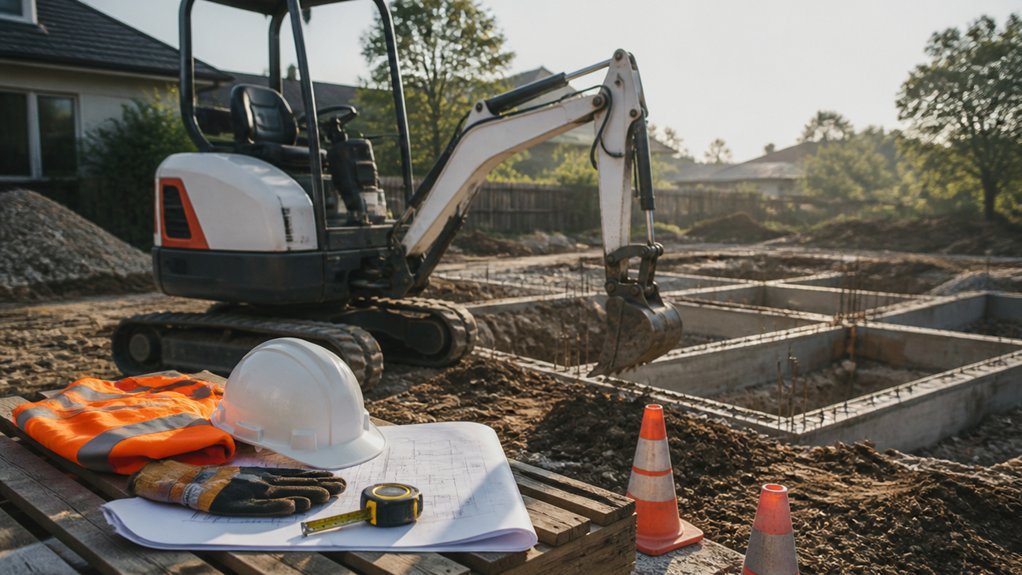
Hiring a mini digger for a small building job requires more than choosing the lowest daily rate. You’ll need to match the machine and attachments to your excavation requirements, confirm safe access and ground conditions, and check clearance around buildings and services. Then compare hire terms, delivery costs, insurance, and operator requirements. Overlooking one detail can cause delays, damage, or safety issues, so use this checklist before booking.
Choose the Right Mini Digger Size and Attachments
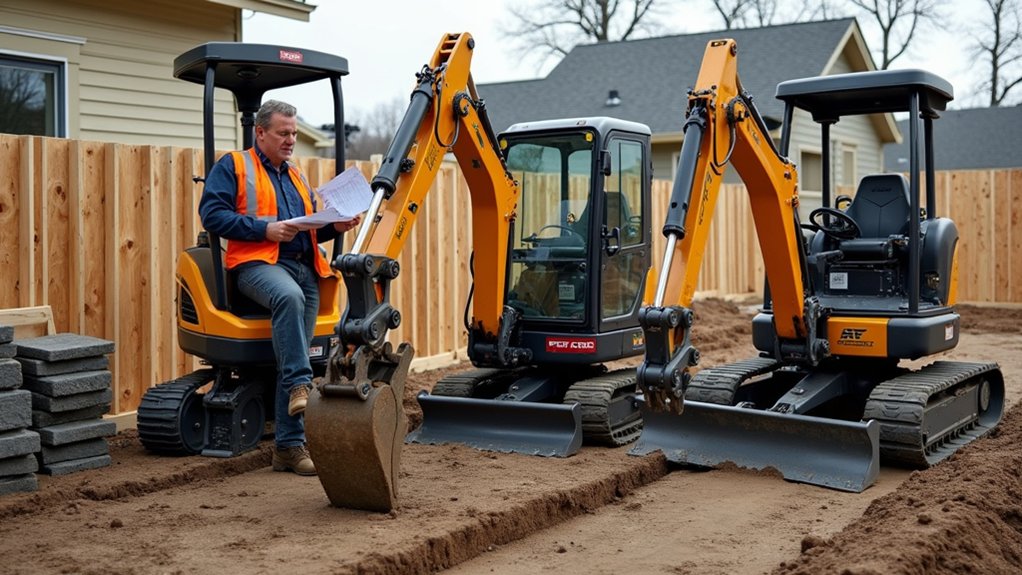
Choosing the right mini digger starts with matching its operating weight, digging depth, and lifting capacity to your site’s requirements. Assess the volume and type of excavation before selecting a machine.
Mini digger capacity should cover your required bucket load, maximum dig depth, and safe lifting duties without pushing the equipment’s limits.
For trenching, choose a narrow bucket that matches the specified width; for foundations or bulk removal, a wider bucket improves productivity.
Review attachment versatility if you’ll complete several tasks. Hydraulic breakers handle concrete, augers drill post holes, and grading buckets level surfaces.
Confirm the hire machine supports each attachment’s weight, flow rate, and connection type.
Select suitable controls and adjustable tracks where available, then verify the operator’s manual for rated performance and safe attachment changes.
Check Site Access, Ground Conditions, and Clearance
Before booking a mini digger, measure the access route, work area, and overhead clearance against the machine’s dimensions, including its width, tail swing, boom height, and transport height. Check gates, doorways, corners, slopes, and turning points, allowing extra space for safe manoeuvring.
Identify low branches, cables, balconies, and fragile structures before moving the machine onsite.
Assess ground conditions, including soil stability, gradients, standing water, buried services, and load-bearing capacity. Soft or uneven ground can cause tracks to sink or the excavator to overturn. Use suitable track mats or temporary access routes where necessary, and confirm service locations before digging.
Plan spoil storage so it won’t overload edges or obstruct escape routes. Good site safety planning protects workers, property, and the public while reducing environmental impact from rutting, compaction, spills, and unnecessary disturbance.
Compare Mini Digger Hire Prices and Terms
Compare the full hire cost, not just the advertised daily rate, by checking the hire period, delivery and collection charges, fuel requirements, VAT, insurance, damage waiver, attachments, and cleaning fees.
Ask whether rates change for weekends, extensions, or late returns, and confirm the minimum chargeable period.
Read the Rental agreements carefully before signing. Check payment deadlines, cancellation terms, security deposits, responsibility for breakdowns, and any hourly meter limits.
Confirm the quoted excavator specification matches your work, including operating weight, digging depth, bucket size, and included attachments.
Don’t assume Equipment warranties transfer responsibility for misuse, unauthorised repairs, or consumables.
Request a written, itemised quotation and compare suppliers on total cost, contract flexibility, machine suitability, and support terms.
Clarify how the hire company calculates additional hours and records machine usage.
Check Delivery, Insurance, and Operator Requirements
Once you’ve confirmed the total hire cost and contract terms, check how the mini digger will reach your site and who may operate it. Confirm the delivery vehicle’s access requirements, arrival window, and unloading procedure. Measure gateways, verify ground conditions, and remove obstacles before transport arrives.
Ask whether delivery and collection fees include waiting time, fuel, or repositioning charges.
Review the supplier’s Insurance policies carefully. Check whether they cover theft, accidental damage, public liability, and damage to underground services. You may need separate cover for site risks or excess payments. Confirm your responsibilities in writing.
Finally, establish who can operate the machine legally and safely. Check required Operator certifications, experience, and site induction arrangements. If you’re hiring an operator, verify their qualifications and insurance. Never allow untrained workers to use the digger.
Conclusion
Hiring a mini digger doesn’t have to become a costly headache. Choose the correct machine and attachments, confirm access and ground conditions, and compare transparent hire terms. Before work begins, verify delivery arrangements, insurance, operator competence, and site induction requirements. With these checks in place, you’ll diminish avoidable surprises, protect your team, and keep your project moving smoothly. A little preparation now helps guarantee your small building job reaches completion safely, efficiently, and without unnecessary “adventures.”