

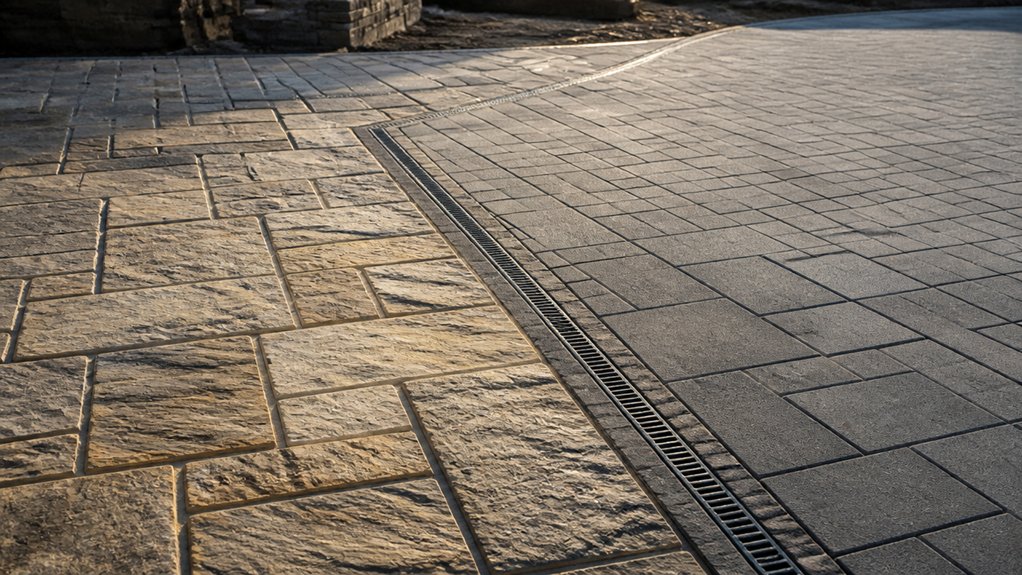
When you’re choosing between York stone and concrete paving, you’ll need to balance appearance, performance, cost and installation demands. York stone gives heritage schemes a natural, varied finish, but its weight, irregular sizes and higher price require careful planning. Concrete offers consistent dimensions, simpler handling and dependable value for busy areas. Your choice will also affect sub-base design, drainage and long-term maintenance—so the right material depends on the project’s priorities.
York Stone and Concrete: Key Differences
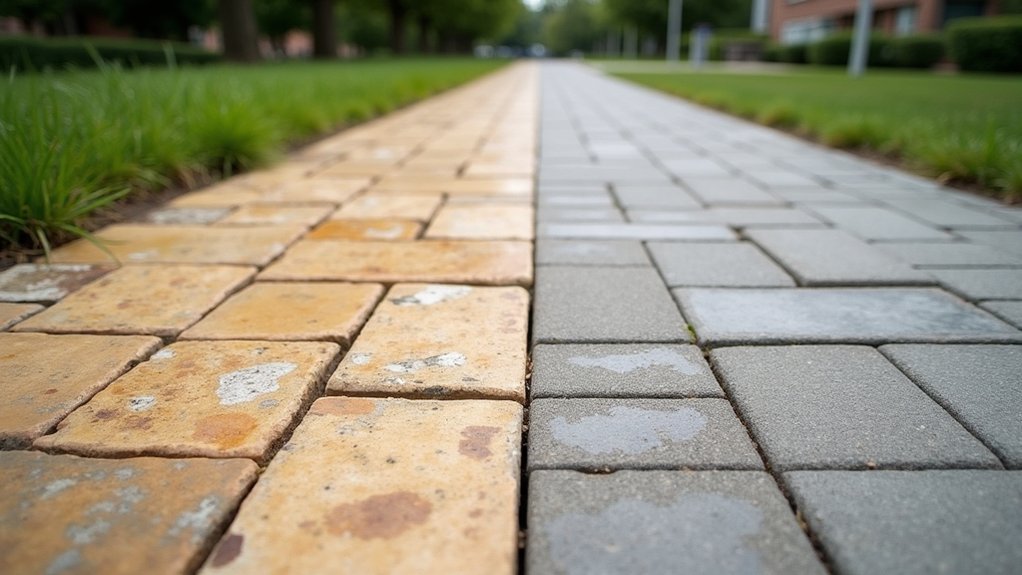
York stone is a natural sandstone, so each slab has unique colouring, texture and mineral variation.
Whereas concrete paving is manufactured from a controlled cement-based mix and offers more uniform dimensions and finishes.
For you as a contractor, this means York stone needs careful selection, setting out and installation to manage variation, while concrete delivers predictable joint lines and easier batching.
York stone’s weathered appearance can strengthen Historical authenticity, particularly on listed properties, conservation areas and traditional Yorkshire schemes.
Concrete can reproduce contemporary or heritage effects through moulds, pigments and surface treatments, but its finish remains manufactured.
Consider Environmental impact too: York stone may involve local sourcing and minimal processing, although transport and quarrying still matter.
Concrete manufacture generally has higher embodied carbon, while both materials require suitable sub-bases, drainage falls and compliant installation for UK conditions.
Compare York Stone and Concrete Costs
Beyond appearance and installation characteristics, cost will often determine which paving system suits your project. York stone usually commands a higher purchase price because each slab offers natural variation, historical authenticity, and limited quarry availability. You’ll also need to allow for potentially greater wastage when selecting pieces to achieve a consistent layout.
Concrete paving generally costs less per square metre, with predictable manufacturing and widespread UK supply keeping budgets controlled. However, compare more than the initial invoice. Assess expected lifespan, replacement availability, cleaning requirements, and the finish’s resistance to staining and weathering.
York stone’s material durability can support strong whole-life value, particularly on prestigious or heritage-sensitive schemes. Concrete may provide the lower upfront cost, but quality varies, so check specifications, guarantees, and colour-retention performance before you finalise your quotation.
Compare Installation, Handling, and Drainage
Installation and handling requirements differ markedly between the two materials. You’ll usually cut and lay concrete paving more predictably because manufactured units follow consistent dimensions and thicknesses.
York stone varies naturally, so you’ll need to sort pieces, check calibrated or uncalibrated thicknesses, and adjust bedding levels carefully. Use mechanical assistance for heavier flags, and protect edges during lifting to prevent damage.
Good sub-base preparation matters for both: compact MOT Type 1 thoroughly and provide a stable, well-drained laying course.
Concrete often suits permeable paving systems, allowing compliant rainwater infiltration where designed correctly.
York stone can drain effectively over permeable bedding, but tight joints and impermeable bases can channel water towards buildings.
Maintain falls, install drainage channels where required, and confirm compliance with UK SuDS guidance.
Sealants may affect surface durability and aesthetic appeal, so follow manufacturer instructions.
Choose Paving by Project Type and Client Needs
Choose the paving material according to the project’s use, setting and maintenance requirements. For driveways and high-traffic forecourts, specify concrete where clients need consistent dimensions, strong load performance and predictable costs.
Use York stone for patios, courtyards and heritage settings when natural variation and aesthetic appeal matter more than uniformity. Assess access, sub-base conditions and local weather before finalising the specification.
York stone can suit conservation areas, but confirm planning requirements and source matching slabs for extensions. Concrete offers broad finishes, including permeable systems that can support sustainable drainage and reduce environmental impact.
Discuss sealing, cleaning and future repairs with your client: stone may need careful stain management, while concrete can show cracking or colour variation.
Match the product to the budget, design brief and expected lifespan, then document your recommendation clearly.
Conclusion
Choosing between York stone and concrete paving comes down to matching material character with project demands. York stone brings heritage appeal and a weathered story, but you’ll need to allow for variable sizes, heavier handling and higher costs. Concrete gives you a reliable, economical workhorse for busy sites and faster installation. Whichever route you take, specify a suitable sub-base, falls and drainage. Get those fundamentals right, and your paving will stand firm through the UK’s changing weather.