

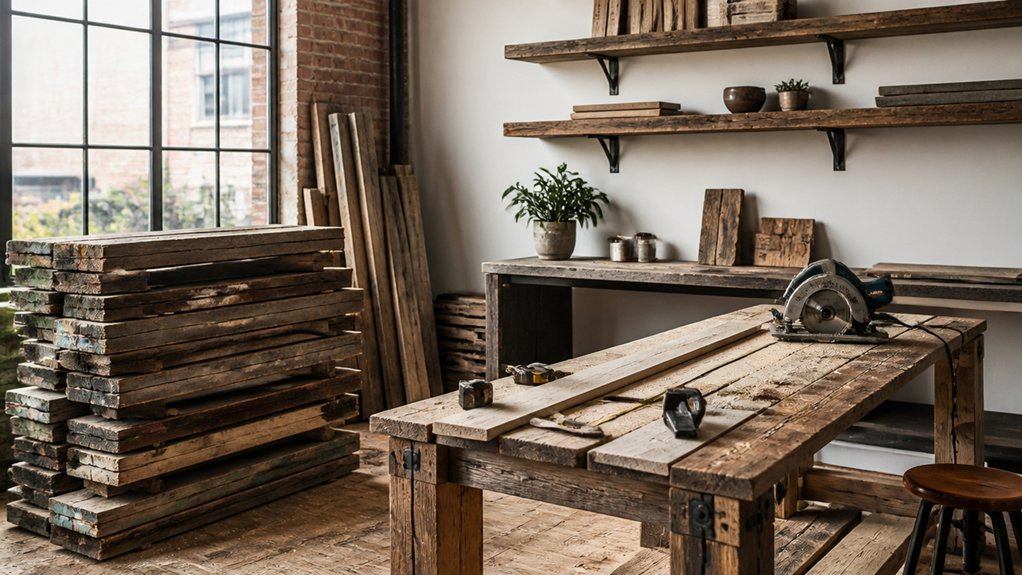
Reclaimed scaffold boards aren’t automatically unsafe, but you must verify their history, condition, and suitability before reuse. Source them from reputable suppliers, inspect for splits, warping, fastener damage, and contamination, then clean them with a non-metallic brush. Match each board to the project and applicable load requirements, especially for structural work. A breathable, low-VOC finish can protect exposed timber without masking defects—but the safest reuse decisions begin with checks that many projects overlook.
Source Safe Reclaimed Scaffold Boards
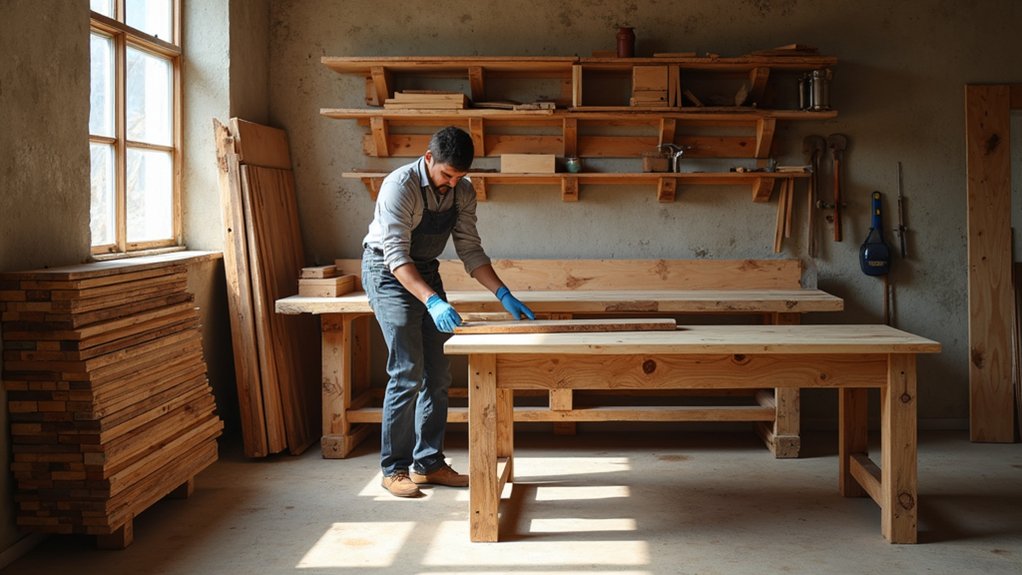
Source reclaimed scaffold boards from reputable suppliers who can document their previous use, inspection history, timber treatment, and storage conditions. Ask for species, dimensions, grading information, and any declarations relevant to your project’s structural or fire requirements.
Confirm that the boards originated from legitimate construction operations, not unknown demolition waste, and request invoices or chain-of-custody records where available.
For load-bearing applications, obtain professional advice and verify compliance with applicable building regulations and workplace-safety standards; reclaimed boards may not retain certification for structural use.
Choose suppliers who separate boards by intended application and disclose previous coatings, preservatives, and adhesives.
You’ll gain authentic Vintage aesthetics and Sustainability benefits by selecting traceable material, while reducing demand for new timber and diverting usable wood from disposal.
Keep supplier documentation with your project records.
Inspect Boards for Damage and Contamination
Once you’ve verified the supplier, inspect every board before transport or reuse. Check each face, edge, and end for splits, deep cracks, excessive knots, rot, insect damage, warping, burns, and crushed fibers. Reject boards with structural defects or dimensions outside your project’s specification.
Pay particular attention to damage around nail holes and bearing areas, where failure risk increases. Look for oil, chemicals, paint, cement, biological growth, and unknown residues. Don’t assume contamination removal will make a compromised board suitable for load-bearing work; isolate questionable stock and obtain competent advice.
Record findings through board labeling, noting dimensions, grade, defects, and intended use. Quarantine any board that could expose workers or occupants to hazardous substances. Follow applicable scaffold, workplace-safety, and waste-handling requirements, and document rejected materials before disposal or return to the supplier.
Clean and Prepare the Boards
Before cleaning, move accepted boards to a dry, well-ventilated work area and keep them segregated by grade and intended use.
Remove loose dirt, mortar, and rust with a stiff, non-metallic brush; use a scraper carefully to avoid gouging the timber. Don’t pressure-wash boards, because trapped moisture can encourage decay and distortion.
If regulations or the manufacturer require washing, use minimal water, allow complete drying, and document the process.
Avoid solvents, preservatives, or coatings unless you’ve confirmed compatibility and safe disposal requirements.
After cleaning, check faces, edges, and ends for exposed fasteners, splinters, raised grain, and remaining contamination.
Pull protruding nails only with controlled tools, then remove debris and dust.
Maintain the boards’ Historical significance where appropriate, while reducing Environmental impact through reuse and responsible waste handling.
Store prepared boards off the ground, covered, and ventilated.
Choose Projects and Build With Scaffold Boards
With the boards clean, dry, and graded, select projects that match their verified strength, dimensions, and condition. Use sound boards for shelving, benches, planters, partitions, and wall cladding, where loads remain modest and connections stay accessible.
Before cutting, confirm measurements, identify defects, and plan around knots, splits, and old nail holes. Don’t assume a reclaimed board meets current scaffold or building requirements; never use it for temporary works, platforms, stairs, or load-bearing framing unless a competent person verifies its capacity and local regulations permit it.
For Structural reinforcement, obtain an engineer’s design, specify suitable fixings, and provide adequate bearing and bracing.
In interior work, you can combine boards with steel or timber frames.
Apply Decorative finishes only after completing accurate cutting, safe assembly, and required inspections.
Seal and Maintain Reclaimed Scaffold Boards
After the boards have been cut and assembled, seal exposed faces and end grain with a product compatible with their intended environment, such as a breathable exterior timber finish or a low-VOC interior coating. Confirm the coating meets manufacturer instructions and relevant building, fire, and indoor-air-quality requirements.
Don’t seal damp timber: measure moisture content and allow adequate drying first. Apply thin, even coats, paying particular attention to joints, screw holes, and freshly cut edges. Recoat at the stated interval, or sooner if the finish chalks, cracks, or wears through.
Inspect regularly for movement, rot, insect damage, and raised fasteners; repair defects promptly and replace compromised boards. Use mechanical cleaning instead of harsh chemicals where practical to reduce environmental impact.
Retaining tool marks and patina can preserve each board’s historical significance without compromising safety or hygiene.
Conclusion
Reclaiming scaffold boards can give your project durable timber with genuine character, but safety must come first. Source traceable boards, inspect every length, remove contamination, and clean without damaging the grain. Match each board to its intended load and follow applicable building regulations—don’t assume age proves strength. Apply a breathable, low-VOC finish, then inspect and maintain the installation regularly. Measure twice, build once: careful preparation protects both your project and everyone who uses it.