

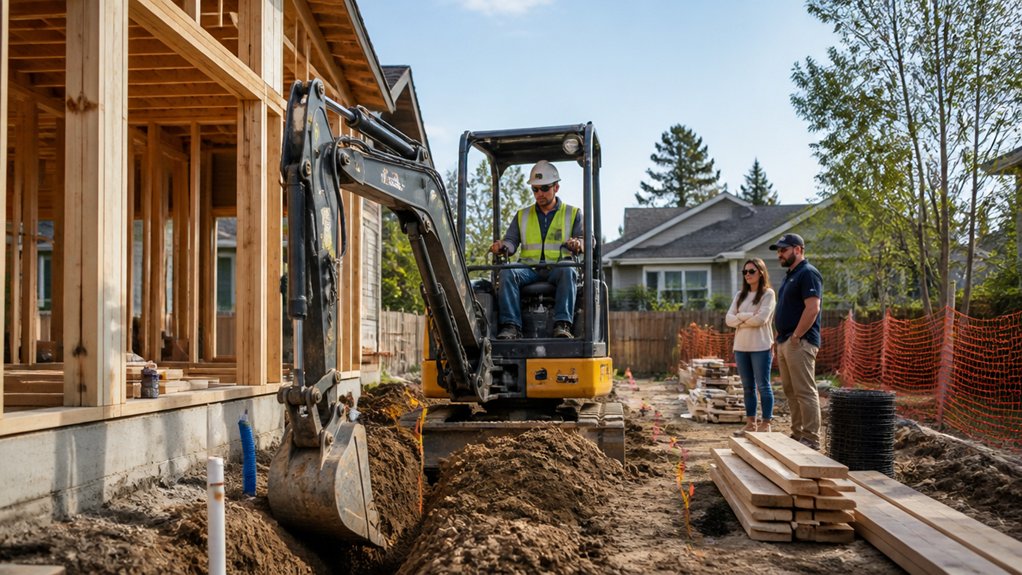
Choosing the wrong excavator can turn a straightforward domestic build into a costly, week-long headache. You need to match the machine to your ground conditions, working depth and site access before hiring. Check whether you need a mini excavator, specialist attachments or an experienced operator, then account for delivery, fuel and insurance. You’ll also need to confirm underground services, safe clearances and relevant UK site requirements—but that’s only the starting point.
Match the Excavator to Your Groundwork
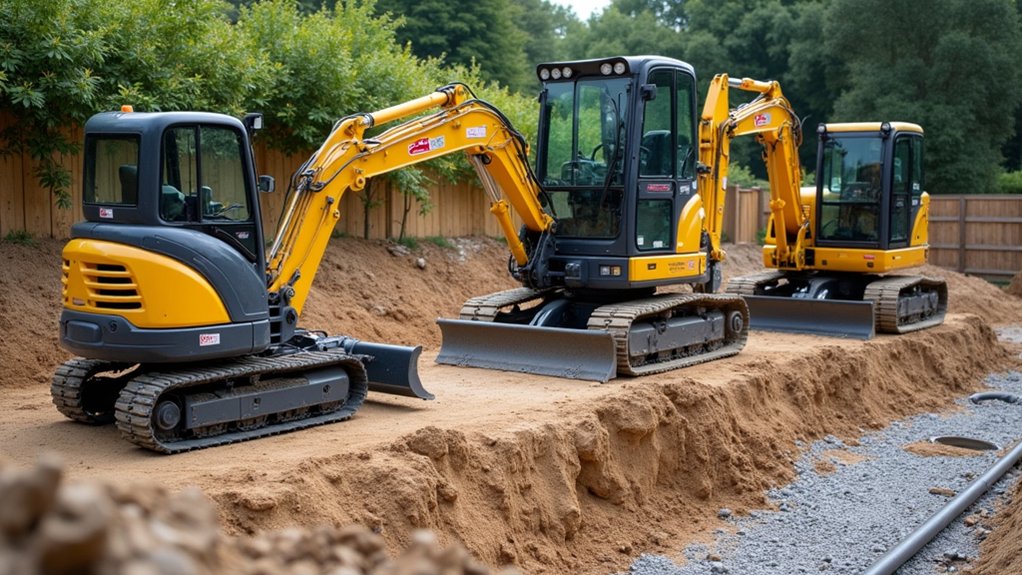
Before hiring an excavator, assess your site’s soil, access, working space and excavation depth so you can choose the right machine for the job.
Match the attachment and operating configuration to the groundwork: a bucket suits general digging, while a grading blade helps level formation layers. For clay, chalk or compacted made ground, confirm that the contractor has suitable teeth, breakers or other approved attachments.
Check ground-bearing pressure around foundations, retaining walls and buried services, and require a competent operator under the Health and Safety at Work etc. Act 1974 and CDM Regulations 2015.
In urban landscaping, protect paving, trees and neighbouring property with defined work zones and suitable ground protection.
Address environmental considerations by controlling dust, mud, noise, spoil, fuel storage and contaminated soil disposal.
Keep utility plans and permits on site.
Choose Excavator Size by Access and Depth
Once you’ve matched the attachment and operating setup to the ground conditions, select the excavator by its physical limits. Measure your narrowest gateway, track route and working clearance, allowing for mirrors, tail swing and temporary fencing.
A compact excavator may suit a terraced property, but check its maximum digging depth against the foundation, drainage or service trench design. Don’t assume advertised reach equals safe, productive depth; consult the load chart and keep the machine level.
Confirm ground bearing pressure where lawns, slabs or suspended structures could suffer damage. Check overhead cables and underground services, following HSE guidance and using safe-dig procedures before breaking ground.
Review rental contracts for delivery dimensions, damage liability, excess hours and insurance. Schedule Excavator maintenance checks, including daily fluid, track and safety-device inspections, throughout the hire.
Select Attachments for the Job
Choose attachments that match both the material and the excavator’s hydraulic flow, rather than assuming one bucket will cover every task. Use a standard digging bucket for soil, a trenching bucket for narrow services, and a grading bucket for shaping and finishing. A breaker suits concrete or hard ground, while an auger helps form consistent post holes.
Check Hydraulic versatility before hiring: some attachments need high flow, additional circuits, or a case drain. Confirm Attachment compatibility with the machine’s coupler, pin spacing, lifting capacity, and operating weight. Ask the hire company to verify hydraulic pressures and provide fitting instructions.
Keep guards and locking pins correctly installed, and inspect connections before work. Follow the manufacturer’s guidance and the Provision and Use of Work Equipment Regulations (PUWER) when selecting and using attachments.
Compare Self-Drive and Operated Hire Costs
When comparing self-drive and operated excavator hire, calculate the full cost of each option rather than relying on the daily machine rate. For self-drive hire, include delivery, collection, VAT, fuel, damage waiver or Rental insurance, and any attachment charges.
Check whether the quoted rate covers a competent, authorised driver; you’ll usually need suitable training and may need to demonstrate competence under the Health and Safety at Work etc. Act and PUWER requirements.
With operated hire, the rate normally includes the trained operator, but confirm minimum hours, overtime, cancellation terms, and fuel arrangements.
Compare Fuel efficiency alongside output: a larger excavator may complete work faster but consume more diesel.
Request written, like-for-like quotations, then weigh total cost against your confidence, available time, and the job’s technical complexity before booking.
Arrange Delivery, Access and Site Safety
Before booking, confirm that the excavator can reach the site and operate safely. Measure gateways, driveways and overhead clearances, then check the delivery vehicle’s access, turning space and ground bearing capacity.
Tell the hire company about slopes, soft ground, restricted roads and nearby structures. You may need a temporary road, track mats or a road-occupancy permit.
Plan delivery for a quiet period, keeping children, vehicles and pedestrians away from unloading. Mark underground services using utility plans and a cable avoidance tool; never dig until you’ve located and exposed services safely.
Maintain exclusion zones, stable spoil piles and safe distances from edges. Confirm the operator holds suitable operator training and understands the machine. Check inspection records, guarding and Equipment maintenance arrangements, and report defects immediately.
Follow the Construction (Design and Management) Regulations and your site risk assessment.
Conclusion
Choosing an excavator doesn’t need to be a gamble. Match its size, reach and attachments to your ground conditions, excavation depth and site access. Confirm delivery routes, underground services and exclusion zones before work starts, and check that operators meet UK competency and safety requirements. Compare the full hire cost, including transport, fuel and insurance, rather than the headline rate. With careful planning, your equipment choice becomes the foundation stone of a safe, efficient domestic project.