

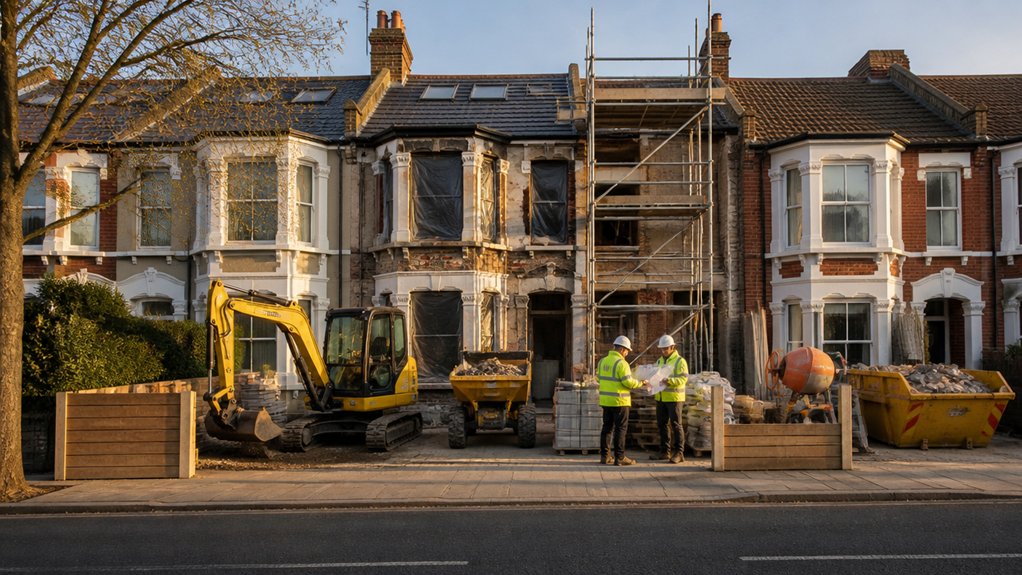
A full house renovation can feel like conducting an orchestra, with every machine and trade needing to work in time. You’ll need to assess the property, plan access, and match UK plant hire equipment to each stage, from excavators and dumpers to lifts and compactors. Check permits, ground conditions, operator requirements, and delivery routes before work starts. Get these details wrong, and delays can begin before the first wall comes down.
Assess Tasks, Access and Equipment Needs

Before hiring plant, list every renovation task and identify the equipment, working height, ground conditions and access each one requires.
Record whether you’ll need excavation, lifting, breaking, cutting or waste removal, then measure gateways, driveways, corridors and floor loading limits.
Check overhead cables, basements, soft ground, slopes and neighbouring properties before selecting machine dimensions.
Assess Material durability when planning storage, handling and protection for bricks, timber, tiles and machinery.
Confirm delivery routes, turning space and secure overnight parking with the hire company.
Review operator competence, insurance, noise restrictions and local council requirements.
Follow manufacturer instructions and relevant Safety guidelines, including exclusion zones, stability checks, personal protective equipment and emergency arrangements.
Photograph access points and note constraints, so your plant assessment remains accurate as the renovation progresses on site.
Choose UK Plant Hire Equipment by Phase
Plan your UK plant hire in phases, matching each machine to the work sequence rather than hiring everything at once. Start with a mini excavator for drainage, foundations and controlled ground reduction; choose a compact model where restricted working areas demand precision.
During structural work, hire telehandlers or forklifts for material handling, checking rated capacity, reach and attachments against your lifting plan.
For masonry and internal alterations, consider a tracked dumper, dust-controlled breaker or material lift, selecting electric equipment where practical to reduce noise and environmental impact.
Book access platforms only when roof, cladding or high-level services require them, and select the correct working height and platform type.
Finally, use floor sanders, mixers and compact loaders for finishing stages.
Set hire periods around programme milestones to avoid paying for idle machinery.
Prepare Your Site for Safe Machinery Access
Before delivery, you’ll need to clear access routes of vehicles, waste and overhead obstructions.
Check turning space, gradients and gate widths against your hired plant’s dimensions.
Protect drives, paving and soft ground with suitable trackway or ground-protection mats to prevent damage and rutting.
Clear Access Routes
Clear access routes help you move plant hire equipment safely around the property and prevent damage to walls, paving, vehicles and services.
Before delivery, measure gates, openings and turning areas against the telehandler, dumper or excavator’s dimensions. Remove bins, stored materials and parked cars, then agree a one-way route with the hire company and delivery driver.
Check overhead cables, low branches and restricted sightlines, and arrange a banksman where pedestrians, neighbours or traffic could conflict with machine movements.
Install sturdy safety barriers around the route and keep unauthorised people out.
Plan clear signage placement at entrances, crossing points and reversing zones, using visible warnings and directional instructions.
Confirm emergency access remains available, and tell everyone on site when equipment will arrive, operate and leave.
Review the route daily as the renovation progresses.
Protect Ground Surfaces
Once you’ve set the access route, protect the ground it crosses from plant loads, tracking and fuel or oil contamination. Assess soil type, drainage, slopes and the maximum machine weight before choosing ground protection. Use temporary trackway, bog mats or heavy-duty boards across lawns, paving and soft ground; interlock panels securely and extend them beyond turning areas.
Keep delivery vehicles on the strongest route, and don’t allow excavators or dumpers to slew on unprotected surfaces. Check that ramps meet the panels without sharp edges or trip points.
For surface safeguarding, install spill kits, drip trays and impermeable sheeting where you’ll refuel or service equipment. Inspect the route daily, especially after rain, and remove mud from public highways.
Ask your UK plant-hire supplier which system suits the site, then reinstate damaged ground promptly when the machinery leaves.
Coordinate Plant Hire Deliveries and Operators
Schedule plant deliveries around your renovation programme, confirming access times, off-loading space and the operator’s arrival with the hire company. Measure gateways, driveways and turning areas, then share these dimensions before transport leaves the depot.
Check whether the delivery vehicle needs a banksman, and keep neighbours informed if access affects the pavement or road. Prepare a firm, level unloading area, free from scaffolding, materials and overhead obstructions.
Confirm the machine’s specification, attachments, fuel requirements and operating hours with your site supervisor. Before work starts, verify the operator’s CPCS or NPORS competence where applicable, plus site-specific induction and operator training.
Apply your risk assessment, method statement and agreed Safety protocols, including exclusion zones, reversing controls and emergency contact arrangements. Record handover checks, defects and return instructions in your site log.
Keep Plant Hire Costs and Delays Under Control
Compare UK plant hire rates, including delivery, collection, fuel and operator charges, before choosing equipment.
Book machinery in advance to secure availability and align hire periods with your programme.
Prevent delays and costly extensions by confirming site access, ground conditions, permits and operator requirements early.
Compare Equipment Hire Rates
Before booking equipment, obtain itemised quotes from several UK plant-hire firms and check exactly what each rate includes. Compare daily, weekly, and weekend tariffs, then calculate the likely hire period from your programme.
Confirm whether VAT, delivery, collection, fuel, attachments, operator costs, cleaning, and damage waivers are included. A cheaper headline rate may cost more once transport and accessories appear separately.
Ask about minimum hire periods, overtime charges, cancellation terms, and extensions, especially if work overruns.
Check that each machine suits your ground conditions, access limits, and lifting requirements; incorrect specification can create costly delays.
Review equipment maintenance records and verify that safety protocols, LOLER inspections, and operator documentation are current.
Request written confirmation of rates and exclusions, then compare the total projected cost rather than the advertised daily figure alone.
Book Plant In Advance
Once you’ve confirmed the specification and total hire cost, reserve plant well ahead of the work date to secure availability and control your budget. Check your contractor’s programme, then set scheduling deadlines for delivery, collection, and any required attachments.
UK hire fleets can be heavily booked during spring and summer, so early confirmation gives you more choice of excavators, dumpers, access platforms, and compactors. Provide the depot with your site address, ground conditions, access restrictions, operating hours, and required hire period.
Ask for written confirmation covering transport charges, fuel policy, damage waiver, deposits, and VAT. Record booking references and payment dates in your renovation plan. This supports budget management by fixing expected costs and highlighting optional equipment you can remove before delivery if your scope changes.
Prevent Delays And Extensions
A confirmed booking only controls costs if the renovation stays on programme, so set daily targets for each machine and monitor progress against them.
Build float into the schedule for rain, restricted access and unexpected ground conditions.
Confirm delivery times, operator availability and collection arrangements with the hire company, and keep access routes clear before equipment arrives.
Plan Material storage close to the work area, but don’t obstruct driveways, scaffolding or emergency routes.
Check Permit requirements with your local council, especially for skips, highway occupation, temporary traffic controls and noisy work.
Inspect plant each morning, record defects and report them immediately; downtime can quickly extend hire charges.
Sequence trades around excavators, dumpers and mixers, preventing idle periods.
If progress slips, resequence tasks promptly and agree any extension with the supplier before the original off-hire date.
Finish Landscaping and Return Renovation Equipment
With the major construction work complete, reinstate levels, remove surplus spoil, and finish the garden using suitable tools such as a mini dumper, compactor, or tracked barrow. Compact sub-base beneath paths, patios, and driveways in suitable layers, checking falls to keep surface water away from the house.
Install garden features, fencing, planting beds, and outdoor lighting only after heavy plant has left the site, protecting cables and services during final groundworks. Sweep access routes, wash down hard surfaces, and remove remaining debris responsibly.
Before collection, inspect each machine for damage, clean mud from tracks and buckets, refuel as agreed, and record operating hours. Check attachments, keys, and safety documents, then photograph equipment condition.
Return everything by the hire deadline, reporting faults immediately to avoid extra charges or disputes.
Conclusion
By planning each renovation phase around suitable UK plant hire equipment, you’ll keep work moving safely and efficiently. Assess access, permits, ground conditions and operator requirements before booking excavators, dumpers or lifts. Coordinate deliveries with milestones, inspect machinery daily and control hire periods to avoid unnecessary costs. As landscaping finishes, arrange collection promptly, complete final checks and leave the site tidy. With careful sequencing, you’ll keep all the plates spinning and bring your full house renovation to completion with fewer delays.