


Cast-iron radiators were popular decades ago. More than 20% of UK homes were built before 1919, making period-sensitive heating decisions increasingly relevant during renovation. If you’re upgrading one of these properties, cast iron radiators can preserve architectural character while providing stable, long-lasting heat and compatibility with modern heating controls. Their repairability, heat output and suitability for conservation areas also deserve consideration, but installation costs, wall loading and system efficiency matter too. The right choice depends on more than appearance, as the following factors show.
Why Choose Cast-Iron Radiators for UK Homes?
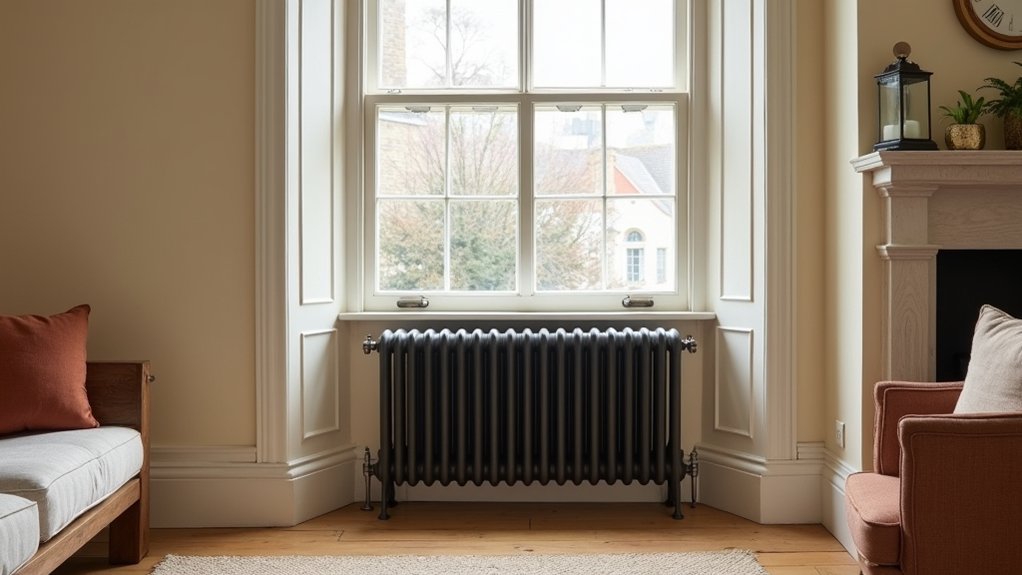
Cast-iron radiators suit UK homes because they combine high thermal mass with durable, repairable construction. You’ll gain a robust heating appliance that complements period properties while remaining credible in contemporary refurbishments.
Their Historical charm can support a conservation-led design, but you should verify listed-building requirements and consult your local authority before altering original fittings.
Cast sections tolerate repeated repainting, and replacement valves, vents, and seals remain widely available.
For safe installation, have a competent heating professional check wall strength, pipework condition, system pressure, and compatibility with your boiler or heat pump.
Follow Building Regulations, particularly requirements for energy efficiency, controls, and commissioning.
Practical Maintenance tips include bleeding only when necessary, inspecting joints for leaks, and using suitable radiator paint.
You’ll also need adequate clearances around each radiator for safe operation.
How Cast-Iron Radiators Deliver Lasting Heat
Once heated, a cast-iron radiator stores substantial thermal energy in its dense sections and releases it gradually after the boiler or heat pump cycles off. You’ll experience steadier room temperatures, fewer rapid cycling demands, and useful warmth during short interruptions.
Its output depends on surface area, water temperature, radiator size, insulation, and room heat loss, so your installer should complete heat-loss calculations rather than rely on historical heating practices.
Pairing thermostatic radiator valves with weather compensation can improve control, provided the system remains balanced and complies with current UK efficiency and safety requirements.
You’ll need regular radiator maintenance: bleed trapped air, check valves and joints, remove surface corrosion, and keep surrounding furniture clear. Don’t use drying covers, which restrict convection.
During renovation, retain accessible isolation points and have work tested by a competent heating professional.
What Do Cast-Iron Radiators Cost to Install?
The installation cost depends on the radiator’s size, condition, connection layout, and the work needed to adapt existing pipework. You’ll typically pay more than for a lightweight steel panel radiator because cast iron requires careful handling, stronger brackets, and sometimes additional labour.
A like-for-like cost comparison should include valves, wall supports, delivery, removal, and system balancing—not just the radiator price.
Older properties can present installation challenges, including corroded pipework, non-standard centres, restricted access, or floors that need reinforcement.
Your heating engineer should check flow rates, pressure, and compatibility with the boiler or heat pump.
If you’re altering gas or heating services, use a suitably qualified professional and follow Building Regulations, including requirements for controls, efficiency, and safe discharge.
Obtain several itemised quotations before work starts, and allow for decorating or remedial repairs afterward.
Style Cast-Iron Radiators for Any Room
How do you choose a cast-iron radiator that suits both the room and the building? Start with the architectural language. Ornate column profiles and traditional finishes reinforce period interiors, while simpler, low-relief designs give modern kitchens, bedrooms, and extensions a cleaner presence.
Preserve Vintage charm with painted detailing, aged finishes, or reclaimed units, but introduce contemporary accents through bold colours, satin coatings, or contrasting pipework. Check that any coating is radiator-rated and compatible with operating temperatures.
In listed buildings or conservation areas, confirm whether alterations need consent before ordering. Your installer should also verify wall condition, fixing methods, valve compatibility, and pipe routes without disturbing protected fabric.
Coordinate the radiator with skirting, flooring, and furniture, keeping required clearances around controls and heat-emitting surfaces for safe, practical use.
Choose by Heat Output, Size and Style
Choose the radiator’s heat output from a room-by-room heat-loss calculation, not its visual size alone. Your installer should assess dimensions, insulation, glazing, ventilation, and the target indoor temperature, then specify output in watts. Check the manufacturer’s rating conditions, because cast iron responds more slowly than steel and may need larger sections or weather-compensating controls.
Measure available wall space, pipe centres, projection, and fixing requirements before ordering. You’ll avoid obstructing furniture, doors, or escape routes while maintaining service access. Match the radiator to your heating system’s flow temperature; lowering it can support Energy efficiency, but you may need additional surface area.
Confirm valves, brackets, and coatings suit the installation, and ask your installer to verify Building Regulations, especially after altering pipework or controls. Finally, choose a period profile, colour, and finish that deliver Vintage appeal without compromising performance.
Conclusion
Whether you’re restoring a Victorian terrace or updating a contemporary flat, cast-iron radiators can deliver dependable, long-lasting warmth with genuine character. Their thermal mass works like a slow-burning hearth, releasing heat after the boiler switches off. Before installation, confirm heat-loss calculations, radiator output, pipework capacity, and compliance with current UK Building Regulations. Choose suitable finishes, valves, and mounting arrangements, then have a qualified professional commission the system. You’ll gain comfort, durability, and period appeal without sacrificing practical performance
We suggest working with a specialist supplier of cast iron radiators, such as Radiator Outlet, who deliver across the UK.