


You may not realize that a site generator’s capacity must account for motor-starting surges, not just the combined running wattage of your tools. Contractors hire generators to maintain power when utility service is unavailable, undersized, or delayed, keeping crews productive without unsafe makeshift connections. The right unit supports lighting, temporary facilities, and equipment while reducing downtime, but incorrect sizing or placement can create overloads, fuel hazards, and exhaust exposure. Understanding rental costs, setup requirements, and delivery support helps you select a dependable solution.
Why Contractors Rent Site Generators
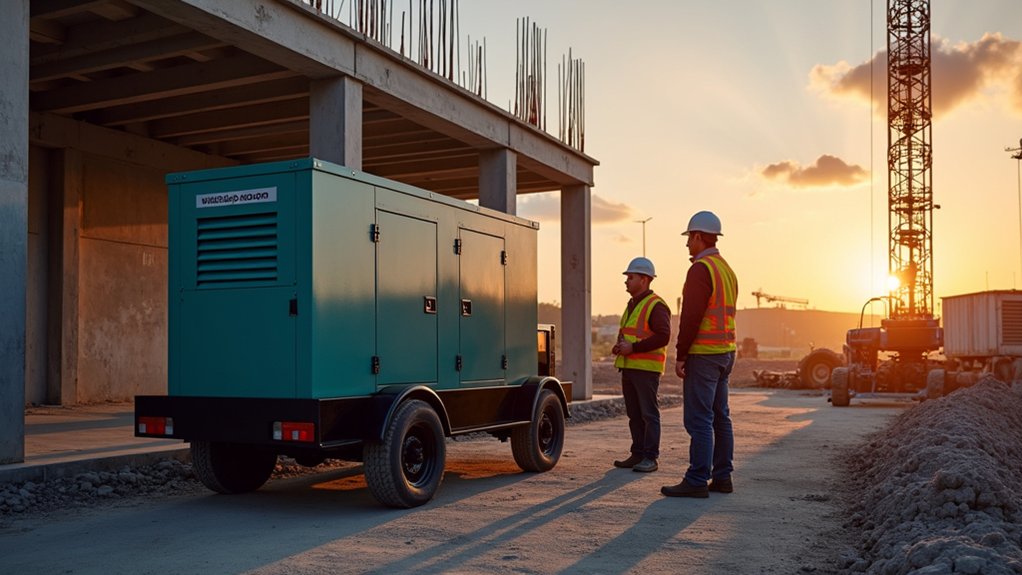
Contractors rent site generators to supply dependable electricity when utility power isn’t available, capacity is insufficient, or temporary service would delay the project. You can match generator output to calculated loads, including startup demands, without purchasing equipment that may sit idle after completion.
Rental providers also help you select appropriate fuel systems, distribution panels, grounding methods, and weather protection. Before operation, verify load connections, inspect cables, confirm ventilation, and establish emergency shutoff procedures.
Schedule equipment maintenance through the provider to support reliable performance and identify leaks, damaged guards, loose connections, or abnormal noise early. You’ll also reduce environmental impact by choosing efficient models, preventing fuel spills, controlling exhaust exposure, and returning equipment for professional servicing.
Confirm local requirements, maintain clearance from combustibles, and use qualified personnel for installation, testing, and monitoring.
Keep Tools and Crews Working Anywhere
With the right site generator and distribution setup, you can keep tools, lighting, pumps, and temporary offices operating wherever the project takes your crew. A dependable power source supports remote foundations, roadwork, emergency repairs, and sites without permanent utility service.
Properly routed cables, weather-resistant connections, and protected distribution panels help you extend power safely across changing work areas. You’ll also improve equipment mobility by positioning portable tools and task lighting near active work zones instead of running long, improvised cords.
Use ground-fault protection, secure cable ramps, and routine inspections to reduce shock, trip, and damage risks. Train every worker to recognize overloads, damaged leads, and unsafe connections.
When conditions change, your crew can relocate operations efficiently while maintaining controlled, compliant temporary power throughout the site.
Choose the Right Site Generator Size
Choosing the right site generator size starts with calculating your crew’s actual electrical demand. List every tool, light, pump, and temporary system you’ll operate simultaneously. Check each nameplate for running watts, then account for starting surges from motors, compressors, and saws. Add those loads and include a safety margin, typically 20% to 25%, so the generator won’t run continuously at its limit.
Select power capacity in kilowatts or kVA that meets both sustained and peak requirements. An undersized unit can overheat, trip breakers, damage equipment, and delay work. An oversized unit may waste fuel and operate inefficiently, reducing fuel efficiency.
Confirm voltage, phase, frequency, and connector compatibility before mobilization. Have a qualified electrician verify load calculations, grounding, distribution equipment, and transfer arrangements.
Monitor demand during operation and rebalance circuits as conditions change.
Compare Site Generator Rental Costs
How much a site generator rental costs depends on more than its advertised daily rate. Compare quotes by calculating the complete operating cost for your project. Ask whether the price covers the generator, required cables, fuel, maintenance, taxes, and overtime charges. A lower daily rate may become expensive if fuel consumption is high or the rental period includes minimum billing days.
Evaluate power output against your actual load. Oversizing wastes fuel, while undersizing can cause overloads, nuisance shutdowns, and equipment damage. Review load-bank testing, service intervals, and emergency support terms before signing. Check insurance requirements, damage waivers, deposits, and cancellation penalties as well.
Compare Rental options for daily, weekly, and monthly use. For longer schedules, negotiate a fixed rate and confirm fuel responsibility. Good Cost efficiency balances price, reliability, capacity, and predictable operating expenses.
Get Help With Delivery and Safe Setup
Before the generator arrives, confirm that the rental provider will handle delivery, positioning, connection, and commissioning.
Review delivery logistics, including access routes, clearance heights, ground conditions, lifting requirements, and arrival times.
You’ll need a stable, level location away from combustible materials, standing water, traffic, and building openings.
Ask qualified technicians to size and install cables, distribution equipment, grounding, and transfer switches for your load and site configuration.
Guarantee they inspect connections, fuel systems, exhaust routing, ventilation, and emergency shutoffs before energizing the unit.
Your crew should receive operating instructions, hazard information, and contact details for support.
Require documented safety protocols covering lockout procedures, refueling, weather protection, noise control, and daily inspections.
Don’t allow untrained workers to move, connect, or service the generator.
Confirm commissioning tests and obtain required permits before operation.
Conclusion
When you rent a site generator, you keep tools running, crews productive, and projects moving—even where utility power falls short. Choose capacity based on starting and running loads, compare rental costs, and confirm fuel, noise, and emissions requirements before delivery. Then rely on qualified technicians for placement, grounding, connections, and routine checks. By planning power carefully, operating equipment responsibly, and maintaining it consistently, you’ll reduce downtime, protect workers, and keep construction progressing safely in demanding conditions.