

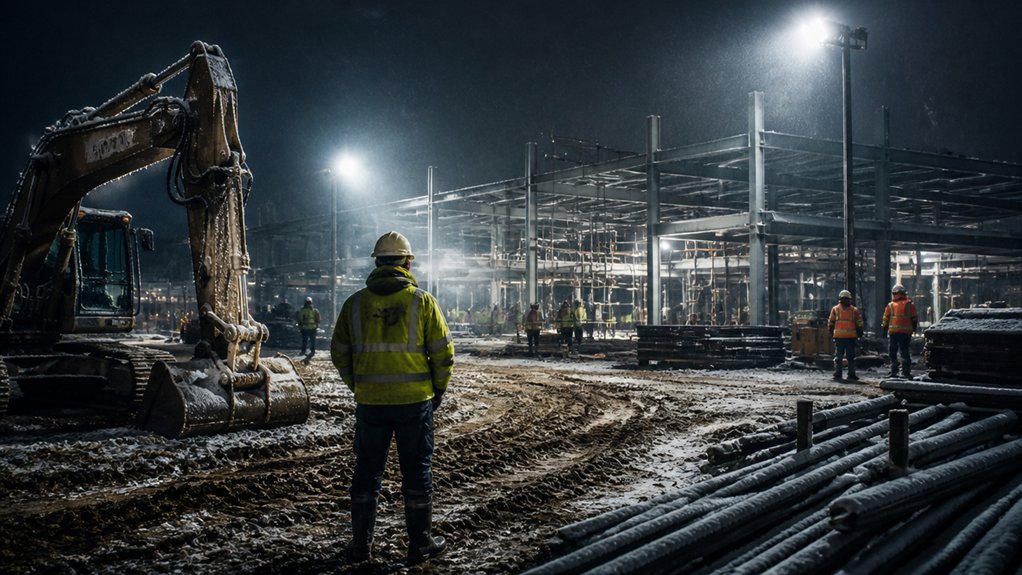
You don’t need to stop construction when daylight fades or winter weather arrives, but you do need a disciplined lighting plan. Start by evaluating your site’s coverage, hazards, access routes, and power needs. Then select weather-resistant tower lights, position them to limit shadows and glare, and secure them against wind and uneven ground. Daily inspections and maintenance keep equipment reliable in freezing conditions. The right setup improves visibility and compliance, but small planning errors can still create serious risks.
Assess Your Site’s Lighting Needs
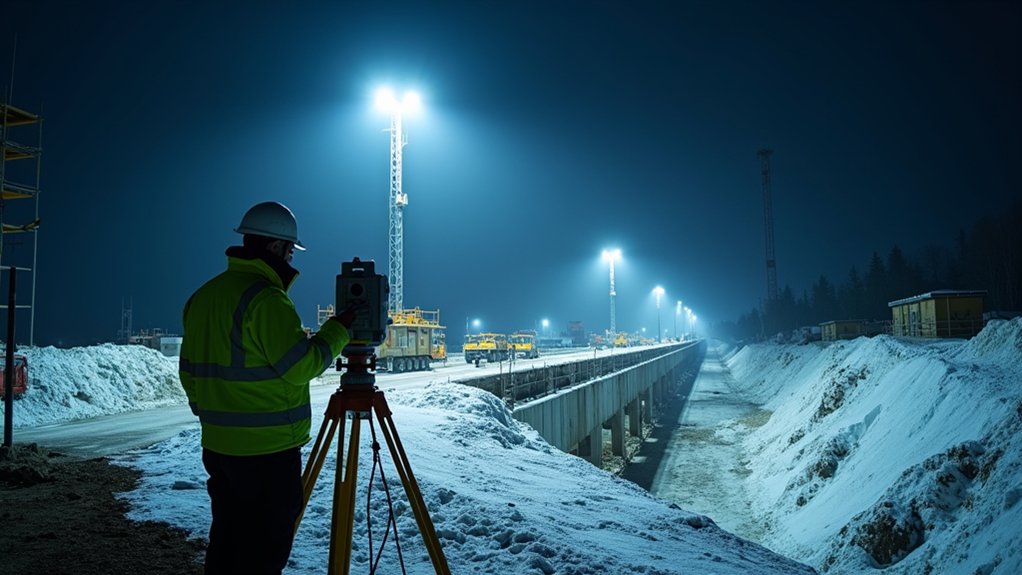
Start by evaluating where your site needs visible, reliable lighting. Walk the entire work area after dark, noting excavation edges, access roads, material storage, loading zones, and pedestrian routes. Measure distances and identify obstructions that could create shadows or glare. Confirm whether nearby homes, traffic, or aircraft could be affected by stray light.
Review your schedule to determine when crews need illumination and how conditions change during winter weather. Include equipment maintenance in your assessment: technicians need safe access to service points, and blocked or unstable locations increase downtime and risk.
Perform a cost analysis that accounts for fuel or electricity, relocation labor, servicing, and backup needs. Document light-level targets, hazards, and inspection responsibilities.
Share the plan with supervisors and workers before nighttime operations begin, then revise it as the site changes.
Choose the Right Tower Lights
Choose tower lights based on the area’s size, required light levels, operating hours, and available power. Compare tower light types before you rent or buy.
LED models deliver high output with lower energy consumption, supporting energy efficiency and reducing fuel use on extended winter shifts.
Metal-halide units can provide strong illumination but typically draw more power and require warm-up time.
Select a generator-powered system when grid access is unavailable, and verify its fuel capacity for the planned work period.
Battery-hybrid and solar-assisted models can reduce noise and emissions, though cold temperatures may limit battery performance.
Check each unit’s rated lumen output, color temperature, weather resistance, and operating range.
Confirm that the mast, fixtures, cables, and controls meet applicable safety standards.
Choose equipment with stable bases, guarded components, and emergency shutoffs.
Position Tower Lights for Even Coverage
Assess the coverage area and place tower lights to provide consistent illumination across all work zones.
Position units at suitable angles and spacing to minimize shadows behind equipment, structures, and personnel.
You’ll improve visibility and reduce trip and equipment-handling hazards.
Assess Coverage Area
How much area must you illuminate, and where will shadows or obstructions occur? Begin with a scaled site plan showing work zones, access routes, equipment locations, storage areas, and elevation changes. Measure each zone rather than estimating from the tower’s maximum output.
Use the manufacturer’s photometric data to determine mounting height, beam spread, and the number of fixtures required for your target illuminance. Account for winter conditions: snowbanks, temporary shelters, and shortened daylight can change usable coverage.
Select a Light color appropriate for the task; neutral or cool white light can improve detail recognition, while glare remains a hazard. Verify Power sources, cable runs, fuel capacity, and backup requirements before placement.
Mark proposed tower positions, then confirm illuminance with a calibrated light meter during a trial setup before work begins.
Minimize Shadows
Once you’ve mapped coverage and confirmed illuminance, position tower lights to limit shadows across active work areas. Place fixtures at opposing angles or use overlapping light zones so equipment, workers, and material stacks don’t block critical visibility.
Keep towers outside travel paths, excavation edges, and crane swing zones, then secure them against wind and uneven winter ground. Aim beams downward and across the task, not directly into workers’ eyes or nearby traffic.
Adjust mast height and fixture direction after machinery arrives; moving equipment can create new shadow pockets. Select a consistent Color temperature across units to preserve visual judgment and reduce glare.
Add diffusers or fixtures designed for light diffusion when hard-edged shadows remain, but verify that output still meets required illuminance. Recheck coverage after snowfall, repositioning, or changing work phases.
Install and Secure Tower Lights Safely
Before installation, verify that the tower light’s mounting surface, brackets, fasteners, and wiring can withstand its weight, vibration, and environmental exposure.
Follow the manufacturer’s instructions and your site’s safety protocols throughout the setup.
Position the unit on stable, level ground, and keep it outside vehicle paths, excavation edges, and overhead hazards.
Use rated hardware, tighten every connection to the specified torque, and install locking devices where required.
Route cables neatly, protect them from crushing and abrasion, and keep connectors sealed against moisture.
Confirm that the power supply matches the light’s voltage and current requirements before energizing it.
Ground the equipment properly, inspect the mast and frame for damage, and test emergency shutoff controls.
Have a qualified person check the completed installation before workers enter the area.
Control Glare and Handle Winter Weather
Control glare by aiming fixtures downward and shielding nearby roads, homes, and work areas.
Protect the tower light from snow buildup, and clear vents and lenses before operation.
Secure equipment against wind exposure by checking anchors, ballast, mast sections, and manufacturer-specified operating limits.
Minimize Light Glare
Minimize glare by aiming tower lights only at the work area, using shields or louvers to block direct line-of-sight exposure, and selecting the lowest output that provides safe visibility.
Position fixtures above eye level when possible, but avoid steep angles that create shadows beneath equipment or scaffolding.
Use glare reduction methods such as full cutoffs, directional optics, and properly adjusted mast height.
Choose luminaires with controlled light diffusion to soften harsh contrasts without washing light beyond the site boundary.
Walk the work zone after dark and check visibility from operators’ and workers’ perspectives.
Reposition lights if drivers, neighbors, or nearby crews face uncomfortable brightness.
Keep illumination off roads, homes, and reflective surfaces.
Verify that controls, dimming, and aiming mechanisms remain secure during each shift and after equipment moves.
Protect Against Snow
Snow can increase glare, obscure hazards, and reduce tower-light performance, so protect fixtures while keeping illumination directed at the work area.
Inspect each tower light before every shift, and remove snow accumulation from lenses, housings, and access platforms using a soft brush. Don’t use sharp tools or hot water, which can damage surfaces or create sudden temperature stress.
Check seals, vents, and electrical connections for ice, moisture, or blocked drainage. Position fixtures beneath suitable covers only when ventilation and manufacturer clearances remain intact; never enclose operating lights.
Confirm that ballast compartments and cables stay dry, then test output after clearing.
Include these checks in your winter specific safety plan, and stop work if frozen components, poor visibility, or electrical damage makes inspection unsafe. Record defects and arrange qualified repairs before restarting.
Manage Wind Exposure
How can you keep wind from turning a tower light into a hazard? Start by checking the manufacturer’s wind rating, then inspect mast sections, pins, cables, wheels, and outriggers before every shift.
Level the unit on firm ground, fully deploy outriggers, and install ballast exactly as specified. Don’t operate on unstable fill, near edges, or where drifting snow can undermine support.
Account for Wind effects when positioning the light. Aim fixtures away from workers and traffic, and lower the mast whenever gusts approach the equipment’s limit.
Use gust management by monitoring forecasts and an on-site anemometer, pausing work when conditions deteriorate. Secure cables so they can’t whip or catch on equipment.
After a strong gust, stop, isolate power, and inspect for movement, bent components, loose hardware, or damaged cords before restarting.
Inspect and Maintain Tower Lights Daily
Before each shift, inspect the tower light for cracked lenses, loose fasteners, damaged wiring, corrosion, and signs of overheating.
Confirm that the mast, stabilizers, wheels, and brakes sit securely on firm ground.
Check hydraulic lines, locking pins, and cable connections before raising the mast.
Clean lenses and remove mud, ice, or snow that could reduce illumination.
Verify the lamp operates steadily, then record unusual flickering, noise, odor, or vibration and tag defective equipment out of service.
Check generator fluid levels, battery condition, grounding, and fuel leaks according to the manufacturer’s instructions.
Monitor color temperature and brightness to maintain consistent visibility across the work area.
Review power consumption to detect abnormal loads or failing components.
After shutdown, let hot parts cool before servicing, and schedule qualified repairs promptly.
Conclusion
With careful planning, tower lights can keep night and winter construction productive without compromising safety. Assess coverage, select weather-rated equipment, position fixtures to reduce shadows, and secure every unit against wind and uneven ground. Control glare so you can see hazards clearly, then inspect lights, cables, fuel, and ballast daily. Remember, poor lighting contributes to roughly 20% of workplace accidents. By maintaining reliable illumination, you’ll protect crews, support compliance, and keep work moving through challenging conditions.