

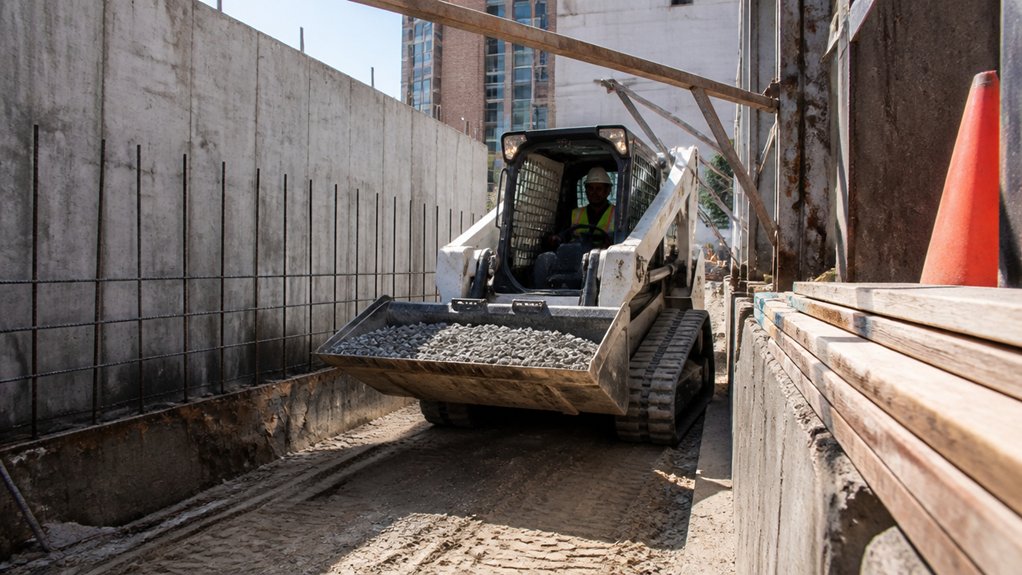
When a tight jobsite and a tight schedule coincide, you’ll need more than a compact skid steer to stay productive. Start by matching the machine’s dimensions, lift height, and turning radius to every doorway, aisle, and overhead clearance. Then inspect the surface, map safe travel paths, and choose attachments that fit the task. Low-speed operation, wide turns, and constant visibility help prevent damage—but one overlooked hazard can change the entire plan.
Choose a Skid Steer for Tight Clearances
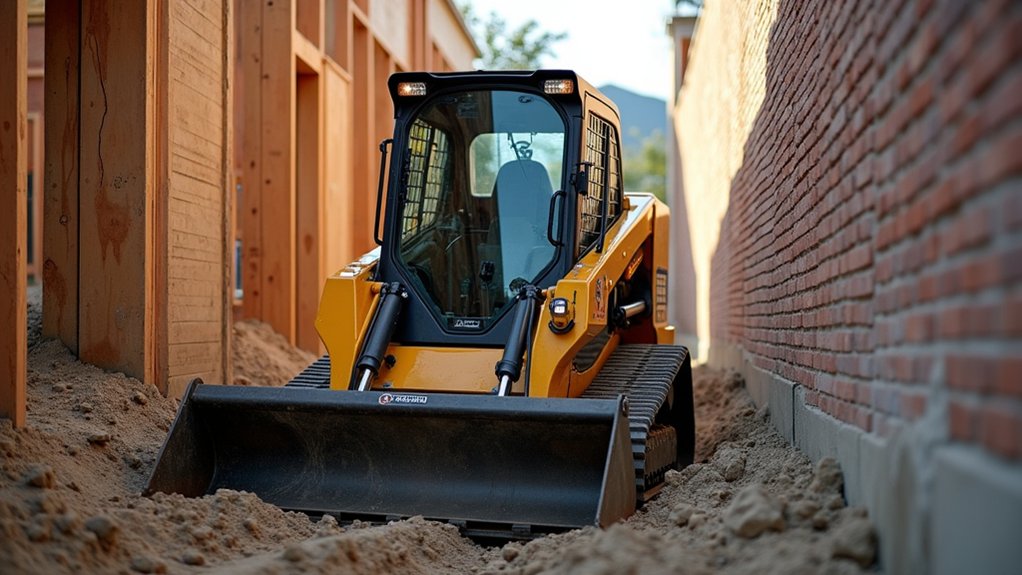
Choose a skid steer by matching its width, lift height, and turning clearance to the work area. Measure doorways, aisles, and overhead obstructions before selecting a machine.
A narrow-frame model can enter confined zones, while a compact radius design reduces rear swing during turns.
Confirm the rated operating capacity exceeds your heaviest planned load, and select lift height based on the truck bed, hopper, or shelving target.
Consider auxiliary hydraulic flow and attachment dimensions, since oversized tools can restrict visibility and maneuverability.
Verify the operator’s sightlines, backup camera, and protective structure meet applicable requirements.
Maintenance tips include checking tire condition, hydraulic leaks, attachment locks, and safety interlocks before operation.
Choose the smallest capable engine and avoid unnecessary idling to improve Fuel efficiency without sacrificing required performance.
Inspect the Site and Plan Safe Travel Paths
Before operating, walk the site and map a travel route that keeps the skid steer clear of workers, drop-offs, trenches, overhead hazards, and unstable ground.
During your site assessment, check ground bearing capacity, slopes, clearance widths, turning space, blind corners, and surface changes.
Complete hazard identification before you start, then mark hazards with cones, barricades, or high-visibility tape.
Confirm that ramps, bridges, and covers can support the machine and its load.
Establish separate pedestrian routes, maintain communication with spotters, and define stop points where visibility disappears.
Keep the route as level and direct as possible; avoid sudden turns near edges or on inclines.
Remove debris and secure loose materials.
Reinspect after weather changes, excavation, deliveries, or shifting site conditions, and update your route briefing before moving again.
Select Skid Steer Attachments by Task
Match the skid steer attachment to the material, surface, and required finish, and verify that its rated operating capacity and hydraulic flow suit the machine. Use a general-purpose bucket for soil, aggregate, and loading; choose a trenching attachment for narrow utility cuts, and select a broom for cleanup without damaging finished surfaces.
For grading, use a laser-guided box blade or land leveler when you need consistent elevation. Confirm attachment compatibility before connecting: inspect the coupler, hydraulic hoses, electrical connections, and manufacturer’s mounting requirements.
Relieve hydraulic pressure, lock the attachment securely, and test each function at low engine speed. Include maintenance considerations in your selection. Frequent greasing, teeth replacement, filter cleaning, or hose inspection can affect downtime and operating cost.
Keep the operator’s manual available for load limits and service intervals.
Operate Safely Around Turns, Slopes, and Obstacles
Once you’ve secured the correct attachment, control the loader’s movement around turns, slopes, and obstacles. Lower the attachment close to the ground, keep your speed low, and make wide, deliberate turns when space allows.
Before climbing or descending a slope, check the surface for loose soil, wet areas, edges, and hidden drop-offs. Travel straight up or down grades, never across them, and keep the heavier end uphill when the manufacturer permits.
Maintain three-point awareness: monitor the attachment, travel path, and overhead clearance. Use hazard recognition to identify pedestrians, utilities, protruding materials, and unstable structures before moving.
Stop immediately if visibility becomes inadequate or the loader feels unstable. Know your emergency procedures, including lowering the attachment, shutting down safely, and contacting site supervision.
Never carry passengers or turn on a slope.
Work Faster Without Losing Visibility or Control
You’ll work faster when you plan each travel path, keep the attachment low enough to preserve forward visibility, and maintain a steady speed that allows immediate stops.
Before moving, identify blind corners, overhead hazards, soft ground, and pedestrian routes. These navigation challenges require deliberate positioning, not rushed steering.
Use mirrors, cameras, and a spotter when the load or structure blocks your view; stop if you lose visual contact.
Keep your body centered, buckle the restraint, and operate controls smoothly to reduce sway and tire scrub.
Match travel speed to surface conditions, turning radius, and load stability.
Effective operator training builds consistent scanning, communication, and attachment-control habits.
Rehearse tight approaches in an open area, then apply the same measured technique near walls, vehicles, utilities, and workers.
Conclusion
When you use a skid steer in tight construction spaces, measure first, plan every route, and match the machine and attachment to the task. Don’t assume a smaller loader eliminates risk: limited clearance can magnify turning, visibility, and stability hazards. Keep loads low, travel slowly, use wide turns, and verify overhead and ground conditions continuously. With deliberate inspections and controlled operation, you’ll improve productivity without sacrificing clearance, machine control, or crew safety.