

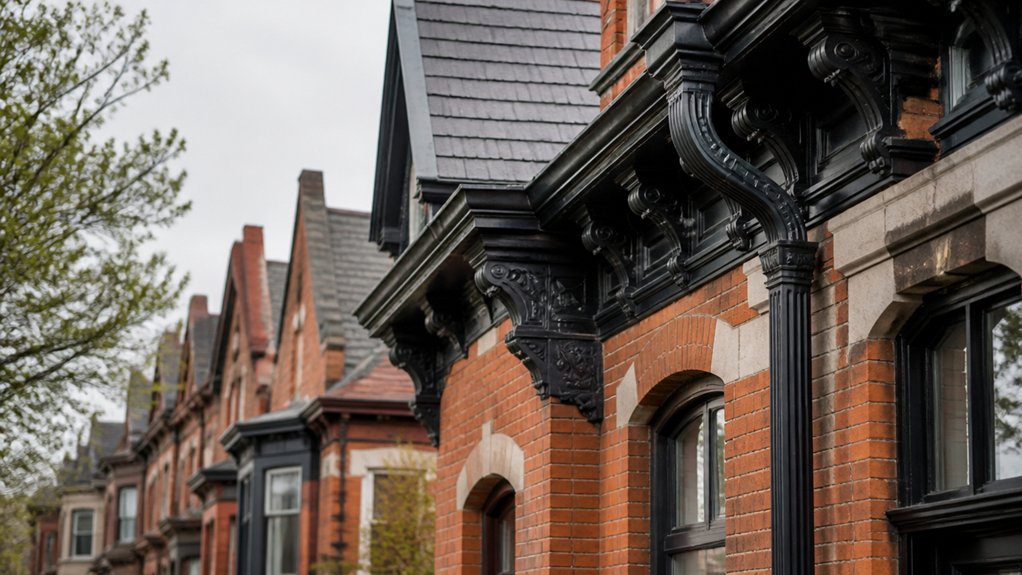
When you renovate a heritage property, cast-iron guttering helps you preserve its original character while providing dependable rainwater control. Its traditional profiles, moulded beads, and jointed construction suit period architecture far better than lightweight modern alternatives. You’ll also gain excellent impact resistance and long service life when the system is correctly installed and maintained. However, heritage requirements, suitable finishes, and compatible fittings need careful consideration before you specify the final system.
Why Cast-Iron Guttering Works on Heritage Homes
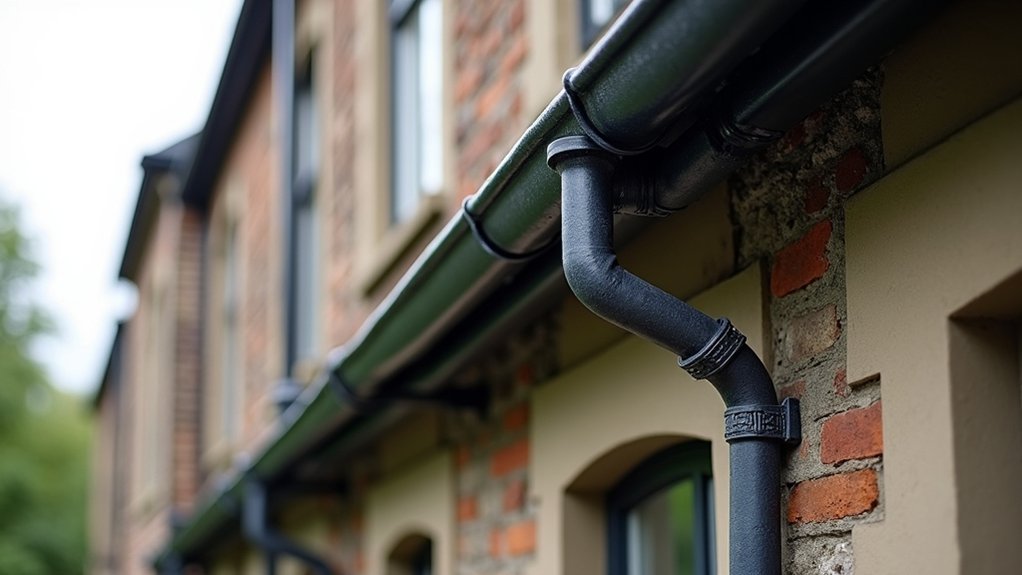
Cast-iron guttering suits heritage homes because its weight, crisp profiles, and traditional jointed construction reflect the detailing of period architecture. When you choose it, you preserve Historical accuracy while matching the substantial appearance of original rainwater goods. Its moulded beads, half-round channels, and restrained finish complement brick, stone, slate, and painted timber without appearing contemporary or lightweight.
You’ll also gain Material durability. Properly maintained cast iron resists impact, remains dimensionally stable, and can serve for decades, often longer than thin modern alternatives. Its mass helps the gutter feel visually rooted in the building, while its strong sections manage roof runoff reliably.
You can repaint the surface periodically to renew protection and retain an appropriate colour scheme. This combination of authentic form, robust performance, and repairable construction makes cast iron a practical choice for sympathetic heritage renovation.
What Do Installation and Heritage Requirements Involve?
Before work begins, you’ll need to confirm whether the property is listed, lies within a conservation area, or is subject to local heritage controls. Contact your conservation officer and building-control department before removing existing gutters or altering fixing points.
You may need listed-building consent, planning approval, or method statements documenting proposed work. Use experienced installers who understand historic masonry, timber fascias, traditional falls, and the need to avoid unnecessary drilling or hard cement repairs.
They should survey the roof edge, record existing conditions, and specify reversible fixing methods wherever possible. Don’t assume Modern materials offer acceptable substitutes; heritage authorities may require like-for-like cast iron because of its durability, repairability, and lower Environmental impact over its service life.
Keep photographic records, retain sound historic fabric, and schedule inspections after installation.
Which Profiles, Finishes, and Fittings Should You Choose?
Choose profiles and fittings that match the building’s historic roofline, drainage capacity, and surviving details rather than selecting solely for appearance.
Gutter profile options include half-round, box, and ogee sections; compare their original dimensions, capacity, and fixing methods before specifying replacements.
Half-round gutters suit many vernacular elevations, while box and ogee profiles can better reflect formal Victorian or Edwardian architecture.
Select cast-iron outlets, angles, unions, brackets, and shoes with compatible dimensions, ensuring every joint follows the existing drainage layout.
Gutter finish choices should respect documented colours and local precedent.
Factory-applied primer and paint provide consistent protection, while site-applied systems may support an exact conservation colour match.
Choose restrained, historically appropriate tones, and avoid bright modern coatings that obscure mouldings or conflict with the façade.
How to Maintain Cast-Iron Guttering for Decades
Once the profile, fittings, and finish reflect the building’s historic character, a disciplined maintenance routine will protect the cast-iron guttering for decades. Inspect channels, joints, brackets, and outlets twice yearly, especially after winter storms. Remove leaves and silt by hand, then flush with clean water; avoid pressure washing, which can damage coatings and force water behind joints.
Check for rust, cracks, movement, and standing water. Treat exposed metal promptly with a compatible rust converter and heritage-approved primer, followed by two finish coats. Renew failing sealant with a flexible, paintable product suited to cast iron. Keep downpipes clear, and confirm discharge reaches a suitable drain or rainwater system.
Record repairs to preserve historical accuracy. For structural defects or complex repainting, use contractors with genuine maintenance expertise. Don’t replace sound components unnecessarily; repair and retain original fabric wherever possible.
Conclusion
Choose cast-iron guttering when your heritage renovation demands authenticity as well as performance. Its traditional profiles, strong joints, and substantial finish sit naturally against historic brick, stone, and timber, while skilled installation helps satisfy conservation requirements. Select period-appropriate fittings and coatings, then inspect and maintain them regularly to prevent corrosion and blockages. In doing so, you’ll protect the building’s character and drainage for generations—ensuring its “old stones” continue to tell their story securely.