


You need stable access, even footing, and dependable support when you work at height, and scaffold boards help provide all three. In the UK, you must select boards suited to the task, inspect them before use, and install them on properly supported platforms with suitable guardrails. Their condition and loading directly affect worker safety, yet common faults such as overloading, poor support, and damage can undermine an otherwise compliant setup—so what should you check first?
What Are Scaffold Boards Used For?
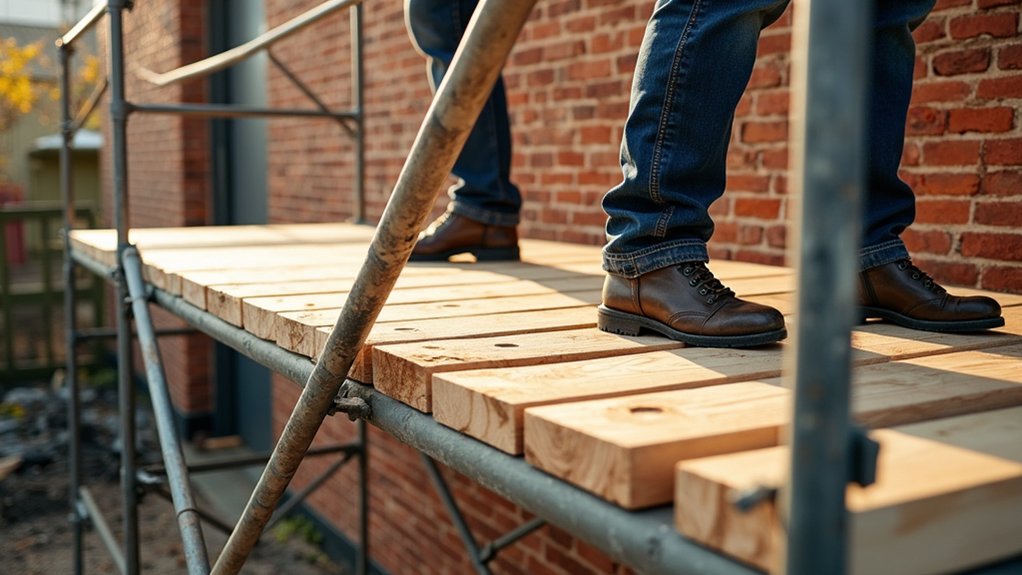
Scaffold boards provide a stable working surface on temporary access platforms, allowing workers to stand, move materials and use tools safely at height. You rely on correctly supported boards to create a continuous platform within a scaffold, tower or temporary walkway. They help you reach work areas while reducing trip hazards and limiting falls through gaps.
Boards also distribute your weight and light loads across the supporting structure, provided you keep within the platform’s designed capacity. Before use, you should check for damage, contamination, distortion and secure seating, then report defects immediately.
Material durability matters because repeated handling, weather exposure and site traffic can weaken unsuitable boards. You should also consider environmental impact by preventing unnecessary waste, storing boards properly and arranging responsible reuse or disposal.
Follow the manufacturer’s instructions and relevant UK safety guidance.
Choose the Right Scaffold Board for the Job
Choosing the right scaffold board starts with matching its type, grade and dimensions to the platform design and intended load. Select boards manufactured to relevant British or European standards, and confirm their permissible span, width and thickness against the scaffolding design.
Solid timber boards may suit conventional access platforms, while engineered or metal alternatives can provide consistent performance in demanding applications.
Consider Material durability: exposure to rain, frost, chemicals or repeated handling can affect the appropriate specification. You’ll also need to account for environmental impact; responsibly sourced timber and reusable materials may reduce waste and support sustainable procurement.
Check compatibility with the scaffold system, including support spacing, edge protection and required access width. If the platform carries materials, calculate imposed loads rather than relying on appearance or standard board sizes alone.
Inspect Scaffold Boards Before Installation
Before installation, inspect every scaffold board for defects that could compromise its strength or stability. Check each board for splits, excessive knots, rot, warping, crushed ends, burns, oil contamination, or damaged edges.
Reject any board with uncertain history or markings, and don’t attempt repairs unless a competent person and manufacturer approve them. Confirm timber boards meet the relevant British Standard, such as BS 2482, and verify identification marks remain legible.
For aluminium or composite boards, examine welds, fixings, surfaces, and manufacturer labels for damage. Consider material durability, moisture exposure, storage conditions, and repeated use when judging serviceability.
Record safety inspections, quarantine failed boards, and report defects to your supervisor. Keep sound boards clean and dry before use, following your employer’s inspection procedure and current HSE guidance.
Build Walkways With Proper Support and Guardrails
When you build a scaffold walkway, support every board along its length on correctly spaced, level transoms or bearers, and secure the structure against movement.
Fit boards tightly, maintain a firm, even surface, and prevent displacement with suitable fixings or board retaining devices.
Provide compliant guardrails, intermediate rails, and toe boards wherever people could fall, following the Work at Height Regulations 2005 and relevant British Standards.
Set the walkway width and access arrangements to suit the task, keeping clear routes for workers and materials.
Connect the platform to a properly erected scaffold, and check ties, bracing, and foundations to preserve Structural stability.
Use Temporary safety signage where conditions or access change.
Your competent person should inspect the completed walkway before use and after alteration, impact, or severe weather.
Avoid Overloading, Poor Support, and Damaged Boards
Never exceed the scaffold’s rated load, because overloading can deflect boards, destabilise supports, and cause collapse. Check the manufacturer’s load class and calculate workers, tools, materials, and equipment together.
Maintain even weight distribution; don’t concentrate bricks, paving slabs, or machinery in one area. Guarantee each board has adequate bearing on sound, level transoms, with supports spaced to the manufacturer’s specification.
Never bridge gaps, rest boards on loose materials, or rely on improvised packing.
Before use, inspect every board for splits, excessive warping, rot, crushed ends, burns, or other damage. Remove defective boards immediately, identify them clearly, and prevent reuse.
Consider material durability, particularly where boards face weather, chemicals, or repeated handling.
Follow the Work at Height Regulations 2005, your scaffold supplier’s instructions, and competent-person inspection requirements, including after alteration or adverse weather.
Conclusion
When you select, inspect, and support scaffold boards correctly, you’re protecting more than a temporary platform—you’re safeguarding every person relying on it. A secure walkway, sound board, and compliant guardrail can coincide to prevent a minor defect becoming a serious fall. Follow UK guidance, including the Work at Height Regulations and manufacturer instructions, and never exceed load limits. By controlling damage, spacing, and support, you’ll create safe, reliable access for every task at height.