

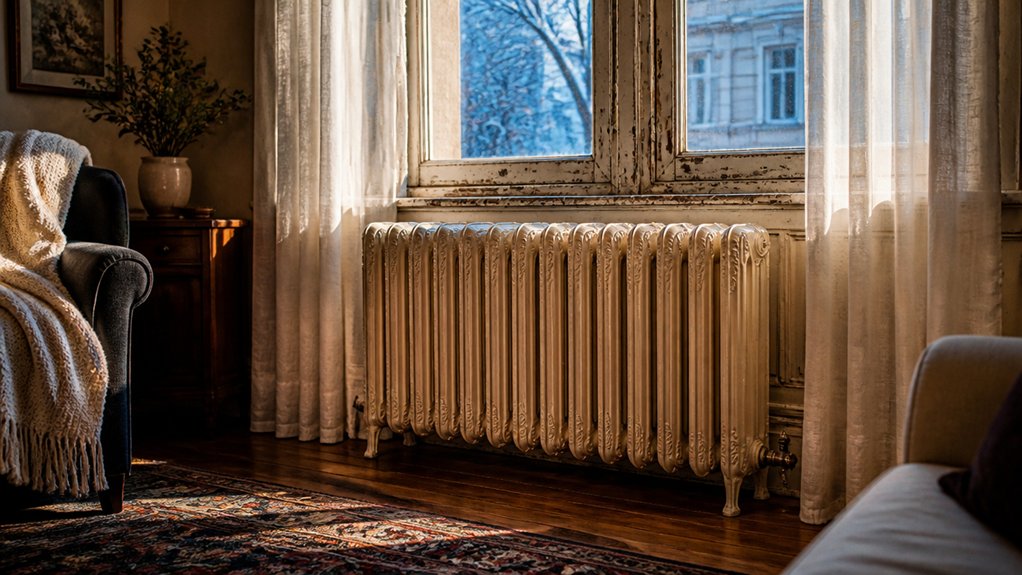
If you live in an older UK home, cast-iron radiators can improve comfort and heating efficiency without compromising its character. Their high thermal mass stores heat and releases it steadily, reducing temperature swings after the boiler switches off. You’ll get better results when you size each radiator correctly, fit thermostatic controls, improve insulation and keep the system maintained. The right combination can make a noticeable difference, but placement and operating habits matter just as much.
Why Cast-Iron Radiators Suit Older Homes
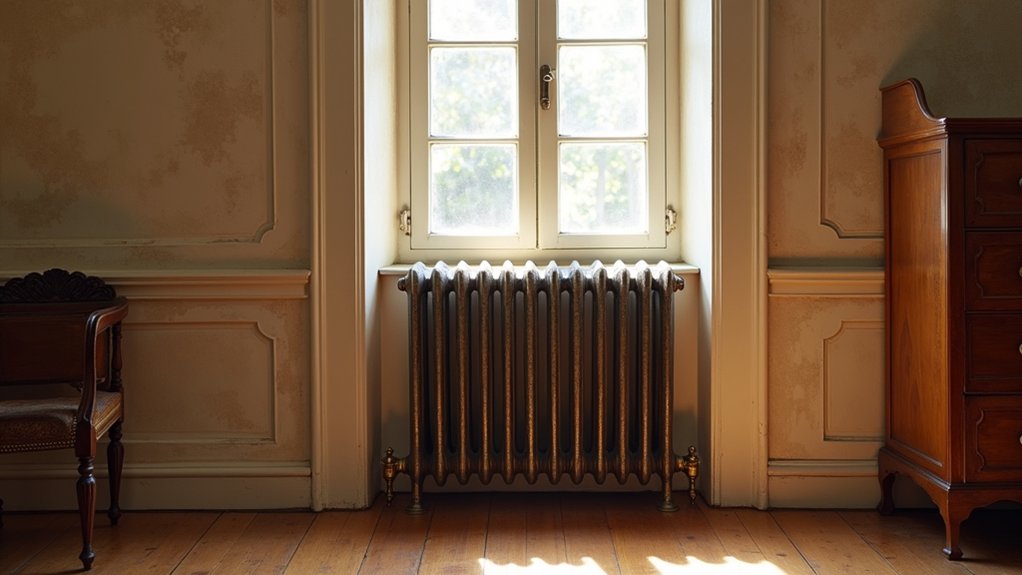
Older homes often have draughts, high ceilings and solid masonry walls that make rapid heat loss a concern. When you upgrade your heating system, choose cast-iron radiators to complement the building’s structure and proportions.
Their robust construction suits properties with traditional pipework, while their broad range of sizes helps you match available wall space without compromising room layout. You can select reclaimed, refurbished or new models, depending on your budget and conservation requirements.
In a listed building, consult your local authority before altering fixtures, and protect original features wherever possible. Cast-iron designs support historical accuracy, preserving the visual character of Victorian, Edwardian and Georgian interiors.
You’ll also gain aesthetic appeal through period profiles, decorative columns and durable painted finishes. Specify thermostatic radiator valves discreetly to improve room-by-room control and reduce unnecessary energy use.
How Cast-Iron Radiators Store and Release Heat
Cast-iron radiators absorb heat from the circulating water and release it gradually into the room, so your heating system delivers steadier warmth after the boiler switches off.
Their high Thermal mass allows the metal to take longer to warm than pressed-steel panels, but it also provides superior Heat retention. Once heated, the radiator continues emitting comfortable radiant warmth, reducing sharp temperature swings in rooms with draughty windows or solid walls.
You’ll get the best performance by allowing the radiator to warm steadily rather than repeatedly turning it on and off. Keep furniture and heavy curtains clear of the surface, so air can circulate and radiant heat can reach the room.
In a typical UK home, this stored warmth can help maintain comfort between boiler cycles, particularly during cold, prolonged winter weather.
Choose the Right Radiator Size for Each Room
Choosing the right cast-iron radiator size starts with calculating each room’s heat requirement in watts, based on its floor area, ceiling height, insulation, window area and external walls.
For a reliable estimate, use a UK heat-loss calculation rather than a simple square-metre rule, particularly in Victorian or poorly insulated properties. Add allowances for high ceilings, bay windows and rooms above unheated spaces.
Select a radiator, or combination of radiators, whose tested output meets or slightly exceeds the calculated requirement at your boiler’s flow and return temperatures. Check the manufacturer’s output figures, as larger radiators don’t always deliver proportionally more heat.
Consider Wall mounting carefully: heavy cast iron needs secure fixings into suitable masonry or reinforced structure.
Sensible Radiator placement beneath windows can counter cold down draughts, while keeping clear space around each radiator supports even heat distribution.
Use Thermostatic Controls With Cast-Iron Radiators
Because cast-iron radiators retain heat long after the boiler stops firing, thermostatic radiator valves (TRVs) give you better room-by-room control. Set each valve to the temperature you need rather than leaving every radiator fully open. A typical living room may suit setting 3, while a bedroom might need setting 2; adjust these gradually to avoid overheating.
TRVs sense nearby air temperature and restrict flow as the room warms, but they won’t switch the boiler off. Keep one radiator, usually in the room containing the wall thermostat, without a TRV so the system can circulate safely.
Smart thermostats can schedule heating, detect occupancy and coordinate boiler demand, but check compatibility with your controls.
Don’t cover radiator valves with curtains or furniture, and bleed radiators only when they’re cool.
Pair Cast-Iron Radiators With Better Insulation
Once thermostatic controls limit unnecessary heat, better insulation helps keep that heat inside your home. In a UK older property, start with the loft: install mineral wool to current recommended depths, while preserving ventilation at the eaves.
Draught-proof sash windows, doors, and floorboards, but don’t block essential airbricks or flues. If you upgrade cavity or solid-wall insulation, obtain advice from an accredited installer to manage damp and condensation risks.
Insulating pipework also reduces distribution losses between your boiler and cast-iron radiators. Keep radiators on internal walls where possible, and avoid placing thick curtains or furniture directly over them, so convection remains effective.
You’ll retain Vintage aesthetics without sacrificing comfort. Careful detailing matters during antique restoration: discreet insulation measures protect original finishes while improving heat retention and lowering your energy use.
Maintain Cast-Iron Radiators for Reliable Heat
You’ll maintain reliable heat by bleeding your radiators regularly, especially when they’re cold at the top.
Check valves and joints for leaks, and arrange repairs promptly to prevent water damage and pressure loss.
Remove dust from the fins and surrounding surfaces so heat can circulate efficiently.
Bleed Radiators Regularly
Trapped air can leave parts of a cast-iron radiator cold and reduce heat output, so bleed it when the system is cool and switched off. Place a radiator key on the bleed screw, usually at the top edge, and turn it anti-clockwise slowly. You’ll hear air escaping; close the screw clockwise when water begins to appear. Keep a cloth and container ready, as even a small amount can mark paintwork.
After bleeding, check your boiler pressure and top it up if the gauge falls below the manufacturer’s recommended range. In a multi-storey UK home, start with downstairs radiators and work upwards, following your heating system’s instructions.
Bleeding supports accurate thermostat calibration, while radiator placement still affects room circulation. Schedule this task before winter and whenever the top stays cooler than the bottom.
Check For Leaks
Check for leaks when the heating system is cold, inspecting the valves, pipe joints, bleed screw and radiator seams for rust, dampness or green staining. Early leak detection prevents water damage, corrosion and falling boiler pressure.
Place kitchen roll beneath suspect joints; it’ll reveal small drips more clearly than visual checks alone. If you find moisture, switch off the heating, allow the radiator to cool and close its thermostatic and lockshield valves.
Don’t overtighten fittings, as you could damage old threads or seals. For minor seepage, a heating engineer can replace washers, reseal threaded connections or apply suitable sealing techniques.
Never use general-purpose plumbing compound where the manufacturer specifies PTFE tape or jointing paste. Persistent leaks, damaged sections or rapidly dropping pressure require a Gas Safe registered engineer’s assessment and repair.
Remove Dust Buildup
When the radiator is cool, vacuum dust from the fins, gaps and pipework, then wipe the cast iron with a slightly damp microfibre cloth. Don’t use excessive water, as trapped moisture can encourage rust, particularly on older, painted surfaces.
For thorough dust removal, use a long, narrow radiator brush to reach behind columns and between sections. Protect the floor with a cloth and avoid disturbing valves, joints or flaking paint.
Build-up restricts air circulation around the radiator, reducing convection and forcing your boiler to work harder. Repeat cleaning before the heating season and whenever you notice visible lint or cobwebs.
If dust returns quickly, check nearby curtains, furniture and carpets, which may obstruct airflow. Wear a mask if the radiator contains loose debris, and arrange professional advice for suspected lead-based paint.
Conclusion
Cast-iron radiators don’t magically reduce energy use, but they can make an older home feel warmer for longer. Their thermal mass stores heat, while correctly sized units, thermostatic valves and improved insulation help you control where that heat goes. Keep valves moving, bleed radiators and check for corrosion to maintain performance. If you’re upgrading a period property, retain the traditional pipework where practical, but balance the system and service the boiler for dependable, efficient comfort.