

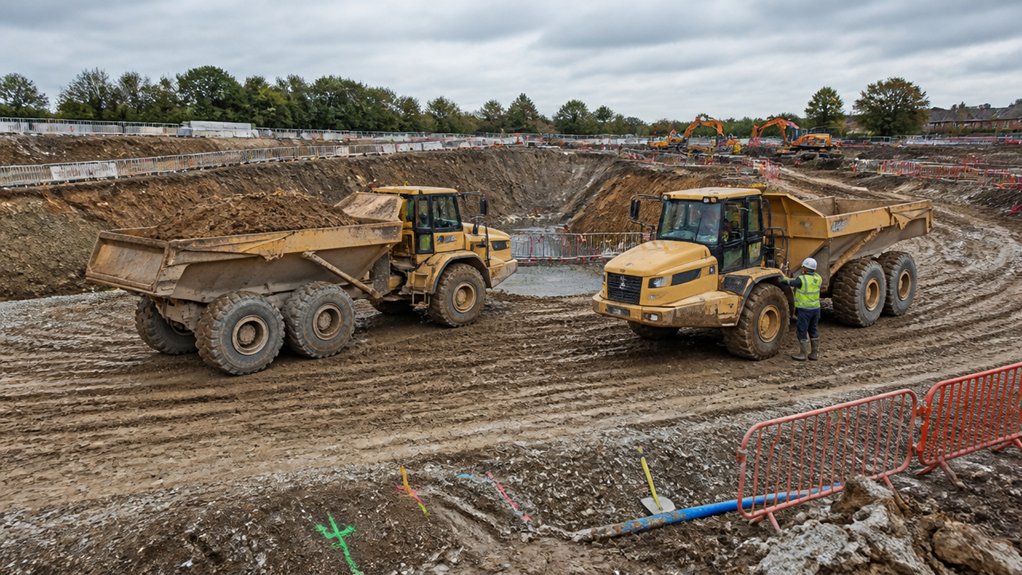
Before hiring dumpers for groundworks, you need to match the machine to your payload, material, access, and site conditions. Assess gradients, ground stability, turning space, and overhead or width restrictions before selecting a dumper type and capacity. You’ll also need competent operators, clear safety controls, suitable insurance, and transparent hire terms covering delivery, fuel, maintenance, and damage. Get these decisions wrong, and costs and risks can escalate quickly—so check each factor carefully.
Define Your Groundwork Dumper Requirements
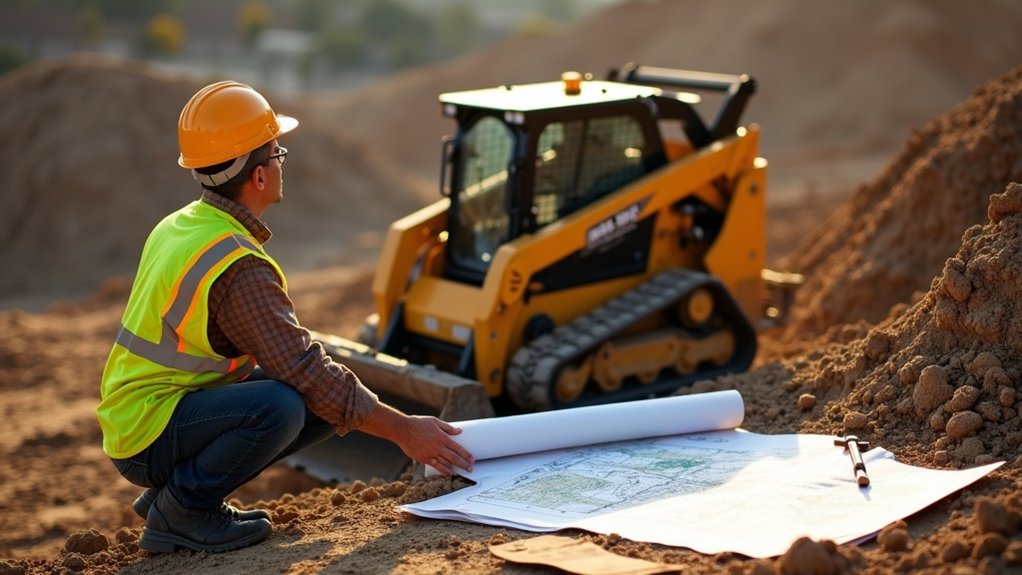
Before choosing a dumper, define the demands of your groundwork project, including payload, material type, terrain, access restrictions, haul distance, and expected operating hours.
Quantify your daily and peak output so you can specify the required loading frequency and cycle efficiency.
Assess ground bearing capacity, gradients, turning areas, and overhead or width constraints before bringing equipment on site.
Identify whether you’ll move soil, aggregate, spoil, wet clay, or demolition waste, as each material affects loading method, stability, and cleaning requirements.
Plan safe loading and tipping zones, maintaining separation from excavators, workers, edges, and services.
Include Material handling requirements in your site assessment, and evaluate Environmental impact, including ground disturbance, emissions, noise, and potential spillage.
Confirm delivery access, operator competence, insurance, and availability before hiring.
Compare Dumper Types, Capacities and Uses
Choose a dumper type and capacity that match your site conditions, material, and required output rather than selecting solely by maximum payload.
Skip dumpers suit general spoil, aggregates, and earthmoving, while tracked dumpers offer lower ground pressure for sensitive areas.
Articulated dumpers carry larger loads efficiently over longer haul routes, but they usually require more operating space and careful scheduling.
Swivel or high-tip models can place material beside obstacles or into elevated receptacles, improving discharge control.
Match payload, body volume, tipping height, and cycle time to your estimated production rate; overloading increases wear, while underusing capacity wastes fuel and labour.
Confirm the hire fleet’s Dumper maintenance records, inspection status, and operator controls.
Also assess Environmental impact, including emissions, fuel consumption, noise, and potential electric alternatives, before booking.
Check Access, Terrain and Ground Conditions
Once you’ve matched the dumper to the load and output target, confirm that the machine can reach every loading and tipping point safely. Measure entrance widths, overhead clearances, turning radii, gradients, and route lengths before you hire. Check whether the dumper’s width, height, ground clearance, and payload suit the site’s constraints.
Assess ground conditions, including slope, compaction, waterlogging, clay, loose fill, and soft edges. Articulated or tracked dumpers may handle uneven terrain better, while excessive gradients can restrict productive operation. Plan temporary haul roads, stable loading areas, and drainage where necessary.
Ask the supplier for ground-pressure data and operating limits, then match them to your site assessment.
Good route planning reduces fuel use, rutting, and the project’s Environmental impact. It also supports Equipment maintenance by limiting shock loads, contamination, and avoidable wear on tyres, tracks, brakes, and drivetrains.
Make Sure Operators and Sites Are Safe
Safe dumper operation starts with a site-specific risk assessment, competent operators, and clear separation between moving plant and people. Before work begins, confirm your team’s Operator skills, including vehicle controls, load limits, reversing procedures, and emergency responses. Provide site induction training and verify that each driver holds the required competence for the dumper type.
Establish Safety protocols covering pedestrian routes, exclusion zones, banksman signals, radio communication, and speed limits. Use barriers and signage to control access, particularly near excavations, edges, overhead services, and public areas.
Check seat belts, brakes, steering, lights, alarms, tyres, and tipping mechanisms during every pre-start inspection. Never permit passengers unless the machine has an approved seat.
Supervise operations, stop unsafe acts immediately, and review controls whenever site conditions or vehicle movements change. Maintain clear visibility and adequate lighting throughout each shift.
Compare Dumper Hire Costs and Terms
Compare more than the daily rate when evaluating dumper hire costs: check the hire period, delivery and collection charges, insurance, fuel policy, damage waiver, operator requirements, and VAT.
Ask whether the quoted price covers weekends, overtime, and extensions, then confirm minimum hire periods and cancellation terms.
Review rental insurance carefully: establish the excess, exclusions, theft conditions, and whether your existing policy applies.
Clarify who pays for punctures, misuse, breakdowns, and routine Equipment maintenance.
Request a written schedule of condition, including photographs, before delivery, and report defects immediately after inspection.
Compare payload, drive configuration, and tipping height, not just headline price; a better-specified machine may reduce loading time and site traffic.
Finally, confirm payment deadlines, deposit requirements, and responsibility for cleaning before signing the hire agreement.
Conclusion
Before hiring dumpers for groundworks, you’ll need to match capacity, dumper type, and site conditions to the job. Check access, gradients, ground stability, and turning space, then confirm competent operators and robust safety controls. Compare hire rates alongside delivery, fuel, insurance, maintenance, and damage terms. A careful review may seem like a small administrative step, but it can prevent costly surprises—ensuring your project moves forward smoothly, safely, and with fewer unwelcome complications.