

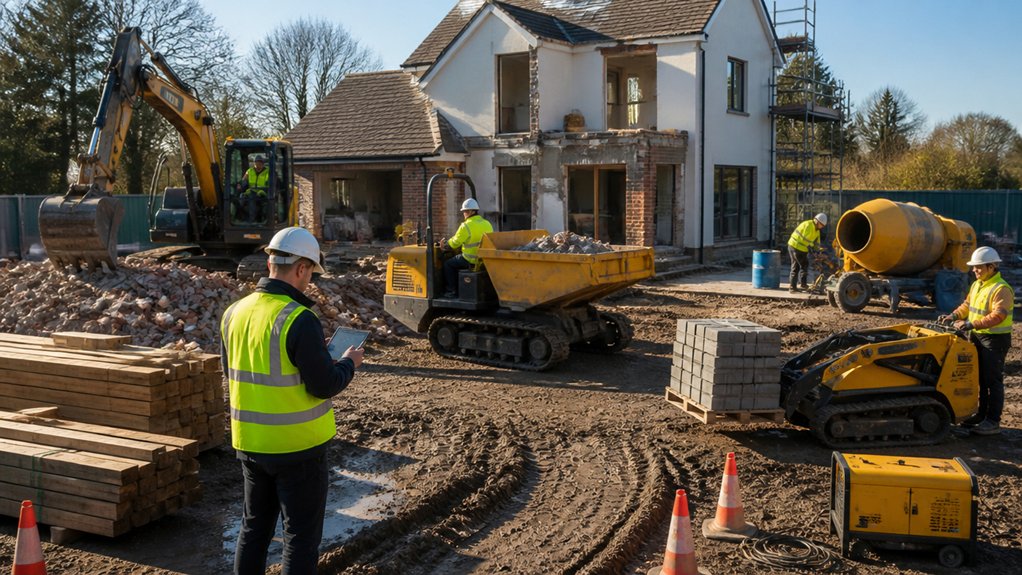
You may not realise that hired machinery can shape your renovation schedule as much as your trades do, because delivery windows, operator requirements, and return conditions all affect progress. Start by matching each machine to a specific stage, then assess site access, ground conditions, and safe working zones before booking it. Confirm hire terms, insurance, training, and PPE, and coordinate deliveries around trade availability. Small planning gaps can create costly delays, so the next steps matter.
Match Hired Machinery to Each Renovation Stage

Plan your machinery hire around the work sequence, choosing equipment that matches each renovation stage rather than hiring everything at once. Start with site preparation, scheduling breakers, compactors, or loaders only while clearance and ground works are underway.
Arrange access equipment for structural repairs, then book finishing tools when walls, floors, and fixtures are ready. Confirm delivery dates, collection windows, fuel requirements, and operator instructions before each phase begins.
Keep a written schedule so one machine doesn’t obstruct trades or remain idle, increasing costs. Inspect attachments, guards, controls, and emergency stops at handover, and report defects immediately.
Follow the hire company’s operating limits, secure exclusion zones, and store equipment safely overnight. Allow time for machinery maintenance between uses.
Review Equipment upgrades only when they improve safety, productivity, or suitability for later stages.
Choose the Right Machinery for the Job
Choose machinery by matching its capacity, attachment, and working environment to the specific task, not by selecting the largest available option. Assess access width, ground conditions, ceiling height, load weight, and available power before choosing a model.
Check Machinery compatibility between the base unit and attachments, including couplers, hydraulic flow, lifting limits, and control systems.
For excavation, confirm the bucket suits the soil and trench dimensions; for lifting, verify reach and rated capacity at the required distance.
Choose compact equipment when space, surfaces, or neighbouring structures limit manoeuvrability.
Ask the hire company about operator controls, noise, emissions, and required delivery dimensions.
If the task changes, arrange an Equipment upgrade rather than forcing unsuitable machinery to work beyond its design limits.
Review the machine’s operating instructions and plan clear travel routes before use.
Confirm Hire Terms, Insurance, and Safety
Before the machinery arrives, confirm the hire period, delivery and collection arrangements, fuel or charging requirements, operator responsibilities, and charges for damage, delays, or extra hours.
Read every clause during Contract negotiations, and request written clarification for vague terms.
Check whether Equipment warranties apply during the hire and who handles faults, servicing, and replacement costs.
Confirm the required insurance, including public liability, theft, accidental damage, and any excess you’ll pay.
Ask whether the hire company’s policy covers your site, or arrange separate cover.
Record existing dents, scratches, safety defects, and meter readings with dated photographs before use.
Verify that each machine has current inspections, guards, emergency stops, manuals, and certificates.
Only trained, authorised operators should use it.
Keep keys controlled, follow load limits, and stop work immediately if equipment becomes unsafe.
Coordinate Machinery Deliveries With Trades
You’ll need to align machinery delivery times with each trade’s schedule to prevent delays and idle hire costs.
Confirm that the site entrance, access routes, ground conditions, and unloading area are ready and safe before the machine arrives.
Check that the relevant trades will be present to receive, inspect, and use the equipment safely.
Align Delivery Schedules
Coordinate machinery deliveries with each trade’s start date so equipment arrives when the crew is ready to use it, not while it blocks access or sits unattended. Build a delivery calendar around the project programme, allowing time for unloading, inspections, and operator familiarisation.
Confirm each hire period, collection date, and supplier contact in writing, then share the schedule with every contractor. Review it weekly, because weather, inspections, or delayed materials can shift the sequence.
Prevent scheduling conflicts by adding realistic buffers between trades and booking scarce equipment early. Check equipment compatibility with the planned task, attachments, power supply, and operator qualifications before confirming a delivery.
Ask suppliers to provide tracking updates and call ahead if timings change. Record changes immediately, and reschedule collections promptly to avoid extension charges and unnecessary on-site congestion.
Confirm Site Access
Can machinery reach the work area safely without obstructing neighbours, pedestrians, or emergency routes? Inspect the route before booking delivery, measuring gate widths, turning space, overhead clearance, ground strength, and gradients.
Remove loose materials, protect fragile paving, and identify low branches or cables that could limit access. Check whether your council requires permits for pavement occupation, road closures, or heavy vehicles.
Record Access restrictions, including narrow time windows, weight limits, height barriers, and shared-driveway rules, then give the driver clear instructions and a marked unloading point.
Keep pedestrian routes separated with barriers and maintain emergency access throughout unloading.
Confirm Site security by arranging locked gates, lighting, cameras, or supervision so hired machinery can’t be tampered with. Photograph the route and communicate hazards, contact details, and contingency space to everyone involved.
Coordinate Trade Availability
Before booking each machine, align its delivery and collection with the trades who’ll use it, so equipment doesn’t arrive while the site is unattended or another crew is blocking access.
Confirm who’ll receive the operator’s instructions, inspect the machine, and secure the keys.
Use a shared calendar for Equipment scheduling, recording hire periods, delivery windows, collection times, and responsible contacts.
Build in time for unloading, setup, and handover rather than scheduling a machine between tightly packed tasks.
Discuss ground conditions, access routes, lifting zones, and exclusion areas during Trade collaboration, and tell every crew when machinery will move.
Ask trades to report delays immediately, then contact the hire company before extending a booking.
Keep backup dates available, and never let one crew operate equipment hired for another without proper training and authorisation.
Operate Hired Machinery Safely and Efficiently
Before use, you’ll inspect the machinery for damage, leaks, secure guards, and proper controls.
Follow the hire company’s operating procedures, and don’t use equipment you haven’t been trained to handle.
Keep a clearly marked work zone with stable ground, safe distances, and restricted access.
Inspect Equipment Before Use
Inspect every hired machine before starting work, even if the supplier says it’s ready to use. Begin your equipment inspection with the exterior. Look for cracks, dents, loose guards, damaged tyres, and leaking fuel, oil, or hydraulic fluid.
Check that warning labels, mirrors, lights, and emergency stops are present and undamaged. Examine cables, hoses, attachments, and connection points for wear or exposed wires.
Confirm fluid levels and inspect for contamination, but don’t remove pressurised components. Record defects with photographs and notify the hire company immediately.
Don’t use equipment that appears unsafe; request a replacement or written repair confirmation. Review the machine’s inspection checklist and your site’s safety protocols before accepting it.
Keep your findings with the hire documents, and report any new damage as soon as you notice it.
Follow Operating Procedures
Once the machine passes inspection, operate it only as the manufacturer’s manual and hire company instructions specify. Read every control label, confirm the machine’s capacity, and use the correct attachments.
Complete operator training before starting, even if you’ve used similar equipment. Wear the required personal protective equipment and secure loose clothing, hair, and jewellery.
Start, steer, lift, and shut down smoothly; never bypass guards, alarms, or interlocks. Keep both hands and feet on designated controls, and don’t carry passengers unless the machine provides an approved seat.
Monitor gauges, warning lights, unusual noises, and fluid leaks throughout the shift. Stop immediately if anything seems wrong, isolate the controls, and contact the hire company.
Follow Equipment maintenance requirements, including daily checks, cleaning, refuelling, charging, and recording faults before returning the machine.
Maintain Safe Work Zones
Set up a clearly marked exclusion zone around each machine before work begins, keeping workers, visitors, and vehicles outside its operating and swing radius. Use barriers, warning signs, and, where necessary, a trained spotter to control access and guide movements.
Check that the ground is stable, overhead lines are identified, and excavations or edges have secure setbacks.
Require everyone entering the area to wear suitable Personal protective equipment, including high-visibility clothing, protective footwear, hard hats, and hearing protection.
Keep the operator’s view clear, and establish reliable hand signals or radio communication.
Never allow anyone beneath raised loads or near moving attachments.
Maintain tidy routes, remove trip hazards, and inspect barriers throughout the shift.
Before starting, brief your team on Emergency response procedures, shutdown controls, and assembly points.
Stop work immediately if conditions change or controls fail.
Avoid Extra Costs, Delays, and Return Problems
To avoid extra costs, delays, and return problems, confirm the machine’s condition, attachments, fuel level, and operating requirements with the hire company before accepting delivery. Photograph existing damage, record meter readings, and keep the inspection report.
Check that access routes, ground conditions, and clearance suit the machine, preventing failed deliveries or unsafe work. Use cost-effective planning to hire equipment only for the time you need, and ask about daily, weekly, cleaning, damage, fuel, transport, and late-return charges.
Confirm equipment customization, including buckets, blades, breakers, ramps, or protective accessories, before collection; incompatible attachments waste time and may damage the machine.
Follow the operator manual, stay within rated limits, and report faults immediately.
Clean the equipment, refuel it as agreed, remove debris, and obtain a signed return inspection to protect your deposit.
Conclusion
With the right hired machinery, your renovation can move like a well-coordinated site: compact equipment clears space, lifting gear positions materials, and access platforms put every task within reach. Plan each stage, verify hire terms, and match deliveries to your trades’ schedules. Before work begins, inspect machines, establish safe zones, and use trained operators with proper PPE. Track hours, report damage, and return equipment promptly. Careful coordination keeps your project safer, smoother, and closer to budget.