

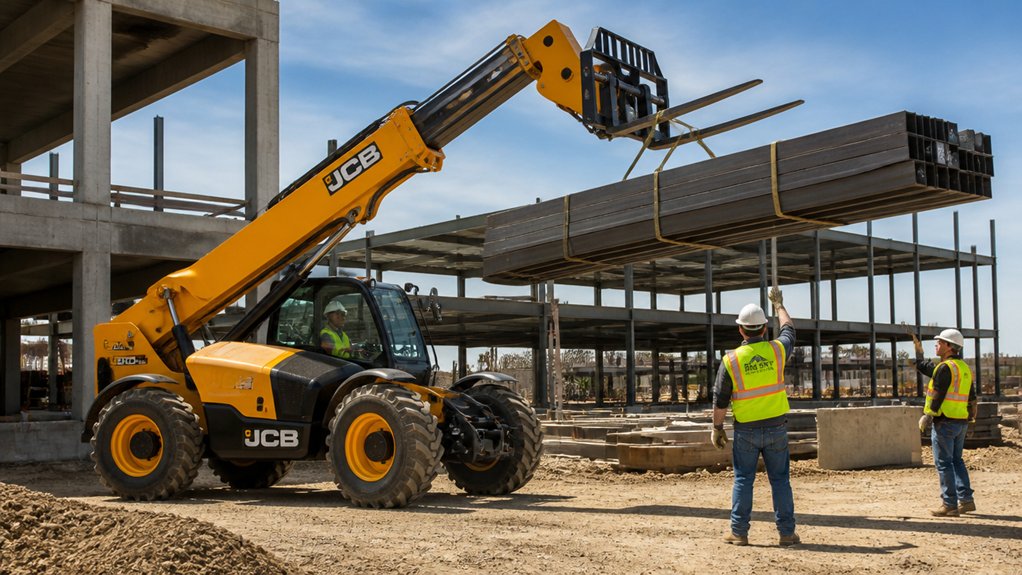
When you lift and move heavy materials with a telehandler, you must match the machine and attachment to the job, verify load limits, and plan every movement before you start. Inspect the equipment, check ground conditions, control the load, and use clear signals with spotters when visibility is restricted. Small errors can quickly create unstable loads or tip-over hazards, so the following steps show how to manage each part of the lift safely.
Match the Telehandler to the Job
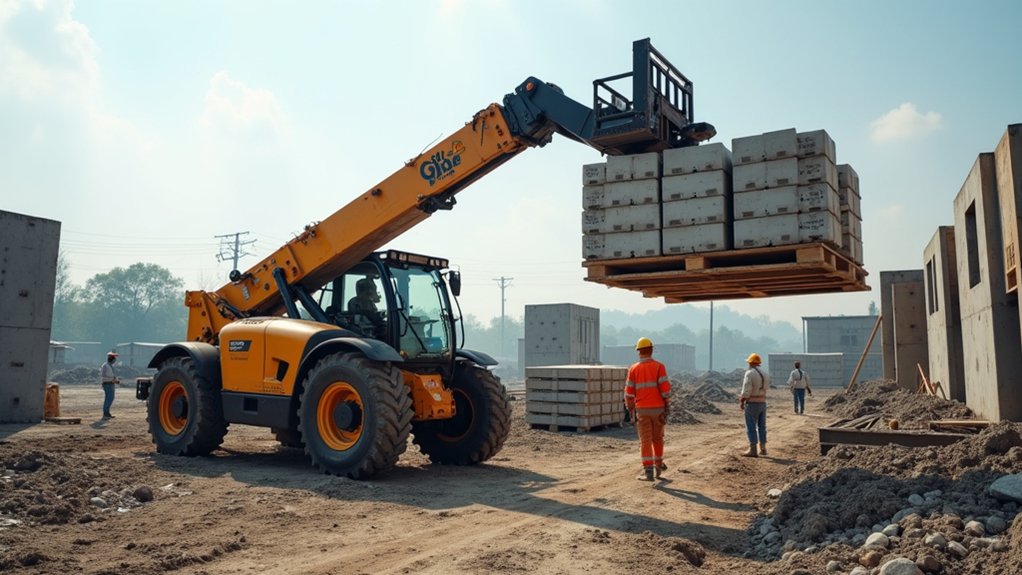
Matching the telehandler to the job starts with the load’s weight, dimensions, lift height, and reach. Choose a machine with sufficient capacity, stability, and working envelope for the planned task.
Consider ground conditions, travel distance, clearance, and whether you’ll work indoors or outdoors. A compact telehandler may suit tight spaces, while a larger model can provide greater reach and site mobility.
Confirm the machine supports approved attachments for your material and task, and verify that its tires, steering, and drive system match the terrain.
Before use, inspect equipment maintenance records, fluid levels, tires, forks, boom components, alarms, and safety devices.
Require documented operator training for everyone who’ll drive or spot the machine.
Remove defective equipment from service immediately, and plan exclusion zones, communication methods, and emergency access before lifting operations begin.
Read the Load Chart and Attachment Limits
Before lifting, read the telehandler’s load chart to confirm capacity at the planned reach, height, and operating position.
Check that the attachment’s rated limits and connection requirements match the load and machine.
Don’t exceed either limit, even when the machine’s general capacity appears sufficient.
Understanding Load Charts
When you read a load chart, confirm that the crane’s capacity covers the load’s total weight, including rigging, attachments, and any material-handling devices.
Then identify the correct chart for your telehandler’s configuration, boom length, and operating mode.
Find the planned lift height and forward reach, and use their intersection to determine the rated capacity.
Remember that capacity typically decreases as reach increases, so don’t estimate between limits unless the manufacturer permits it.
Account for ground slope, wind, uneven surfaces, and dynamic movement; these conditions can reduce stability and usable capacity.
Keep the chart legible and available in the cab, and verify that it matches your machine model.
Include chart checks in your lifting safety procedures and equipment maintenance records.
If anything remains unclear, stop and consult your supervisor or manufacturer.
Checking Attachment Limits
Check the attachment’s rated capacity against the load chart before lifting, because a telehandler’s allowable load can change with the attachment, boom position, reach, and operating mode.
Confirm Attachment compatibility by matching the attachment type, mounting system, and capacity with the manufacturer’s specifications. Never assume a bucket, fork, jib, or platform has the same limits as another attachment.
Identify the correct chart for the machine and attachment, then locate the planned boom angle, extension, and load position. Include the load’s weight, dimensions, center of gravity, and any rigging in your calculation.
Stay below the chart’s rated capacity, and account for uneven ground or dynamic movement.
Follow site Safety protocols: inspect locking devices, secure the attachment, verify alarms, and keep unauthorized workers outside the exclusion zone. If information is missing, stop and consult your supervisor or manufacturer.
Plan the Lift Before You Move
Before moving the load, assess its weight and confirm your equipment can handle it safely.
Inspect the site for overhead hazards, unstable ground, obstructions, and personnel.
Map a clear travel route, identify turning points, and establish controlled access.
Assess Load Weight
How much does the load weigh, and where’s its center of gravity? Confirm the material’s actual weight from shipping documents, manufacturer data, or a reliable scale; don’t estimate by appearance.
Include pallets, packaging, attachments, and any contents that could shift. Compare the total with your telehandler’s load chart at the planned lift height and forward reach. Never rely only on the machine’s maximum capacity.
Check the chart for the correct attachment, boom position, and operating configuration. Evaluate load stability before lifting: an uneven or suspended load can create unexpected forces and reduce control.
Analyze weight distribution and identify heavy sections, voids, and unsecured components. Keep the center of gravity within the attachment’s supported area, secure loose materials, and reduce the load or reposition it if capacity or balance remains uncertain.
Inspect Site Conditions
Once you’ve confirmed the load’s weight and balance, inspect the entire travel and placement area. Look for a site hazard that could affect stability or visibility, including soft ground, trenches, slopes, overhead lines, structures, debris, and confined clearances.
Verify that the surface can support the telehandler and its load without rutting, shifting, or collapsing. Check ground conditions at the planned set-down area, ensuring it’s level, firm, and capable of supporting the material.
Evaluate lighting, visibility, dust, and nearby personnel or equipment that could interfere with safe operation. Consider weather impact, including rain, ice, wind, heat, or lightning, and determine whether conditions require delaying the lift.
Confirm drainage and identify changing conditions you’ll need to monitor during the operation. Record hazards and correct them before moving.
Map Travel Routes
Plan the route from the staging area to the set-down point before you move the telehandler. During route planning, verify ground capacity, slope, overhead clearances, doorway widths, turning radii, and the machine’s overall dimensions.
Remove debris, mark soft spots, and protect edges, trenches, and excavations. Keep the load within the telehandler’s capacity chart for the planned boom height and reach.
Coordinate traffic management with everyone on site. Establish a dedicated travel lane, barricade the route, and separate pedestrians, vehicles, and other equipment. Assign a spotter at blind corners, crossings, and tight clearances; maintain reliable radio or hand-signal communication.
Check for changing hazards such as weather, congestion, and shifting materials. Drive with the boom retracted and the load low, stop if visibility is restricted, and never carry suspended loads over people.
Set Up on Firm, Level Ground
Before lifting, position the equipment on firm, level ground that can support its combined weight and the load without shifting or settling. Check the surface for voids, soft soil, mud, slopes, and underground hazards. Remove loose debris, and use suitable mats or cribbing when ground conditions require additional support.
Keep the telehandler’s tires properly inflated and confirm that stabilizers, if fitted, rest evenly and fully on the prepared surface. Level the machine according to the manufacturer’s instructions; don’t rely on visual judgment alone.
Engage the parking brake, place controls in neutral, and shut down unnecessary movement before connecting or handling a load. Follow your site’s Safety protocols and complete required inspections as part of equipment maintenance.
Recheck stability after positioning, especially if weather, excavation, or changing loads could weaken the setup.
Move Loads Safely Across the Jobsite
Move loads only along a clear, stable route that can support the machine, load, and expected turning forces. Before traveling, inspect for potholes, soft soil, slopes, overhead obstructions, and personnel.
Establish exclusion zones, control intersections, and keep pedestrians separated with barriers or a spotter. Follow site Safety protocols, posted speed limits, and the telehandler manufacturer’s travel guidance.
Carry the load as low as practical while maintaining visibility and stability. If the load blocks your forward view, travel in reverse only when your route remains clear and you can use a trained spotter.
Keep forks, attachments, and materials secure against shifting. Make gradual steering and braking inputs, especially on uneven ground or grades.
Effective operator training helps you recognize changing conditions, communicate clearly, and stop safely when the route becomes unsuitable.
Avoid Common Telehandler Lifting Mistakes
Safe travel sets the foundation, but lifting errors can still destabilize a telehandler or damage the load. Before picking up materials, confirm the load’s weight, dimensions, center of gravity, and placement against the capacity chart.
Don’t exceed rated capacity, rely on counterweights, or lift with an unlevel machine. Fully engage forks beneath the load, keep it centered, and secure unstable materials before moving.
Raise and lower smoothly; sudden joystick movements can shift the center of gravity. Keep the boom low while traveling, and never allow anyone beneath a suspended load.
Watch clearance around power lines, structures, and workers. Follow the manufacturer’s procedures, complete operator training, and report defects immediately.
Scheduled telehandler maintenance helps prevent brake, tire, hydraulic, and attachment failures that can turn a routine lift into a serious incident.
Conclusion
A safe telehandler lift starts before you raise the load. Match the machine and attachment to the task, confirm capacity from the load chart, and plan your route, ground conditions, and communication signals. Keep loads stable, travel slowly, and never exceed rated limits or bypass a safety device. Remember, roughly one in four construction fatalities involves a struck-by or caught-between hazard. With trained operators, reliable spotters, inspections, and steady decisions, you’ll move materials efficiently without compromising people or equipment.