

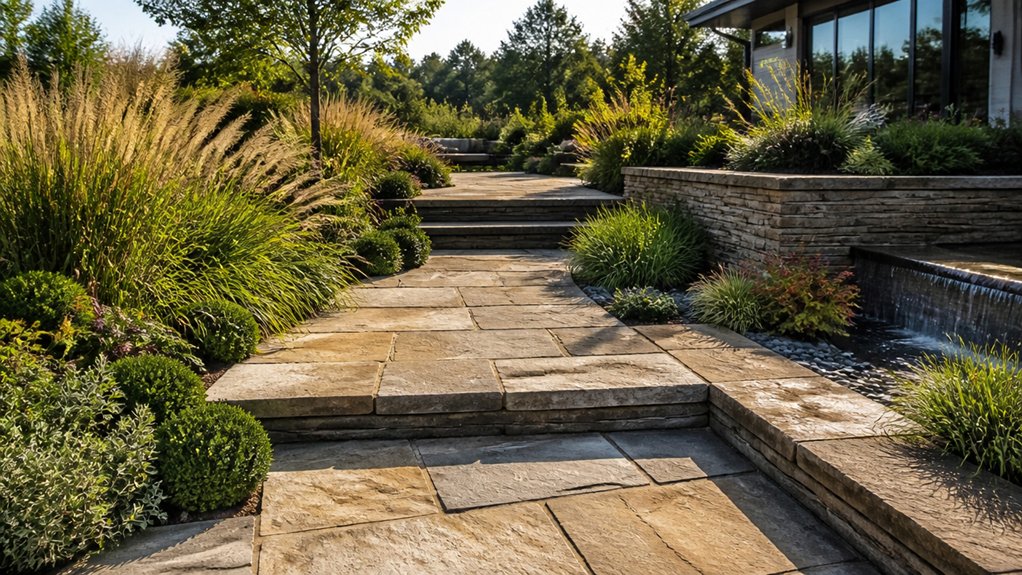
Like the enduring stonework of a Yorkshire village, York Stone can give your landscape a sense of permanence and place. Its strength, weather resistance, and varied tones suit patios, paths, walls, steps, and feature areas across the UK. You’ll need to match the stone’s finish and thickness to each application, then install and maintain it correctly. The right choices can transform an ordinary garden, but the details determine how well it performs.
What Makes York Stone Durable and Distinctive
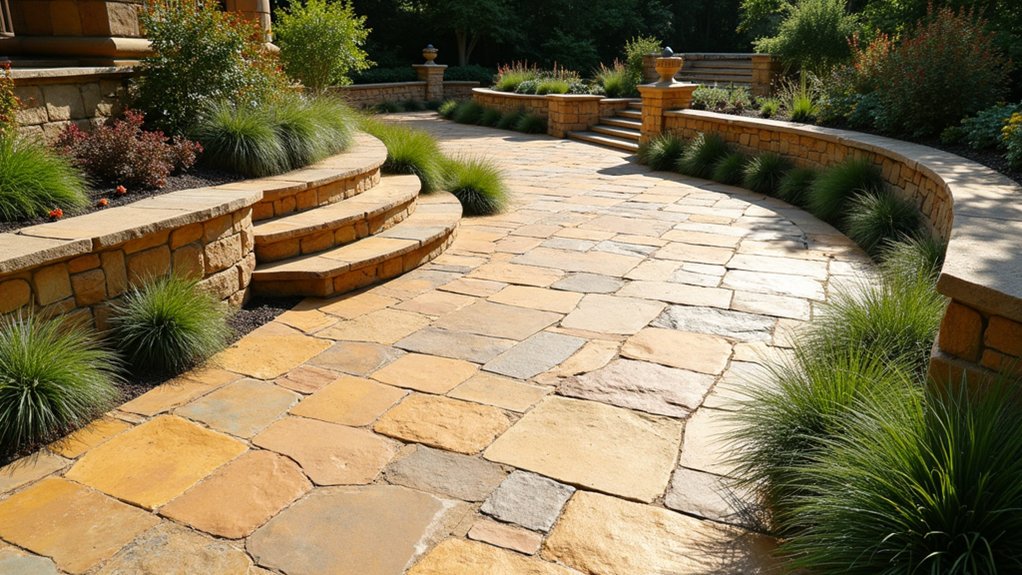
York Stone is a dense, naturally weather-resistant sandstone formed over millions of years, giving it the strength to withstand frost, heavy foot traffic and changing UK weather conditions. Its tightly compacted grain provides reliable structural performance.
While natural variations in colour, texture and fossil markings give each slab a distinctive appearance. You’ll find tones ranging from warm buff and grey to muted brown, helping you achieve an authentic finish without artificial uniformity.
Its Historical significance strengthens its appeal: quarries across Yorkshire have supplied building stone for centuries, leaving the material closely associated with regional architecture and traditional craftsmanship.
Regional sourcing can also reduce transport distances and support UK suppliers.
With correct specification, drainage and installation, York Stone offers long service life, develops an attractive patina and remains practical for demanding British landscapes.
Plan York Stone Patios and Pathways
Planning a York Stone patio or pathway starts with how you’ll use the space, the available ground conditions and the required drainage. Measure the area, mark finished levels, and check that paving will fall away from your property.
In the UK, allow sufficient sub-base depth for local ground conditions, traffic, and frost exposure. Excavate unstable material, install a well-compacted MOT Type 1 sub-base, and use suitable geotextile membrane where clay or poor soil risks movement.
Set paving on a full mortar bed, keeping joints consistent and surfaces level without creating standing water. Consider access, door thresholds, rainwater routes, and maintenance before ordering stone.
Select compatible sizes, tones, and textures to support your garden design and strengthen aesthetic appeal. Plan cuts carefully to minimise waste and achieve clean edges.
Use York Stone for Walls, Steps, and Features
Whether you’re building a retaining wall, garden steps, seat, or raised bed, York stone provides a durable, characterful finish that suits traditional and contemporary gardens.
Use appropriately sized, sound pieces, and design walls with stable foundations, correct drainage, and suitable mortar for your site conditions.
For retaining structures, include a free-draining backfill and weep holes where required; consult a structural engineer for substantial loads or height.
York stone steps need a firm, level base, consistent rises, and a slight fall to shed rainwater.
Set each tread securely, then check access against UK building guidance, particularly on larger projects.
Copings, caps, and lintels can frame entrances, ponds, and seating areas, linking practical construction with thoughtful garden design.
Its enduring character also complements stonework found in historical architecture, helping new features sit naturally within older properties.
Choose the Right York Stone Finish
The finish you choose will affect how York stone looks, performs, and feels underfoot. For patios, paths, and steps, compare sawn, riven, and brushed surfaces against the demands of your site.
Sawn York stone offers precise edges and a relatively even face, creating a clean, contemporary appearance that suits formal layouts.
Riven stone retains natural clefting, so you’ll achieve greater visual character and variation across each paving unit.
Brushed or tumbled finishes soften sharp edges and add tactile interest, making them suitable for informal gardens and heritage-style schemes.
Consider colour options alongside texture choices: warm buff, grey, and mixed tones can complement brickwork, render, or planting.
Request physical samples, because quarry variation and changing light can markedly alter perceived colour and surface detail before you commit to a final selection.
Install, Seal, and Maintain York Stone
Install York stone on a stable, well-drained base, allowing adequate falls to direct water away from buildings and avoiding standing moisture beneath the paving. Use a suitable mortar or full-bed exterior adhesive, depending on the application, and maintain consistent joints. Check each slab’s level and alignment as you work, allowing movement joints beside buildings and across larger areas.
After curing, clean the surface with clean water and a pH-neutral product. Don’t use acidic cleaners, wire brushes, or pressure washing, which can damage the stone.
Apply a breathable, penetrating sealer only when the paving is dry, and follow the manufacturer’s coverage and curing guidance. Reapply it as recommended, remove weeds from joints, and replace failed pointing promptly.
These steps protect your landscaping design while keeping York stone, one of the most durable Hardscape materials, attractive in the UK climate.
Conclusion
York Stone can transform a garden into a lasting investment, combining practical performance with unmistakable character. Its strength suits patios, pathways, walls, steps, and bespoke features, while varied tones and textures complement both traditional and contemporary schemes. Choose a finish for its intended use, then rely on correct sub-base preparation, jointing, sealing, and routine cleaning to protect the surface. With sensible specification and installation, your stonework won’t merely weather the seasons—it’ll gather the patina of time gracefully.