


When you’re managing a structural project, mobile cranes give you the reach, capacity, and mobility to position heavy components with controlled precision. You can adapt crane configurations to changing site conditions, then use rated slings and spreader beams to secure each load. However, safe lifting depends on more than crane capacity; ground conditions, lift planning, weather, clearances, and operator coordination all matter. The right approach can reduce delays, but one planning error can compromise the entire operation.
How Mobile Cranes Lift Heavy Loads
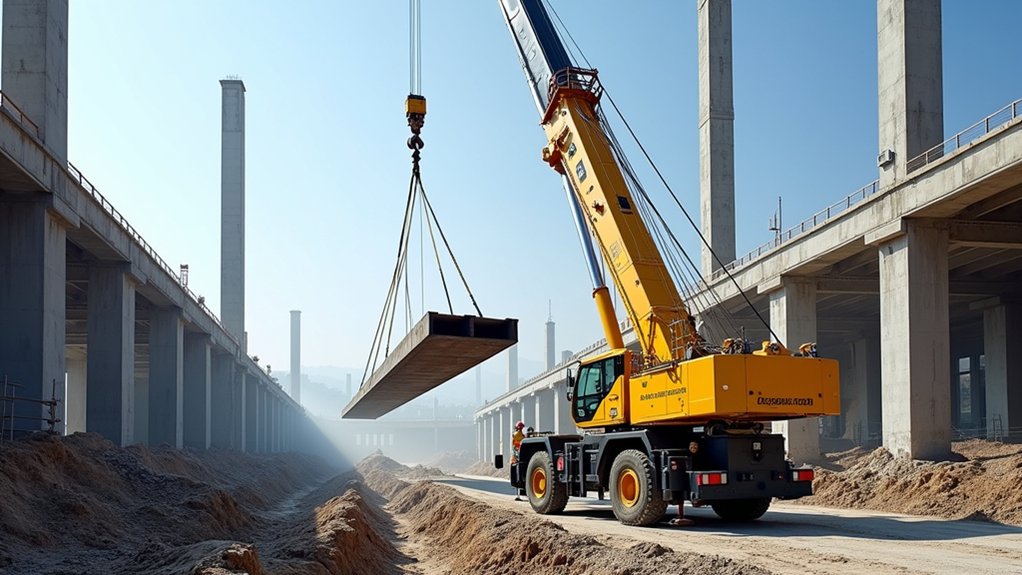
How do mobile cranes lift heavy loads safely? You begin by confirming the load’s weight, dimensions, lifting points, and center of gravity.
The crane’s hoist motor winds steel wire rope around a drum, creating controlled upward force through the hook and rigging.
Monitor cable tension continuously; excessive tension can indicate overload, snagging, or an unbalanced load.
Use rated slings, shackles, and spreader beams to maintain secure connections and prevent damage.
Plan load distribution across the rigging so each component carries an acceptable share of the force.
Raise the load slowly, pause to check stability, and keep personnel outside the fall zone.
Use clear signals or dedicated radio communication between the operator and signal person.
Never exceed rated capacity, shock-load the crane, or move an uncontrolled suspended load.
Match the Mobile Crane to the Site
Before choosing a mobile crane, assess the site’s access routes, ground conditions, overhead clearance, working radius, and available setup space.
Evaluate Site accessibility by checking road widths, turning areas, bridge limits, slopes, and obstacles that could restrict transport or positioning.
Select a crane whose capacity, boom length, and configuration match the structural loads and required reach without exceeding its load chart.
For soft or uneven ground, confirm that outriggers, mats, or other approved support systems can distribute pressure effectively.
Compare all-terrain, rough-terrain, truck-mounted, and crawler cranes according to terrain, mobility, and setup requirements.
Verify Crane maintenance records, inspections, tires, hydraulics, safety devices, and manufacturer limits before delivery.
Confirm the selected machine fits through entrances and can set up without contacting structures, utilities, or overhead obstructions.
Plan Safe Mobile Crane Operations
Once you’ve selected a suitable crane, plan each lift around site hazards, load characteristics, and the manufacturer’s operating limits.
Inspect ground bearing capacity, overhead obstructions, power lines, access routes, and exclusion zones before setup.
Confirm the crane’s configuration, rated capacity, lift radius, counterweights, and outrigger positions match the engineered lift plan.
Establish clear operator communication using agreed hand signals, radios, and one designated signal person.
Verify every rigger understands attachment methods, load weight, center of gravity, and tag-line requirements.
Secure the area against unauthorized entry, and stop work when wind, visibility, or ground conditions exceed safe limits.
Keep inspection records current, follow maintenance schedules, and remove defective equipment from service.
Conduct a pre-lift briefing, then monitor conditions continuously throughout each pick and placement.
Reduce Delays With Better Crane Planning
Efficient crane planning keeps lifting work on schedule without compromising safety. Before mobilization, confirm load weights, lifting points, required reach, ground conditions, and overhead clearances.
Select a crane with suitable capacity at the planned radius, then prepare a lift plan that sequences picks, deliveries, and crew movements. You’ll reduce waiting when materials arrive in the correct order and access routes remain clear.
Schedule equipment maintenance before critical lifts, and verify inspections, certifications, and backup arrangements.
Include operator training in your schedule so every operator understands site hazards, communication signals, control limits, and emergency procedures.
Hold a pre-lift briefing with riggers, signalers, supervisors, and the operator.
Monitor weather, changing site conditions, and production progress; pause and revise the plan whenever conditions differ from your assumptions.
Conclusion
When you match the crane to your site, plan each lift, and use rated slings or spreader beams, you’ll move heavy structural loads with control and confidence. Verify ground conditions, load charts, clearances, weather, and communication before the first pick. Like a well-rehearsed orchestra, every person and component must work in sequence. Careful planning keeps crews safe, protects structural integrity, and prevents costly delays—helping you complete demanding lifts efficiently, safely, and on schedule.