


Like rebuilding a small ship in a tight harbour, renovating a cottage demands careful planning before you bring in machinery. Set a firm budget that includes hire, delivery, fuel, operators, permits, and contingency funds. Measure gateways, check ground conditions, and note overhead hazards before choosing compact plant such as mini excavators or skid-steer loaders. Compare rates and terms, then plan safe booking and inspections—because one overlooked access problem can quickly alter your entire schedule.
Plan Your Cottage Renovation Budget and Access Needs
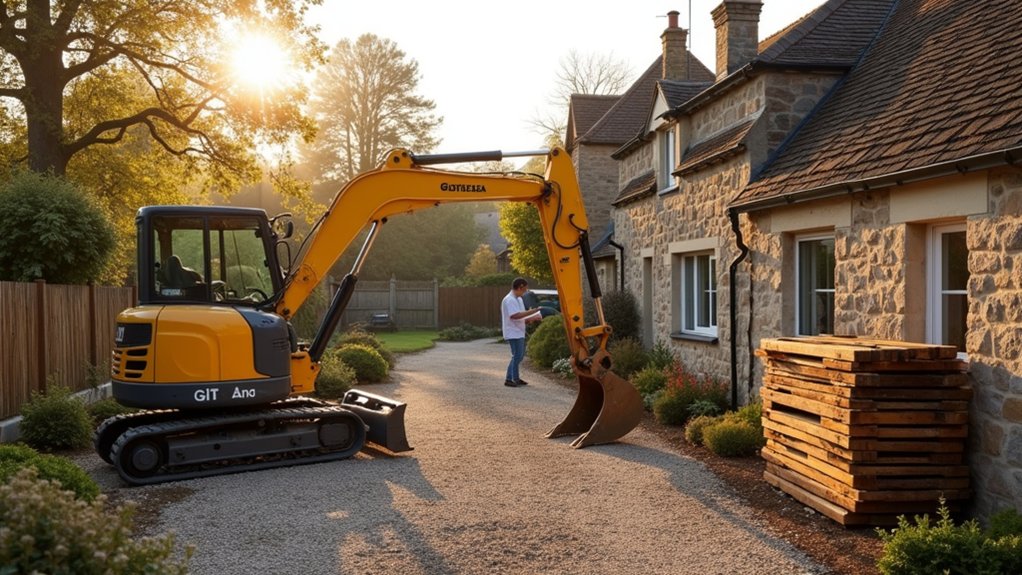
Before work starts, set a realistic renovation budget that includes plant hire, delivery, fuel, operator costs, permits, and contingency funds.
Separate structural repairs from finishes, then reserve extra cash for hidden defects, weather delays, and restricted access.
Measure gates, driveways, doorways, and turning areas before you request quotations.
Record ground conditions, slopes, overhead cables, drainage routes, and nearby walls; these details affect setup, safety, and potential reinstatement costs.
Confirm whether you’ll need temporary surfacing to protect lawns or paving.
Coordinate spending across landscape design and interior decor, so exterior access work doesn’t undermine planned finishes.
Ask suppliers for itemised rates, minimum hire periods, transport charges, and damage policies.
Keep a written schedule and update your cash-flow forecast whenever the scope changes.
This approach helps you control costs before machinery arrives.
Choose Plant Hire for Each Renovation Task
Match each machine to the task, site conditions, and available access rather than choosing by size alone.
For trenching utilities, choose a compact excavator with a narrow bucket; it can reach confined cottage corners while limiting ground disturbance.
Use a skid-steer loader for moving spoil, gravel, or reclaimed materials, but confirm the surface can support its weight.
A mini dumper suits steep or muddy paths where a trailer can’t operate safely.
For garden grading and landscaping ideas, select a laser-guided leveller or small plate compactor to create stable, accurate finishes.
Indoors, use compact, low-clearance equipment and protect floors with boards; a tracked machine may reduce pressure on delicate surfaces.
Match attachments to each job, too, such as breakers for masonry and augers for posts.
This approach supports interior design plans by preserving walls, thresholds, and established features.
Compare Plant Hire Rates, Terms and Delivery
Compare quotes by total job cost, not just the daily plant hire rate. Ask each supplier for itemised pricing covering the machine, attachments, landscaping tools, delivery, collection, fuel, cleaning, and taxes.
Check whether rates apply per calendar day, working day, weekend, or week; a longer hire period may reduce your daily cost.
Read the terms for deposits, minimum hire periods, cancellation charges, damage liability, breakdown support, and replacement arrangements.
Confirm the quoted machine’s specification, including operating weight, reach, width, power, and attachment compatibility, so you don’t pay for unsuitable capacity.
Ask whether safety equipment is included or charged separately.
Compare delivery windows, access requirements, unloading space, and fees for remote or restricted sites.
Get the final quote and all exclusions in writing before you commit, then allow contingency for weather-related delays.
Book Equipment and Use It Safely
Once you’ve accepted the quote, book the equipment for the confirmed work period and request written delivery, collection, and breakdown procedures. Confirm access widths, ground conditions, operator requirements, fuel charges, and insurance before delivery.
Check that the machine suits each task, from garden landscaping excavation to moving materials for interior decorating. Ask the hire company for an induction, operating manual, and emergency contact number.
Before starting, inspect tyres, tracks, guards, controls, attachments, fluid levels, and existing damage; photograph findings and report defects immediately.
Wear task-appropriate PPE, keep bystanders clear, and use barriers where children or visitors may enter. Work on stable ground, observe load limits, and never carry passengers unless designed for them.
Park securely, lower attachments, isolate power, and lock the machine whenever you leave it. Record operating hours to prevent unexpected charges.
Conclusion
With careful planning, affordable plant hire can keep your cottage renovation on budget without compromising safety or quality. You’ll save more by measuring access, choosing compact equipment, comparing inclusive rates, and booking only what each task requires. Inspect machinery, confirm delivery conditions, and allow for fuel, permits, weather, and unexpected ground problems. Why pay for capacity you don’t need? Plan precisely, operate safely, and your renovation can progress efficiently with fewer costly surprises.