

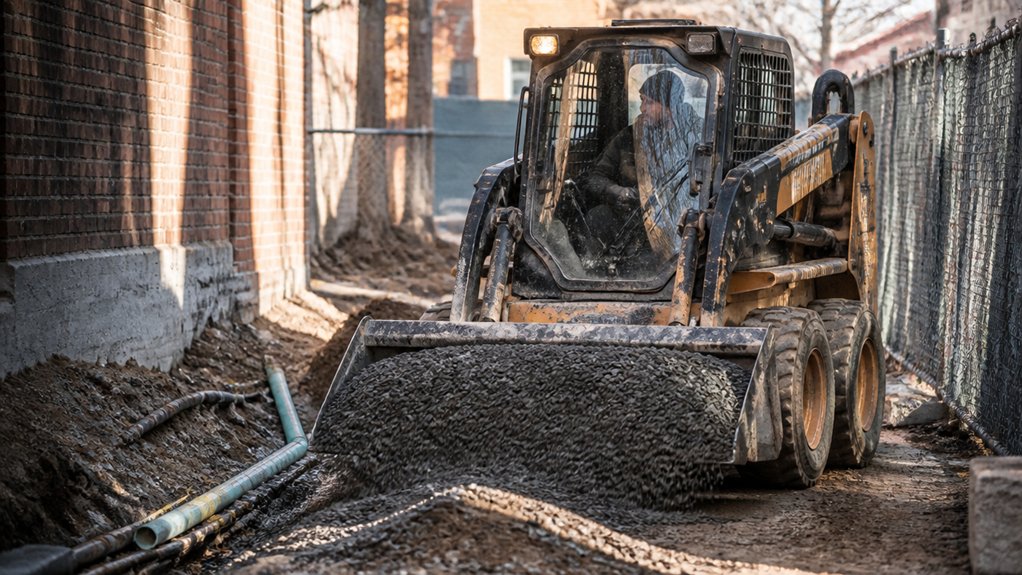
When you’re hiring a skid steer for a tight-space project, start by measuring every access point, route, and working area. Check ground conditions, overhead clearance, turning room, and delivery limits before choosing a machine. Then match its lift type, operating capacity, and attachments to the terrain and task, allowing a safe margin for load weight. Compare hire rates, support, and contract terms carefully, because one overlooked detail can delay the entire job.
Measure Access Before Hiring a Skid Steer
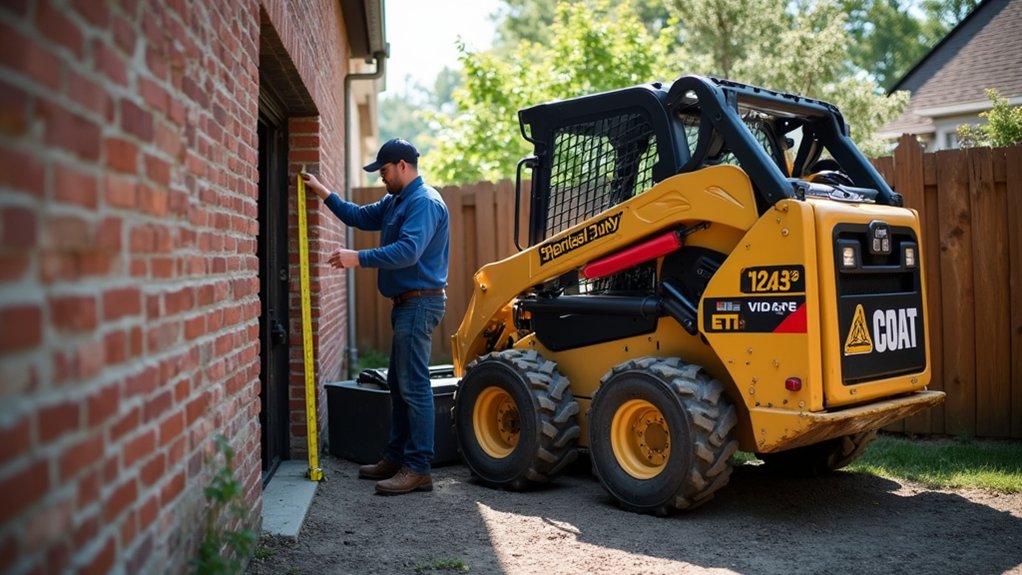
Before you hire a skid steer, measure every access point from the delivery area to the work zone. Record gate widths, doorway heights, corridor clearances, turning areas, slope angles, and overhead obstructions.
Compare these measurements with the rental unit’s published dimensions, including mirrors, tires, attachments, and protective structures. Allow extra clearance for steering corrections; a machine that barely fits can damage walls, fencing, or utilities.
Check ground conditions and identify soft soil, drainage grates, curbs, and sharp gradual shifts that could affect travel.
Confirm the delivery truck can reach the unloading location without blocking traffic or contacting power lines.
Ask the rental provider about equipment maintenance records and current inspection status.
Before operation, walk the route with the operator, establish signals, and maintain exclusion zones to protect operator safety and nearby workers.
Choose the Right Capacity and Lift Type
Once the route is confirmed, match the skid steer’s rated operating capacity and lift type to the loads and heights on your job. Check the rated operating capacity at the tipping load, then include the machine’s safety margin, load weight, and center of gravity. Don’t assume a compact frame can safely handle a heavy, elevated load.
Choose radial lift for digging, grading, and placing materials at midrange heights. Select vertical lift when you’ll load high-sided trucks or stack materials overhead; verify the reach at full height. Ask the rental provider for lift charts and operating limits for the exact model.
For operational safety, keep loads low while traveling, level the machine, and never exceed capacity. Inspect warning systems, tires or tracks, hydraulics, and restraints. Confirm equipment maintenance records before accepting delivery.
Select Attachments for the Job and Terrain
Select an attachment that matches the material, task, and ground conditions—not just the loader’s mounting system. Confirm attachment compatibility, including hydraulic flow, rated capacity, coupler type, and electrical connections, before booking.
Use a general-purpose bucket for soil, gravel, and debris; choose a grapple for irregular loads, a trencher for narrow utility cuts, or a broom for finished surfaces.
Match the attachment’s weight and working width to your loader’s operating capacity and the site’s access limits.
For frozen, compacted, or rocky ground, a breaker or rock bucket may improve productivity, but verify impact ratings and underground-utility controls.
Evaluate terrain suitability: tracks can improve stability on soft ground, while tires suit firm surfaces.
Inspect pins, hoses, guards, and safety latches before use, and secure loads during travel.
Compare Skid Steer Hire Costs and Support
Compare more than the advertised daily rate when hiring a skid steer loader. Request a complete quote covering delivery, collection, fuel, cleaning, attachment charges, excess hours, and damage liability.
Check whether Rental insurance is included, identify exclusions, and confirm the excess before signing. A lower rate may cost more if it excludes the bucket, narrow tyres, or delivery to your restricted site.
Evaluate Technician support, too. Confirm the provider’s response time, emergency contact, and arrangements for breakdowns. Ask whether staff will demonstrate controls, attachment changes, stability limits, and daily inspection points.
Choose a machine whose rated operating capacity suits your load, leaving a safety margin rather than hiring solely on price. Verify operator-training requirements and site access dimensions.
Compare like-for-like quotes, read the hire agreement, and document existing damage during handover with photographs.
Conclusion
With careful planning, you’ll turn a tight-space skid steer project from a potential headache into a smooth, well-controlled operation. Measure every access point, confirm ground conditions, and choose a machine with suitable capacity, lift type, and safety margin. Match attachments to the terrain and task, then compare hire costs, delivery, servicing, and insurance. Document site conditions before work begins, brief operators, and maintain clear routes. These steps help you work efficiently, protect people and property, and avoid costly surprises.