

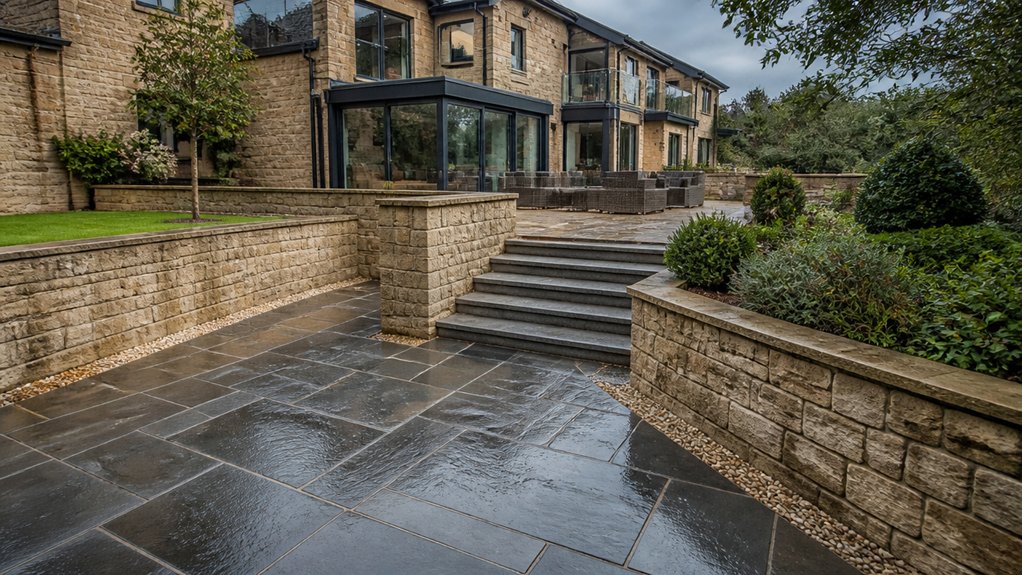
Natural stone needn’t exceed your budget when you match the material to your project and source it carefully. You’ll need to assess appearance, strength, slip resistance, frost performance and environmental impact before choosing sandstone, granite, limestone or slate. UK weather, paving standards, drainage and jointing methods all affect long-term performance. With the right installation and maintenance plan, you can avoid premature damage—but several requirements deserve closer attention before you specify a single slab.
Choose Natural Stone by Use and Appearance
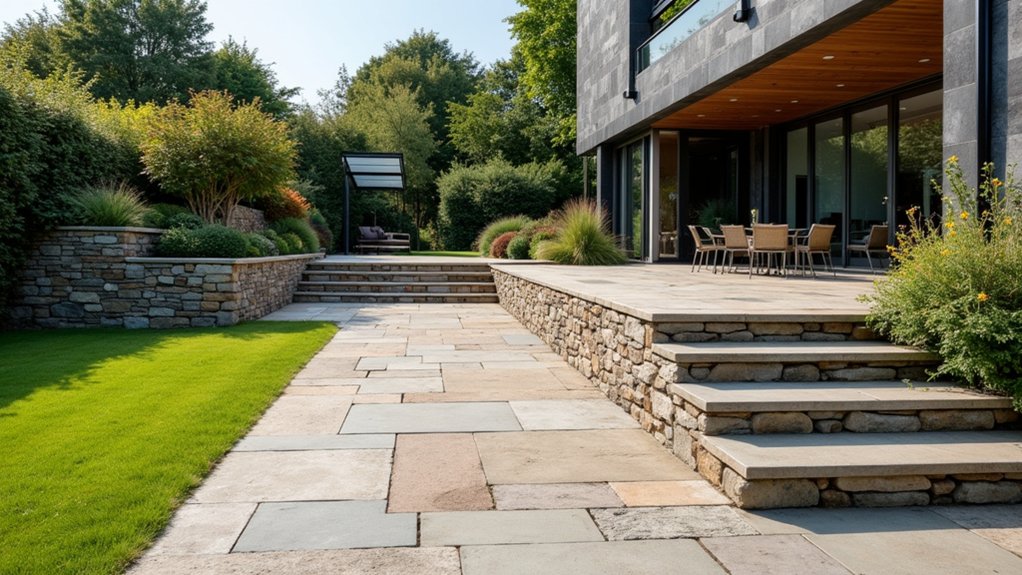
When choosing natural stone for a UK project, match its performance and appearance to the intended use rather than selecting solely by colour.
For paving, assess thickness, finish, dimensional tolerance and slip resistance alongside the design brief. Use calibrated sandstone or limestone where you need consistent joint widths and a formal layout; choose riven finishes for a more traditional garden character.
For walls, consider block size, bed depth and how easily the stone can be cut or dressed on site. Color variability can range from subtle tonal shifts to pronounced banding, so review several samples and, where possible, an approved batch before ordering.
Texture options include sawn, honed, brushed, flamed and naturally cleft surfaces.
Coordinate the stone with brick, render, planting and surrounding hardscape to create a coherent UK scheme.
Match Stone to UK Weather and Wear
UK weather demands a stone choice based on water absorption, freeze–thaw resistance and surface durability. For exposed paving, choose dense, low-porosity granite or well-tested sandstone rated for UK conditions. Check technical data for frost resistance, slip performance and expected traffic before specifying slabs.
In northern or upland areas, repeated freezing, driving rain and grit can accelerate cracking and abrasion, so select thicker units and robust finishes.
Limestone can suit sheltered terraces, but porous varieties may suffer staining and frost damage without suitable sealing and drainage.
For walls, confirm that the stone tolerates saturation and temperature changes, particularly where coping directs water onto the face.
Match texture to use: flamed or riven surfaces improve grip, while polished finishes become hazardous outdoors.
Balance Weather resistance with aesthetic harmony across elevations, paths and planting.
Compare Stone Costs and Sustainable Sources
Once performance suits the site, compare whole-life costs rather than slab prices alone. Request itemised quotations covering extraction, processing, grading, packaging, haulage and VAT.
A local Welsh, Scottish or English quarry may reduce lead times and transportation emissions compared with imported stone, although regional availability and specification still affect price.
Ask suppliers about quarrying practices, including bench restoration, water management, dust control and energy use. Check whether they hold BES 6001, ISO 14001 or independently verified environmental product declarations; these documents support credible procurement decisions.
Reclaimed Yorkstone, granite setts and paving can reduce demand for new extraction, but confirm provenance, testing, contamination risk and consistent quantities before committing.
Compare expected service life, maintenance requirements, replacement availability and delivery distances. Record assumptions in your tender so each option receives a transparent cost and carbon comparison.
Install Natural Stone for Lasting Performance
Install natural stone to the project’s drainage, loading and movement requirements, not simply to its appearance. Specify thickness, jointing and bedding for the intended use: a permeable sub-base and well-compacted Type 1 support paving, while a concrete base may suit heavy vehicle areas. Follow the supplier’s installation guidance and relevant British Standards, including BS 7533 where applicable.
Match stone selection to exposure, freeze-thaw risk and slip resistance, particularly on paths in wetter parts of the UK. Account for the stone’s bedding plane, laying slabs consistently to reduce cracking.
Review quarrying techniques and historical applications for evidence of performance in comparable conditions, but verify current product data.
Allow movement joints where the design requires them, and detail edges, thresholds and drainage channels so water leaves the surface efficiently.
Maintain Stone and Check UK Requirements
Good installation won’t prevent problems if you neglect routine care and compliance checks. Inspect paving, walls and cladding regularly for cracked joints, staining, frost damage, movement and slipping risks.
Remove dirt with a soft brush and pH-neutral cleaner; avoid acidic products on limestone, marble or cement-sensitive surfaces. Repoint open joints with a compatible mortar, replace damaged units, and keep drainage channels clear.
Apply a breathable sealer only where the stone manufacturer recommends it, then record treatments for future maintenance. Effective stone preservation depends on controlling water, salts, weeds and de-icing chemicals, particularly through UK winters.
For regulatory compliance, confirm planning conditions, conservation-area restrictions and listed-building consent before altering historic stonework. Check Building Regulations, accessibility gradients, slip resistance, structural loading and boundary requirements.
Use competent contractors, retain product data, and review local authority guidance before work begins.
Conclusion
Choose natural stone with care, and you’ll create spaces that feel timeless yet withstand Britain’s changeable weather. Balance beauty with performance: a smooth surface may look elegant, while a textured finish offers safer footing in rain. Source responsibly, install correctly, and maintain regularly, rather than accepting short-term savings and long-term repairs. By checking drainage, joints, slip resistance and relevant UK requirements, you’ll deliver durable, sustainable construction and landscaping that looks refined yet works hard for years.