
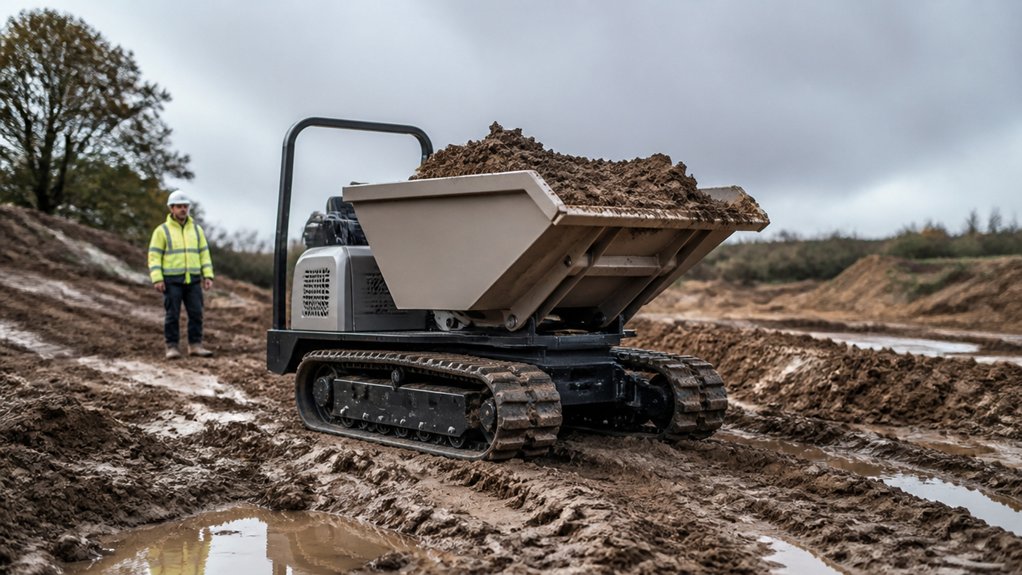
If your site turns muddy just when material movements increase, tracked dumper hire can provide the control and traction you need. Continuous tracks spread the machine’s weight, reducing ground pressure, rutting, and the risk of sinking on soft or uneven surfaces. You’ll also move more material with less manual carrying and fatigue, even on slopes. The right size and capacity matter, though, and that’s where the real cost and safety benefits begin.
When Is Tracked Dumper Hire Worth It?
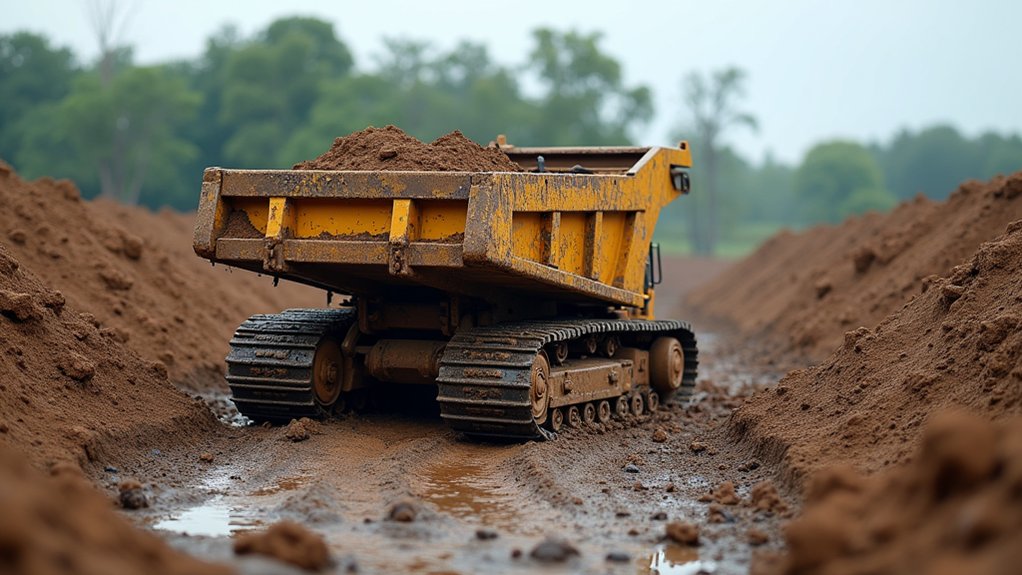
Tracked dumper hire is worth considering when your project involves moving heavy materials across uneven, soft, or restricted terrain where wheeled dumpers may lose traction or cause excessive ground damage. You’ll benefit most when access routes are narrow, ground protection matters, and transporting spoil, aggregate, or demolition waste exceeds manual handling capacity.
Hiring also makes financial sense for short-term work because you avoid purchasing, storing, insuring, and depreciating specialist machinery.
Before booking, assess payload requirements, site access, operating hours, and delivery arrangements. Confirm that the selected machine suits your material and discharge method.
Prioritise construction safety by checking operator competence, exclusion zones, visibility, and traffic controls. Ask the hire provider about equipment maintenance records, inspection status, breakdown support, and replacement arrangements.
This approach helps you control costs, reduce delays, and maintain reliable material movement.
How Do Tracked Dumpers Handle Mud and Slopes?
Site conditions often determine whether a dumper performs efficiently, and tracked models are designed to maintain movement where mud and slopes challenge wheeled equipment. Continuous tracks spread traction across the ground, helping you move through soft surfaces without relying on narrow tyres that can spin or sink quickly.
The track pattern clears mud from contact areas, while controlled steering lets you correct direction without sudden wheel slip. On inclines, low-mounted components and steady track engagement support slope stability, provided you follow the manufacturer’s gradient limits.
You should approach slopes directly, keep the load balanced, and avoid abrupt turns or braking. Effective mud management also requires planned access routes, regular track cleaning, and pauses when conditions become unsafe.
A competent operator will assess changing ground conditions throughout the workday.
Protect Uneven Sites With Low Ground Pressure
When ground conditions are fragile or uneven, low ground pressure helps protect the surface while maintaining reliable load movement. Tracked dumpers spread their weight across continuous tracks, reducing rutting, soil compaction, and damage to turf, drainage layers, or recently prepared ground.
You’ll preserve ground stability more effectively than with narrow-tyred equipment, particularly on soft embankments, landscaped areas, and partially finished access routes. The tracks also improve traction without requiring excessive wheel spin, helping you maintain controlled progress across cambers, loose fill, and uneven gradients.
Choose a dumper with a suitable payload and track width for your site; excessive loading can still increase surface pressure. Hiring the right machine gives you equipment versatility, allowing one compact carrier to work across sensitive terrain while limiting reinstatement costs and environmental disturbance during material transport.
Reduce Manual Carrying With Tracked Dumpers
Protecting the ground is only part of efficient material handling; you also need to limit the physical effort required to move each load. A tracked dumper carries spoil, aggregate, soil, and tools across difficult terrain, reducing the need for workers to push wheelbarrows or lift materials repeatedly.
You’ll lower manual-handling risks, reduce fatigue, and maintain steadier productivity throughout the shift. Because the machine travels over soft or uneven ground, you can position materials closer to the work area without creating unnecessary access routes.
Choose a hire provider that verifies controls, tracks, brakes, and loading systems before delivery. Reliable equipment maintenance supports safe operation and prevents disruptive breakdowns.
Choose Tracked Dumper Size and Capacity
Choose a tracked dumper whose load capacity and dimensions match the material volume, access width, and ground conditions on your project. Estimate your total spoil, aggregate, or soil volume, then select a capacity that limits repeated trips without exceeding safe payload limits.
Check the dumper’s width against gates, paths, and excavation access points, allowing clearance for turning and operator visibility.
On soft or sloping ground, prioritize low ground pressure, stable tracks, and sufficient climbing ability over maximum capacity. A compact model may maneuver better, while a larger dumper can improve productivity on open sites.
Ask the hire company to verify payload ratings and terrain suitability.
Follow Tracked dumper safety procedures, and complete Dumper maintenance checks, including track tension, brakes, hydraulics, and warning systems, before operation.
Conclusion
If you’re moving spoil across a muddy, sloping site, tracked dumper hire can improve productivity, safety, and ground protection. For example, during a hypothetical drainage project, a compact tracked dumper could transport excavated clay without rutting the access route or requiring repeated manual handling. Choose capacity according to site access, payload, and gradient, then match operating limits to ground conditions. With the right machine, you’ll reduce delays, protect finished surfaces, and control overall project costs.