

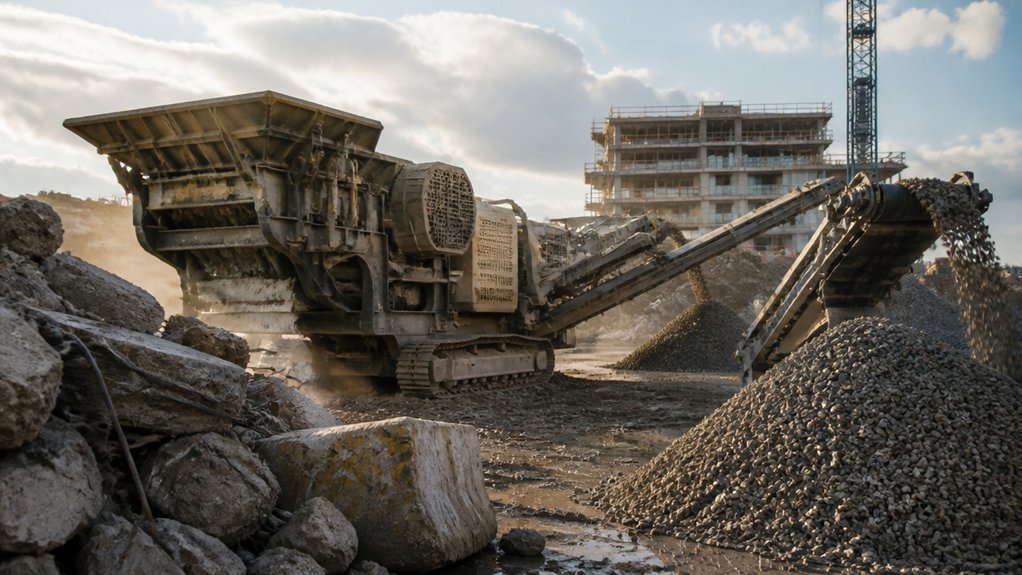
Like turning rubble into building blocks, you can use crushers to give demolition waste a useful second life in UK construction. Jaw crushers break down large concrete, brick and masonry fragments, while impact or cone crushers refine their size and shape. Screens then grade the output, and magnetic separators remove steel. The resulting recycled aggregate can support road sub-bases, fill and concrete work—but achieving consistent quality depends on each stage working together. The range of crushing machinery by AGGPRO will give options for all workloads.
How Crushers Make Recycled Aggregate
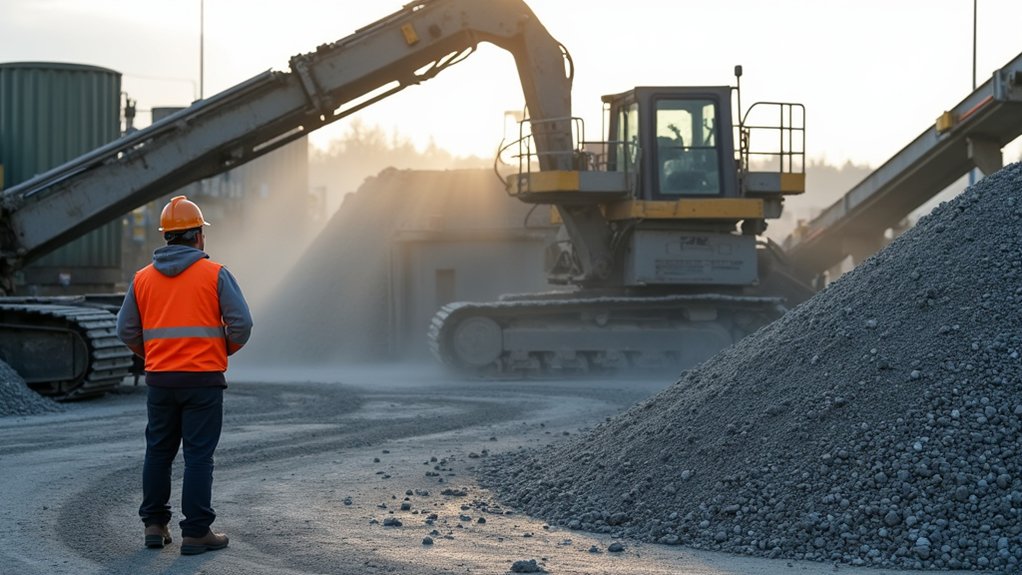
When you feed demolition waste into a crusher, it breaks concrete, brick and masonry into controlled sizes for reuse as recycled aggregate. You adjust the jaw, impact or cone crusher to produce the grading your UK project specification requires.
Primary crushing reduces large fragments, while secondary and tertiary stages refine particle size and shape. Screens separate oversize material, returning it for further processing, and remove unwanted fines where necessary.
You can use magnetic separators to extract ferrous metal before stockpiling. Effective Crushing technology limits contamination and supports consistent grading for applications such as sub-base and drainage.
You should monitor feed rate, moisture and crusher settings to maintain output quality. Proper processing improves Aggregate durability by reducing weak particles and producing stable, well-graded material for construction use.
What Materials Can Crushers Recycle?
Crushers can recycle clean concrete, brick, blockwork, asphalt and selected natural stone from UK demolition and construction sites.
You can also process some reclaimed road planings, provided they meet the required specification and contain no prohibited contaminants. However, you shouldn’t feed plasterboard, timber, soil, glass, plastics, asbestos or heavily contaminated loads into a crusher.
These materials create Recycling challenges, damage equipment and may prevent the aggregate from achieving UK quality requirements.
Painted or chemically treated surfaces need particular care because hazardous substances can affect worker safety and end use.
You should confirm the waste classification, source and intended application before processing.
Choosing suitable feedstock reduces landfill demand, conserves virgin stone and lowers the Environmental impact of construction, while helping you produce consistent recycled aggregate for compliant UK projects.
How Sorting and Crushing Prepare Waste
Once suitable feedstock has been identified, you need to sort it before crushing. Effective waste segregation removes plasterboard, timber, plastics, soil and hazardous materials from concrete, brick and asphalt. You can use site inspections, picking stations, magnets and material handlers to separate ferrous metal and other contaminants. Check incoming loads against your waste-transfer documentation and follow the relevant UK environmental controls.
Next, choose crushing techniques that suit the material and intended application. A jaw crusher provides primary reduction for robust concrete and masonry, while an impact crusher can process softer, brittle feedstock and release bonded mortar. Adjust the crusher to limit excessive fines and prevent oversized fragments passing through.
Keep feed rates steady, control dust with water suppression, and maintain guards and exclusion zones. These steps produce consistent, clean material ready for subsequent grading.
How Screening Grades Recycled Aggregate
After crushing, screen the recycled aggregate to separate it into controlled size fractions for different UK construction applications. You’ll typically use vibrating screens, with interchangeable decks and mesh sizes, to remove oversize pieces and fine material.
Adjusting the screen settings helps you achieve consistent grading and prevents unwanted contaminants from remaining in the product. You should check each fraction’s particle-size distribution through regular sampling and laboratory testing. This confirms compliance with relevant British and European quality standards, including specifications for recycled coarse and fine aggregates.
Effective screening also improves handling, reduces waste, and supports environmental benefits by maximising useful material recovery and limiting the need for virgin aggregate extraction. Keep separate stockpiles clearly labelled, protect them from cross-contamination, and record test results so you can demonstrate reliable, traceable quality.
Where Are Recycled Aggregates Used in the UK?
Recycled aggregates support a wide range of UK building and civil engineering projects, including concrete production, road sub-bases, footpaths, drainage layers, trench reinstatement, and general fill.
You can also specify them for car parks, housing developments, commercial foundations, railway works, and utility schemes, provided the material meets the project’s grading and performance requirements.
For structural applications, check the aggregate’s source, contamination controls, grading, strength, and relevant specification, such as the Highways England earthworks and pavement standards.
Recycled crushed concrete often suits Type 1 sub-base, while screened brick and mixed mineral material may serve lower-risk fill or drainage applications.
Your contractor should confirm testing and compliance before placement.
Using locally processed material reduces haulage, landfill demand, and raw aggregate extraction.
That environmental impact supports planning goals, while reduced transport and disposal costs deliver practical economic benefits for UK projects.
Conclusion
When you crush demolition waste, you’re not simply reducing rubble—you’re giving yesterday’s buildings a second career. Jaw, impact and cone crushers, combined with screens and magnetic separators, turn concrete, brick and masonry into graded recycled aggregate for UK roads, sub-bases, concrete and fill. It’s ironic: breaking materials apart can create stronger, more sustainable construction outcomes. By controlling size, shape and cleanliness, you’ll reduce landfill, conserve virgin resources and support practical circular building across the UK.