

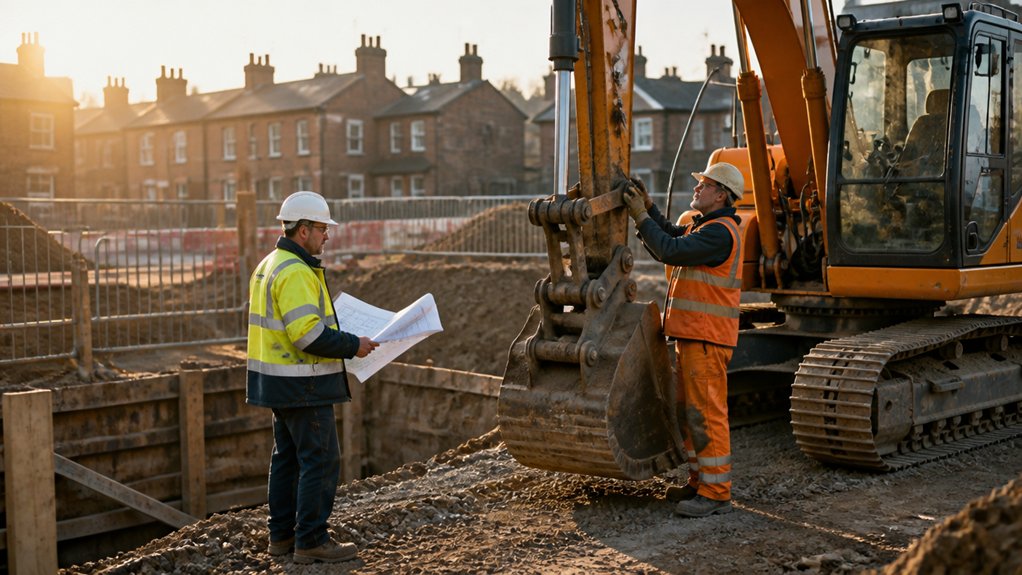
Assess the ground, plan the work, and check the access before you hire an excavator for a UK construction project. You’ll need to match the machine’s size, reach, and attachments to the site, then compare hire rates, terms, and service support. Confirm operator competence, LOLER and PUWER compliance, insurance, and maintenance records too—because the wrong choice can affect safety, programme, and cost before excavation even starts.
Start With the Job, Access and Ground Conditions
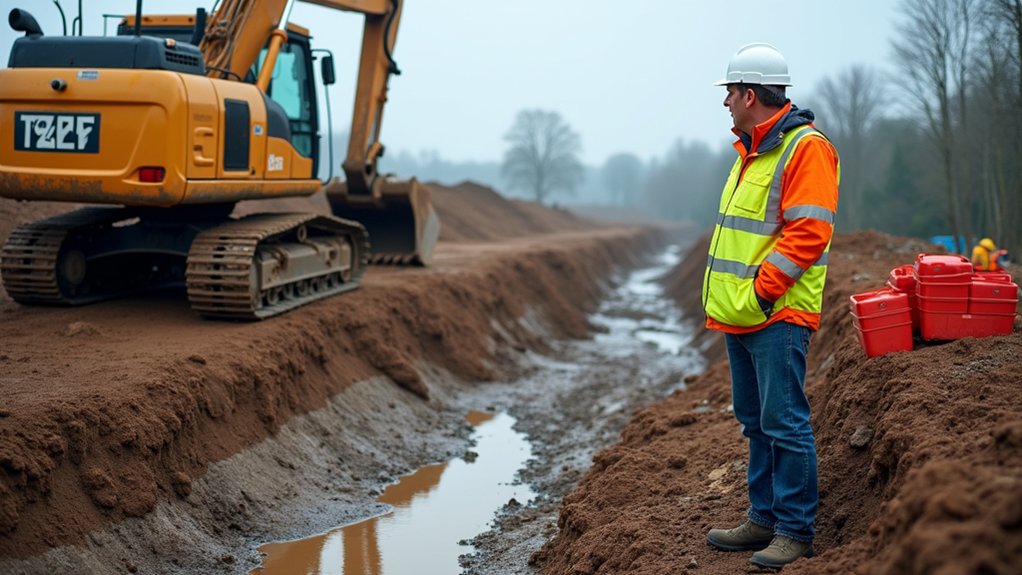
Before contacting plant hire firms, define the excavation work, site access and ground conditions. Record the required digging depth, trench length, spoil volume and working duration. Identify whether you’ll excavate foundations, drainage runs, footings or landscaping, then note nearby structures, buried services and overhead cables.
Assess Site access carefully: measure gates, haul roads, turning areas and ground bearing capacity, and check for restrictions on delivery vehicles.
Review soil conditions, including clay, sand, chalk, made ground, groundwater and contamination risks. A site investigation, utility survey and trial holes can confirm assumptions before work starts.
Consider working space, exclusion zones and safe spoil storage under the Construction (Design and Management) Regulations. Provide accurate information, photographs and drawings to the hire company so it can advise on suitable attachments and operating arrangements.
Choose the Right Excavator Hire Size
Once you’ve assessed the job, access and ground conditions, match the excavator’s operating weight and dimensions to the work. Choose a compact excavator for restricted UK sites, garden projects or work near existing structures.
Select a midi or standard machine when you need greater digging depth, lifting capacity and productivity, but confirm that roads, gates and working platforms can support it. Check the manufacturer’s tail-swing radius, transport weight and maximum reach against your site plan.
An oversized machine can increase ground pressure, fuel use and Environmental impact, while an undersized model may extend programme time and hire costs.
Ask your hire company to verify suitability, including transport arrangements and ground-bearing requirements.
Confirm servicing records and Equipment maintenance responsibilities before delivery, so reliability, safety and compliance remain under your control throughout the project.
Select Attachments for Each Task
Match each attachment to the material, excavation method and excavator’s hydraulic capacity, rather than treating the bucket as a one-size-fits-all option. Choose a general-purpose bucket for mixed soil, a digging bucket with teeth for compacted ground, and a grading bucket for shaping banks or finishing trenches.
For clay, use a wider bucket only where the machine can maintain safe lift capacity; for rock, specify a heavy-duty bucket or ripper. Breakers suit concrete and stubborn strata, while augers create consistent holes for posts or foundations.
Attachment types must reflect the site’s access, ground conditions and planned output. Confirm Equipment compatibility with the hire company, including the quick-hitch system, pin dimensions, auxiliary hydraulic flow and operating pressure.
Ask for certified attachments and check that operators receive fitting and safety guidance.
Compare Excavator Hire Rates and Terms
How much you’ll pay depends on more than the advertised daily rate. Build a realistic cost comparison by checking weekly and monthly tariffs, minimum hire periods, delivery and collection charges, fuel arrangements, and VAT.
Ask whether the quote covers attachments, changeovers, cleaning, and damage waivers, or whether suppliers charge these separately.
Compare like-for-like excavators by operating weight, reach, dig depth, and specification. A cheaper machine may cost more if it works slowly or needs frequent attachment changes.
Request written rental policies covering extensions, off-hire notice, breakdowns, weather delays, and cancellation charges. Check how the supplier calculates extra days, weekend use, and late returns.
Confirm payment terms, deposits, credit requirements, and any excess for damage. Keep quotes itemised, then select the best overall value rather than the lowest headline rate for your programme.
Confirm Operators, Compliance and Site Safety
Before booking, confirm whether the excavator will be supplied with a trained operator or hired self-drive. If you’ll provide the operator, check their competence, CPCS or NPORS card, relevant experience and familiarity with your ground conditions. Confirm operator training records and site induction requirements before mobilisation.
Ask the hire company for inspection certificates, service history and evidence of Equipment maintenance. The machine should meet current UK health and safety requirements, carry suitable guarding, alarms and emergency controls, and have a valid LOLER inspection where lifting accessories or functions apply.
Check that your insurance covers hired plant and operators.
Before work starts, complete a site-specific risk assessment and method statement. Locate underground services through utility plans and safe digging practices, establish exclusion zones, control reversing movements and provide appropriate PPE.
Record daily checks, defects and communications. Ensure everyone understands stop-work procedures.
Conclusion
Choose the excavator that suits your ground, access and programme—not the biggest machine that’ll make the neighbours question your planning. Match attachments to each task, compare hire rates and terms, and confirm competent operators, maintenance records and UK safety compliance. If you’ve checked the details before delivery, your project should dig, lift and finish without expensive surprises. Ignore them, and you may discover that “groundwork” includes negotiating with mud, delays and an impressively large invoice.