

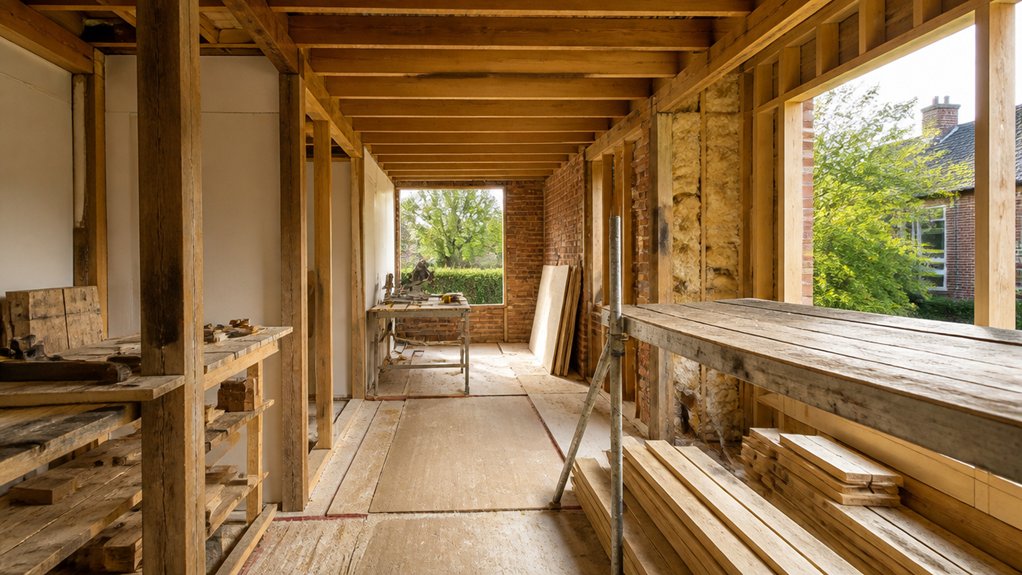
If you’re renovating or extending a property, scaffold boards can provide practical platforms, walkways, workbenches and temporary supports when you use them correctly. Start by checking each board for splits, rot, contamination and excessive wear, then place it on stable, level bearers and secure it against movement. Guardrails, toe boards and suitable access are essential where falls are possible. Their usefulness extends beyond the work area too, but several common applications require particular care.
Inspect and Prepare Scaffold Boards Safely
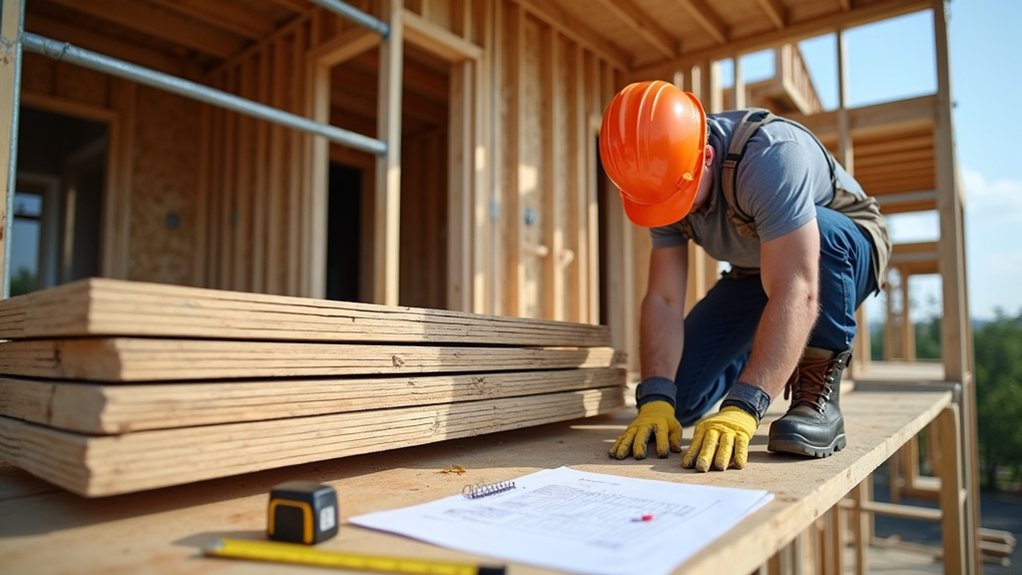
Before using scaffold boards, inspect each one for splits, rot, excessive warping, damaged edges, oil contamination, and loose or protruding fixings. Remove any defective board from service immediately; don’t trim, nail, or paint over damage.
Check timber boards for the required identification, grade marking, and acceptable moisture condition, following the manufacturer’s instructions and current UK scaffold guidance.
Complete an Inspection checklist for every delivery and repeat it after storage, transport, or exposure to weather.
Keep boards on level bearers, raised clear of standing water, and protect them from ground contact.
Don’t drag them across abrasive surfaces or stack them where edges can suffer impact.
Wear suitable Safety equipment, including gloves, safety footwear, eye protection, and a hard hat.
Report defects to your supervisor and quarantine questionable boards.
Build Safe Platforms and Walkways
Once you’ve inspected and stored the boards correctly, use them to form stable, fully supported platforms and walkways. Set each board flat across properly designed scaffold frames, with adequate bearing at both ends and no overhang that could tip. Don’t span gaps, bridge openings, or rely on loose bricks, blocks, or improvised supports.
Secure boards against movement and keep joints tight, level, and free from trip hazards. Fit guardrails, midrails, and toe boards wherever someone could fall, and provide safe access using a properly secured ladder or stair unit.
Keep the route clear of tools, cables, and waste, particularly on busy UK building sites. Follow the scaffold design, inspection, and loading requirements under current UK regulations.
Good scaffold board maintenance prevents splitting and contamination; wear suitable safety equipment, including a hard hat and non-slip footwear.
Store Materials and Build Temporary Workbenches
Use scaffold boards to create temporary workbenches and organised storage areas, provided they’re supported by a stable frame designed for the intended load.
For reliable workbench construction, use level trestles or a properly braced timber frame, then fix the boards securely to prevent movement. Check each board for splits, rot, excessive warping, and contamination before use.
Keep the working surface clear of protruding nails and protect it from wet materials.
For material storage, place boards on firm, level supports to keep boxes, tools, and sheet goods off the floor. Distribute weight evenly, avoid overloading, and leave clear access routes around the bench.
Don’t use improvised supports, unstable stacks, or boards spanning excessive distances.
Recheck fixings and stability regularly, particularly after moving heavy items or altering the temporary arrangement.
Use Scaffold Boards for Garden Paths and Supports
Scaffold boards can form short-term garden paths or support walkways across soft ground during renovation and extension work, provided they’re laid on firm, level contact points and secured against movement. Position them perpendicular to the direction of travel, and use treated timber bearers or paving slabs beneath joints to spread loads and prevent sinking.
Check each board for splits, rot, excessive warping, or contamination before use, particularly after wet UK weather.
Fix boards with exterior-grade screws or suitable clamps, leaving no trip hazards at edges. Don’t use them as permanent bridges, steps, or structural supports without competent design.
Once the project ends, you can repurpose sound boards for Decorative garden borders or Creative outdoor seating, but seal cut ends and protect timber from persistent ground contact.
Keep paths clear, stable, and well lit.
Conclusion
Use scaffold boards wisely and they’ll become the backbone of your renovation or extension project. Inspect every board, keep it clean and dry, and support it on stable, level bearers. Fix platforms, walkways and workbenches securely, and add guardrails and toe boards wherever needed. Outdoors, lay boards on firm contact points for temporary paths or supports. Store them correctly, check them regularly, and wear suitable PPE. Treat each board as part of your site’s safety net, not a shortcut.