


York Stone can outlast many modern paving materials, but only when you match its properties to the project. You’ll need to assess site conditions, loading, frost exposure, drainage, slip resistance, colour, finish, and thickness before specifying it. Check each batch’s quality and provenance, then account for delivery, installation, access, and contingencies. The right choice depends on details that aren’t always visible in a sample—especially when long-term performance matters.
Match York Stone to Your Project
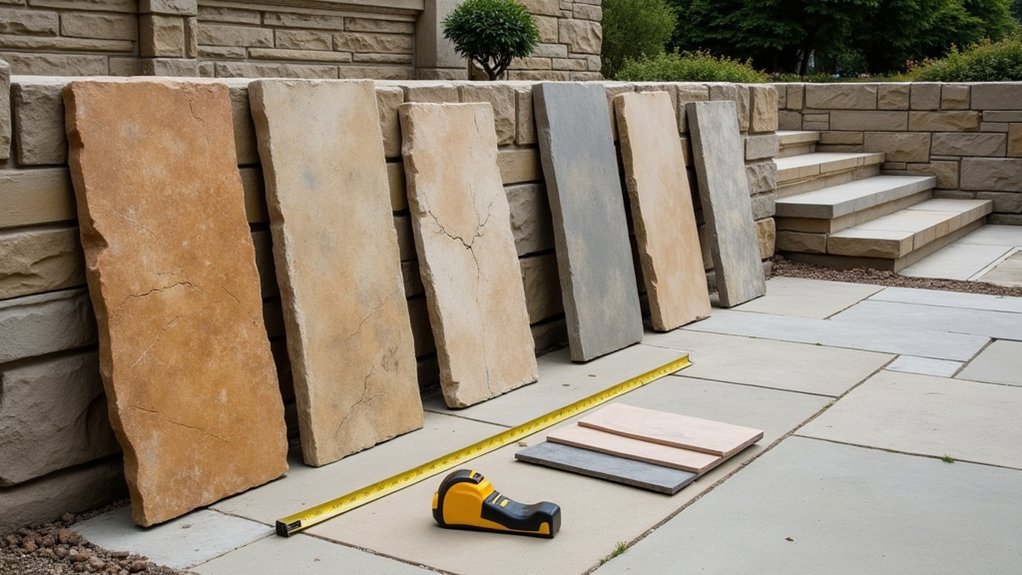
When matching York stone to your project, assess the intended use, loading, exposure, and required finish before selecting a product.
For paving, choose dense, appropriately gauged slabs that can withstand anticipated pedestrian or vehicular traffic.
For walls, steps, kerbs, or architectural detailing, specify dimensions, edge treatments, and fixing requirements early, then confirm compatibility with the construction system.
Match the stone’s colour, texture, and degree of variation to the building’s character; a consistent commercial scheme may need carefully selected batches, while heritage work often benefits from natural tonal diversity.
Consider Historical significance when working near listed buildings or within conservation areas, and source reclaimed material where it supports the design.
Evaluate Environmental impact by checking quarry location, transport distance, extraction practices, and expected service life.
Suppliers’ technical data, samples, and project references will help you confirm suitability before ordering.
Check Frost, Drainage, and Slip Resistance
After confirming the stone suits the project, check how it will perform in wet and cold conditions. Ask your supplier for technical data on Frost resistance, including water absorption, freeze-thaw testing, and suitability for your local exposure.
Choose sound, properly seasoned York stone, and reject pieces with deep cracks or excessive porosity, which can retain water and deteriorate during freezing weather.
Plan drainage before installation. Set adequate falls, provide free-draining bedding where appropriate, and keep outlets clear so water can’t pond beneath or on the paving.
Follow the supplier’s guidance for jointing materials and installation depth.
Assess Slip safety for the intended use, especially on steps, ramps, entrances, and shaded areas. Specify a suitable textured or naturally riven surface, maintain positive drainage, and schedule regular cleaning to remove algae, moss, and other slippery contamination.
Compare York Stone Colours and Finishes
York stone ranges from pale buff and golden tones to grey, blue-grey, and brown, with colour varying by quarry, seam, weathering, and moisture content. Compare samples outdoors, because artificial lighting can distort color variations. Wet stone usually appears darker, so assess representative pieces both dry and damp before approving a batch. Request samples from the intended quarry and confirm whether the supplier can maintain a consistent blend across your project.
Next, evaluate finish textures. Sawn faces provide clean, uniform lines and suit contemporary paving, while riven surfaces expose natural clefting and create a more textured appearance. Brushed, tumbled, or hand-dressed finishes soften edges and develop character, but they can alter colour perception and maintenance requirements. Match the finish to your setting, drainage design, and expected foot traffic.
Document the selected colour range, surface treatment, and acceptable variation in your specification.
Choose the Right York Stone Thickness
Choose York stone thickness by evaluating the expected loads, including pedestrian traffic, vehicles and fixed structures. Match the slab thickness to its application, whether it’s paving, walling or landscaping.
You’ll also need to verify ground conditions, as weak or poorly prepared sub-bases require additional support.
Assess Load Requirements
How much load will the stone carry? Establish the maximum expected load, including permanent construction weight, imposed loads, point loads, and dynamic forces.
You’ll then specify a thickness that limits bending, cracking, and excessive deflection. For pedestrian areas, a thinner slab may suffice, but vehicle or heavily loaded construction requires greater depth and, often, structural support beneath the stone.
Don’t rely on appearance or historical significance when selecting thickness; assess the substrate, span, joint arrangement, and support conditions.
Ask a structural engineer to verify calculations where loads are substantial, concentrated, or uncertain.
Check the quarry’s technical data for compressive strength, flexural strength, and recommended thicknesses.
Selecting accurately also reduces material waste and environmental impact.
Never compensate for inadequate support by choosing stone alone; correct the underlying construction first.
Match Application Needs
Once load requirements are established, match the York stone’s thickness to its intended application and support conditions. For pedestrian paths, patios, and steps, choose slabs thick enough to resist everyday impact without unnecessary material use.
Heavier-use areas, such as driveways or loading approaches, require greater thickness and stronger detailing than decorative paving. Check the supplier’s technical data, because stone strength, span, edge support, and joint design affect the suitable specification.
For walling, select coursing and bed depth that provide stable bearing and maintain accurate alignment; don’t treat paving slabs as structural masonry.
Consider the project’s Historical significance when restoring a traditional setting, matching established proportions and finishes.
Also assess Environmental impact: specifying only the thickness you need reduces quarrying, transport weight, cutting waste, and replacement risk while preserving York stone’s long-term performance.
Verify Ground Conditions
Before you specify York stone thickness, verify the ground conditions that will support it. Assess soil stability, drainage, compaction, and the expected loading. A pedestrian terrace may perform well with thinner slabs on a properly prepared sub-base, while driveways, courtyards, and commercial routes require thicker stone and stronger construction.
Excavate unsuitable or soft material, then install a well-compacted MOT Type 1 sub-base to the required depth. Improve drainage where clay, groundwater, or poor falls could cause saturation, settlement, or frost damage. Check existing services and nearby structures before excavation, and account for seasonal movement.
Don’t choose thickness in isolation: match the bedding mortar, joint design, and sub-base to site conditions. This approach protects durability, controls whole-life costs, and reduces environmental impact by preventing premature replacement and unnecessary material use.
Verify York Stone Quality and Provenance
To verify York stone quality and provenance, inspect the supplier’s technical information, quarry source, and documentation before placing an order. Confirm the stone’s geological type, extraction location, thickness, dimensions, and intended performance classification.
Request test data covering water absorption, slip resistance, frost durability, and compressive strength, particularly for external paving.
Examine representative samples for consistent colour, grain, bedding direction, surface finish, and defects such as cracks or excessive friability.
Ask for chain-of-custody records, quarry identification, and invoices proving the material’s origin; don’t rely on labels such as “Yorkshire stone” alone.
Provenance supports the stone’s Historical significance and helps you select authentic material suited to conservation work.
Check the quarry’s Environmental sustainability credentials, including responsible extraction, restoration plans, and independently verified environmental management certification before approving the specification.
Budget for York Stone, Delivery, and Installation
Although the stone’s purchase price matters, you should budget for the complete installed cost of York stone, including quarrying, cutting, packing, delivery, off-loading, ground preparation, bedding, jointing, labour, waste, and any specialist finishing.
Request a written quotation that separates material, transport, preparation, and installation, then confirm whether prices include VAT.
Measure your Yard size accurately and allow for cuts, breakages, and future repairs.
Larger orders may reduce the unit price, but access restrictions, cranage, narrow roads, or timed deliveries can increase transport and off-loading charges.
Ask suppliers to price site-specific risks rather than applying generic allowances.
Evaluate supplier reputation alongside cost. An established supplier should provide consistent grading, reliable quantities, clear lead times, and appropriate installation guidance.
Compare at least three itemised quotations, check payment terms, and retain a contingency of 10–15% for unforeseen ground conditions or design changes.
Conclusion
Choosing York Stone isn’t simply about selecting the prettiest slab—it’s about ensuring that beauty survives frost, traffic, drainage challenges, and installation realities. You’ll need to verify thickness, finish, provenance, batch consistency, and technical performance before committing. Ironically, the “natural” choice demands careful engineering, budgeting, and documentation. By evaluating access, maintenance, sustainability, and supplier reliability, you’ll avoid expensive surprises and achieve a durable result that meets both project specifications and conservation expectations across the UK.