

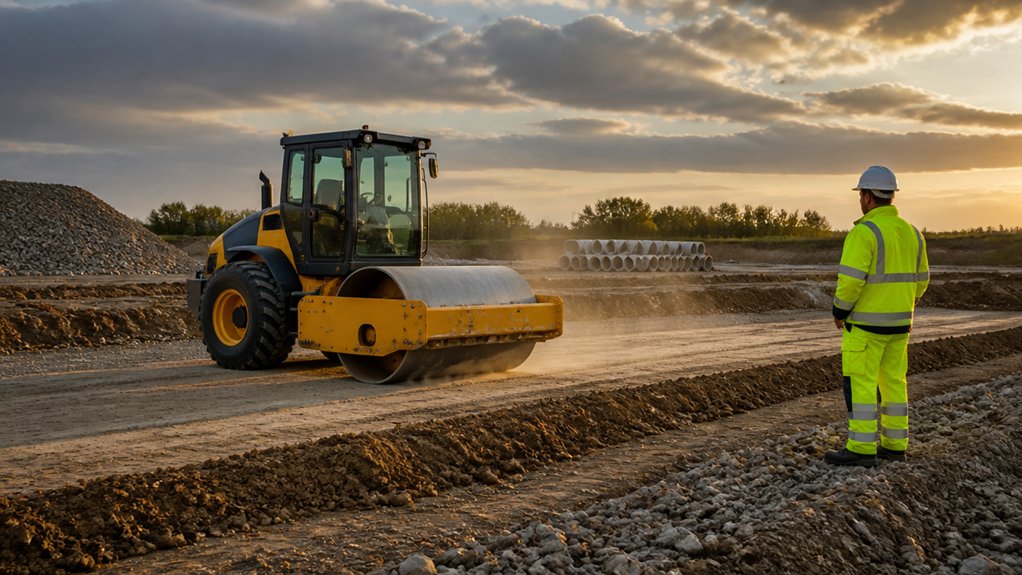
When you hire compaction machinery for ground stabilisation, start by defining the soil, moisture conditions, required density and site constraints. Then match the machine’s type, weight, drum width and power to the ground and access available. You’ll also need to compare hire rates, delivery costs, operator requirements and safety obligations. Choose poorly, and you may waste time or create uneven settlement, so the following checks matter before machinery arrives on site.
Define the Ground You Need to Compact
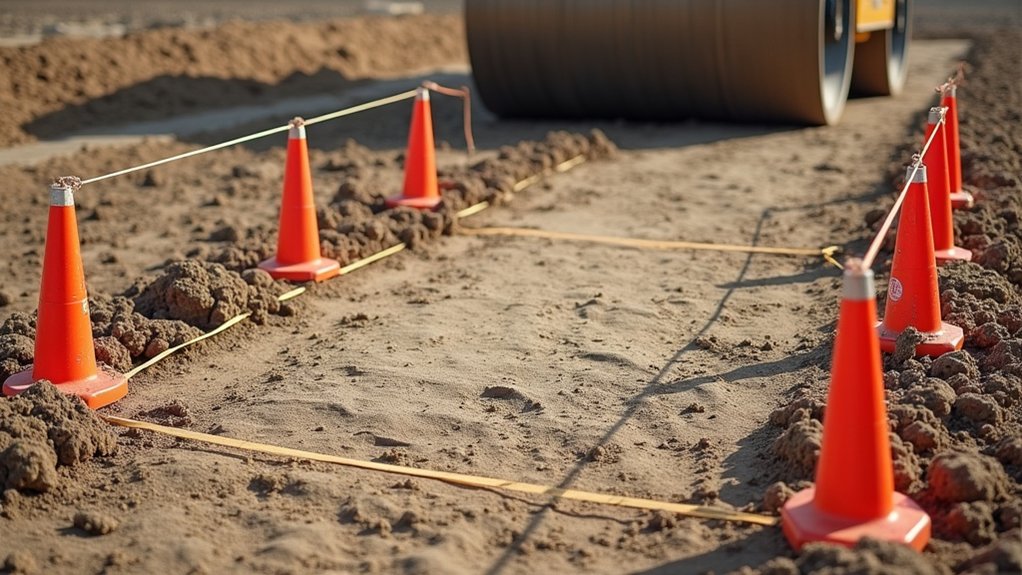
Before hiring compaction machinery, identify the ground type, moisture condition, depth, and required finished density. Classify the material as cohesive clay, granular sand or gravel, mixed fill, or weak subgrade. Each responds differently to compaction techniques, so accurate identification prevents ineffective treatment.
Assess soil moisture across the working area, not just at the surface. Clay commonly needs controlled moisture to become workable, while saturated material may require drying or removal.
Record layer thickness and confirm whether you’ll compact a formation, trench backfill, pavement sub-base, or embankment. Define the target density from the project specification, then establish how you’ll verify it through field testing.
Check for buried services, contamination, voids, and unstable zones before work begins. These findings establish the technical requirements for ground stabilisation and quality control.
Match Machinery to Soil and Site Access
Assess soil conditions, including moisture, density and particle size, before choosing compaction equipment.
Consider site access, working space and ground clearance so you can position and operate machinery safely.
Then select equipment that matches the soil type, required compaction depth and available access.
Assess Soil Conditions
Soil type, moisture content and bearing capacity determine which compaction machinery will stabilise the ground effectively. Begin with a geotechnical assessment, including particle-size distribution, Atterberg limits, in-situ density and groundwater levels.
Granular soils typically respond well to vibratory rollers, while cohesive soils need kneading action from padfoot rollers.
If the material contains excessive moisture, allow drainage or blend in suitable fill before compaction; dry soil may require controlled watering.
Confirm the target dry density and optimum moisture content through laboratory testing, then establish lift thickness and pass requirements.
Test for soil contamination before disturbing or relocating material, and follow the correct handling procedure if contaminants are present.
You’ll also reduce environmental impact by preventing dust, runoff and unnecessary reworking during stabilisation operations.
Document test results to guide equipment selection.
Consider Site Access
Once you’ve identified the soil’s compaction requirements, evaluate how easily each machine can reach and operate across the site. Measure access roads, gates, turning areas, overhead clearances, and working platforms before arranging delivery.
Check ground bearing capacity, gradients, drainage, and proximity to excavations, structures, or buried services. Narrow entrances or restricted work zones may limit movement, while soft approaches can cause transport vehicles or machinery to rut, sink, or become unstable.
Confirm that the hire company can provide suitable delivery, recovery, and positioning arrangements without disrupting other site activities.
Review visibility, noise, vibration, and exclusion-zone requirements, particularly near occupied buildings.
Schedule inspections and equipment maintenance around access constraints, and verify operator training covers confined manoeuvring, slope control, and emergency procedures.
Document these limitations in your method statement.
Select Suitable Machinery
Choose machinery that matches both the material’s compaction behaviour and the site’s access limits. Use smooth-drum rollers for granular soils and vibratory padfoot rollers for cohesive clay, where kneading action improves density.
Select pneumatic-tyred rollers when you need uniform pressure and effective sealing between passes.
For trenches, verges, or confined areas, choose a trench roller, reversible plate compactor, or rammer that can manoeuvre safely without damaging adjacent structures.
Check the required working width, operating weight, vibration frequency, and amplitude against your specification and available clearance.
Confirm the hire machine suits gradients, ground bearing capacity, and transport arrangements.
Before work starts, verify Equipment maintenance records and request operator training where controls or remote operation differ from your usual plant.
This approach reduces delays, rework, and safety risks.
Compare Compaction Machinery for Hire
Comparing compaction machinery for hire starts with matching the machine to your ground conditions, access constraints, and required finish. Review each supplier’s specifications for drum configuration, vibration settings, operating controls, and suitability for soil, aggregate, or asphalt.
Check whether the hire rate includes delivery, collection, fuel, operator support, and insurance, then compare the total cost rather than the headline price.
Ask about machinery maintenance records, inspection procedures, and breakdown response times; reliable support reduces delays and protects compaction quality.
Consider environmental impact by comparing fuel consumption, emissions, noise levels, and available electric or low-emission models, particularly near homes or sensitive sites.
Confirm availability, hire duration, and booking flexibility before committing.
Obtain written quotations so you can compare inclusions, exclusions, damage policies, and replacement arrangements confidently.
Choose Machine Weight, Width and Power
Choose machine weight according to the soil type and required compaction depth, as excessive force can damage weaker ground.
Select the drum or plate width to suit the working area and access restrictions.
Match engine power to the machine’s weight and site conditions so it maintains effective performance without unnecessary fuel use.
Match Weight to Soil
Once you’ve identified the soil type and required compaction depth, match the machine’s operating weight, drum or plate width, and engine power to the ground conditions. Choose sufficient weight to densify the material without crushing aggregate, displacing wet soil, or creating unstable shear planes.
Granular fill generally accepts heavier vibratory equipment, while cohesive clay may need controlled vibration and staged passes to prevent pumping. Check moisture content before hiring; unsuitable moisture can limit results regardless of machine capability.
Consider soil chemistry where binders, salts, or contaminated material could affect drum corrosion, dust, or operator exposure. Verify ground-bearing capacity, especially near services, retaining structures, and soft margins.
Select equipment that delivers the required force without unnecessary mass, reducing fuel use, rutting, and overall Environmental impact. Confirm the hire company’s specifications, service history, and safety guidance before mobilisation.
Select Width and Power
Select a machine width that matches the working area and access constraints: wider drums or plates cover more ground per pass, while narrower equipment delivers better control around edges, services, and confined spaces.
Next, choose operating power according to soil resistance, lift thickness, and production targets. Higher power helps maintain vibration or impact performance on dense, cohesive, or uneven ground, but excessive output can damage buried services, destabilise edges, or overcompact sensitive layers.
Confirm the hire machine’s static weight, centrifugal force, frequency, and amplitude against the project specification. Consider transport limits, turning space, gradients, and fuel or battery capacity before booking.
Require operator training so your team can adjust speed, vibration, and overlap safely.
Schedule Machine maintenance checks, including drums, plates, water systems, guards, and controls, before each shift and throughout the hire period.
Budget for Hire, Delivery and Site Access
Budget the full hire cost, not just the machine’s daily rate: include delivery, collection, fuel, operator time, insurance, and any minimum hire period. Request an itemised quotation so you can compare suppliers accurately and identify standby or overtime charges.
Assess site access before booking. Confirm gate widths, headroom, ground conditions, turning space, loading restrictions, and suitable unloading areas. A low-loader may need firm, level access and additional room for positioning.
Tell the hire company about gradients, soft verges, overhead services, and restricted routes; inaccurate information can cause failed deliveries and extra fees.
Allow for permits, traffic management, temporary surfacing, and environmental impact controls where transport or fuel handling could affect neighbouring land.
Clarify who covers machinery maintenance, breakdown recovery, and replacement equipment.
Choose the shortest realistic hire period, but retain contingency time for preparation, weather delays, and access constraints.
Operate Safely and Check Compaction Results
Operate the compaction machinery only after completing the pre-start inspection, reviewing the manufacturer’s instructions, and confirming that everyone on site understands the exclusion zone and signalling arrangements.
Follow site Safety protocols: wear required PPE, maintain a safe distance from edges and services, and never leave running equipment unattended.
Use steady passes at the specified speed, amplitude, and frequency; avoid abrupt turns that can damage the surface or destabilise the machine.
Monitor vibration, noise, leaks, and warning indicators throughout operation, and stop immediately if conditions become unsafe.
Good Equipment maintenance supports reliable performance, so report defects and keep guards fitted.
Check compaction results using the specified method, such as density testing or proof rolling.
Record readings, locations, pass counts, and corrective actions, then obtain approval before covering the completed layer.
Conclusion
Ground stabilisation succeeds when you assess accurately, select intelligently and operate safely. Define the soil, match the machine and confirm site access before hiring. Compare rollers, plates and rammers; balance weight, width, power and hire costs. Plan delivery, inspect equipment and protect everyone on site. Then compact in controlled layers, measure results and record each pass. If conditions change, stop, reassess and adapt. You’ll achieve reliable density, minimise delays and build a safer, stronger foundation.